School Journal Year 7-8 November 2025
This School Journal features the following texts:


This School Journal features the following texts:
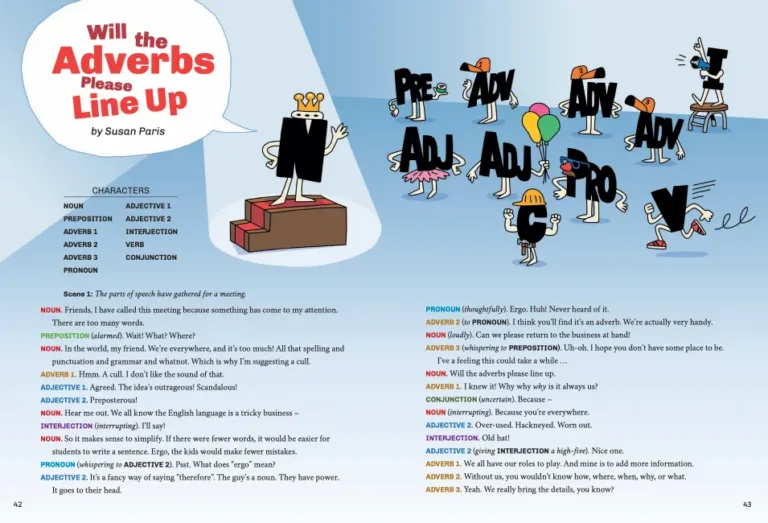
This humorous play turns grammar into a fun argument. When the character Noun suggests removing Adverbs from the English language, they must prove why they are important. Each part of speech – Adjectives, Verbs, and Adverbs – speaks up to explain why they matter. In the end, the Adverbs show they have a valuable role…
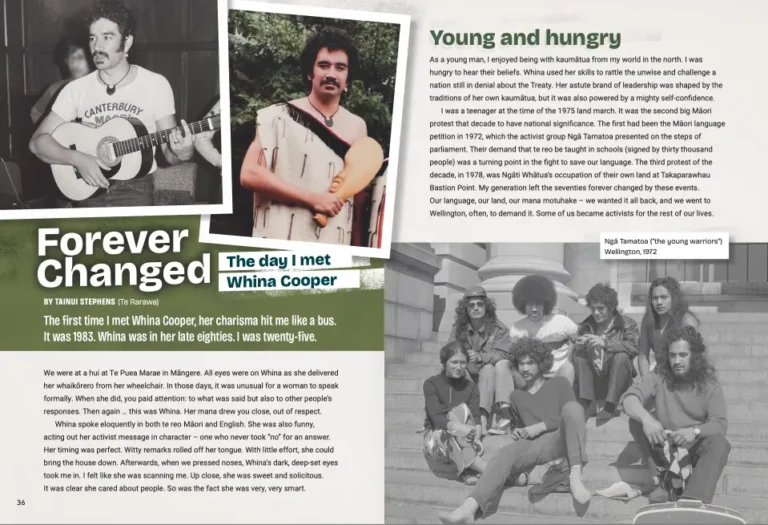
In this essay, Tainui Stephens examines the life and legacy of Dame Whina Cooper, showing how her vision and dedication inspired generations of people to fight for justice. Keywords: 1975 land march, activists, Bastion Point, change, hīkoi, land marches, mana motuhake, Māori language petition, mother of the nation, Ngā Tamatoa, Ngāti Whātua, protestors, protests, relationships,…
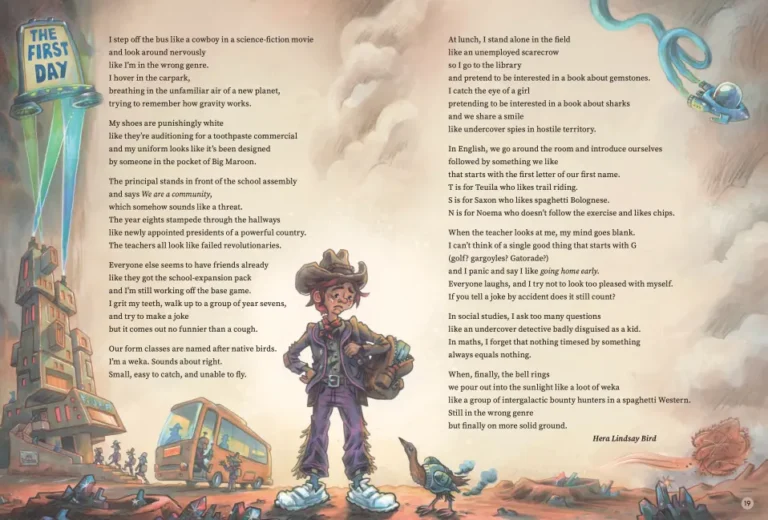
The First Day is a poem about a year 7 student starting intermediate. It uses rich figurative language to paint a vivid picture of what it feels like to be new. Each stanza shows a different moment from the day, with touches of humour that capture the awkwardness and excitement of finding your place and…
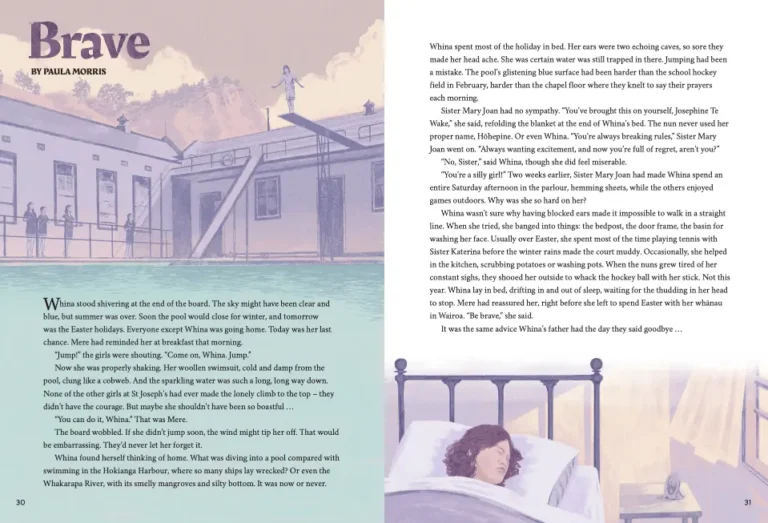
This story, based partly on fact, tells of Dame Whina Cooper’s school days at Saint Joseph’s Māori Girls’ College in Napier.
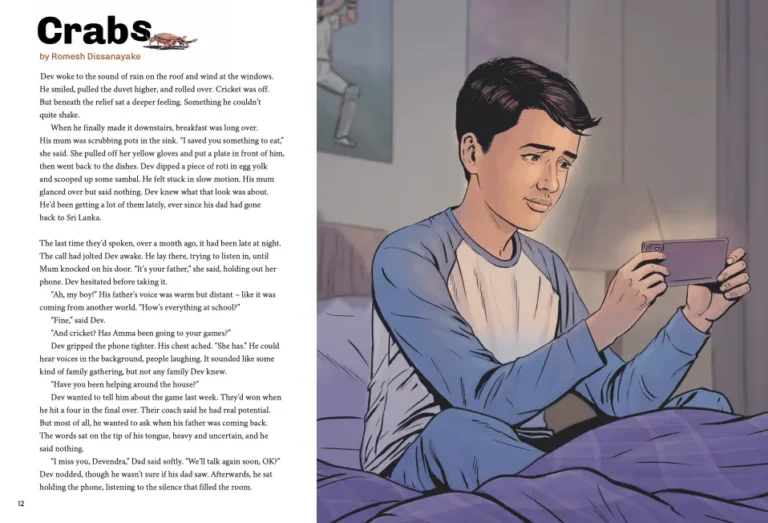
Dev misses his father. With no cricket to keep him busy, Dev’s friend Kwan invites him to go fishing. Being outdoors and spending time with Kwan’s family helps Dev to feel more cheerful and supported. The story ends with Dev and his mum cooking a meal together, featuring a delicious crab curry recipe.

The students from Manurewa High School celebrate their diverse cultures through their involvement in Polyfest, with a special focus on Tongan stories. It shares their personal experiences and brings their traditions to life through photos and quotes. The article concludes by exploring the rich history of Polyfest, showing how this festival has grown over fifty…
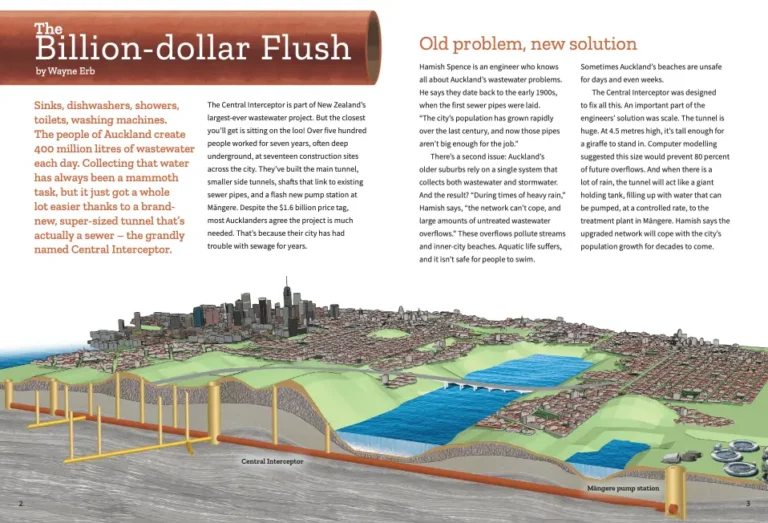
This article explains how Auckland’s wastewater is collected through the newly-built Central Interceptor tunnel. It describes the key people and machinery behind New Zealand’s largest-ever wastewater project. Keywords: Auckland, Central Interceptor, engineering, engineers, flooding, geologists, groundwater, pipes, pollution, pumps, sewage, sewerage networks, sewers, stormwater, treatment plants, tunnels, wastewater, waterways
This School Journal for Year 5 and 6 features three stories (Shower Power, Pai Tū, Pai Hinga, and Double Backflip), two articles (Amazing Antics: Life inside an ant colony, Pedal-Powered Community), one poem (Bus Stop, Wet Day), and one play (Bus Stop, Wet Day). Four texts in this issue share the theme of “community”.
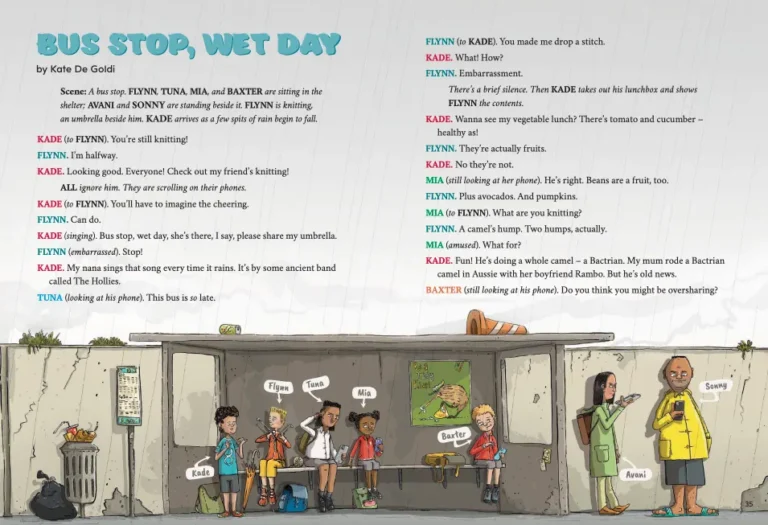
This humorous play shows how some people connect with each other while waiting for a late bus. Through sharing stories, school speech ideas, and jokes, the characters create a temporary community full of laughter and friendship.
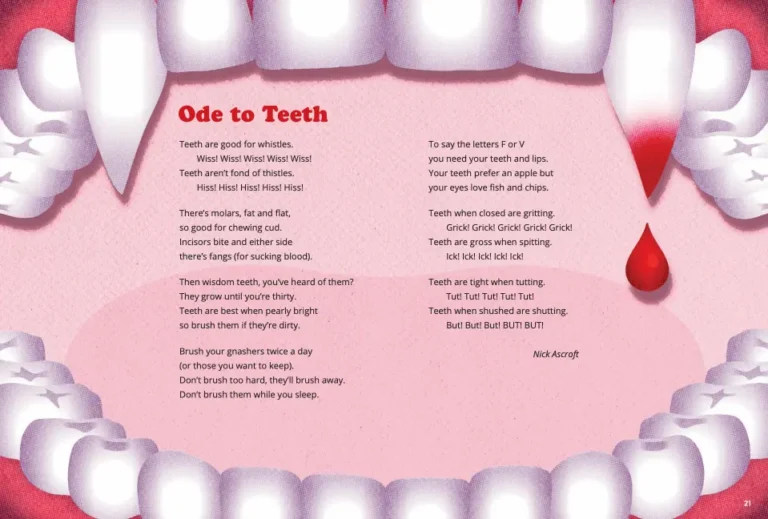
A humorous and rhythmic poem about teeth.
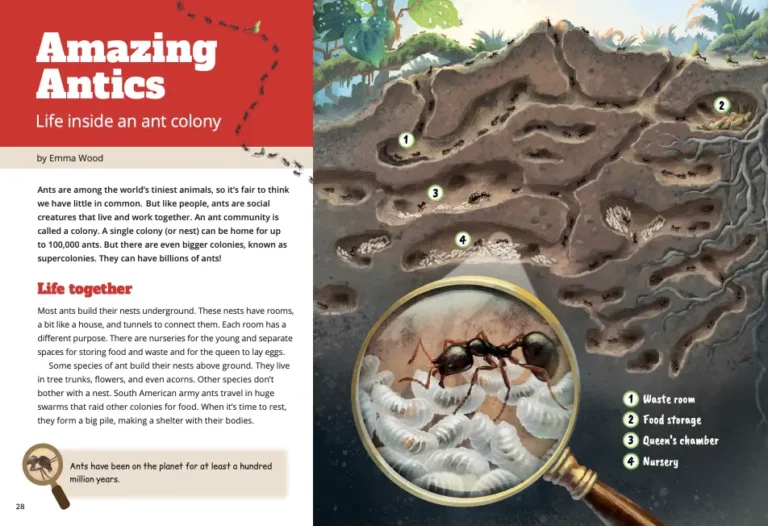
This article shares facts about how ants live and work together in colonies. It explains their different roles and uses a mix of facts, captions, photos, illustrations, and a diagram to show how ant communities thrive.

This article describes the work carried out by the group RAD Bikes to make Ōtautahi Christchurch more bike-friendly. It highlights the importance of working together to create a healthier, more active city.
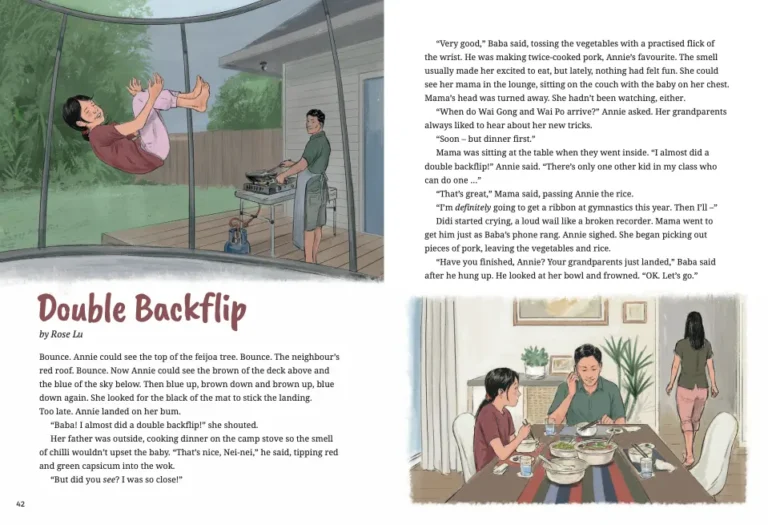
When a new baby brother arrives, Annie’s world is turned upside down. As emotions are boiling over, her grandparents arrive from China. They help Annie see things differently. With their support, she begins to understand the joys of being the oldest and discovers the special role of being a big sister.
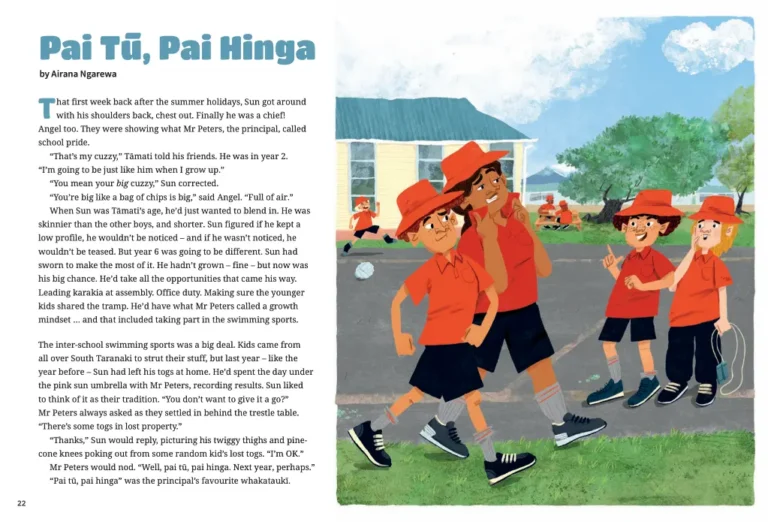
This light-hearted story describes how Sun, now a Year 6 student, decides to show school pride and have a “growth mindset”.
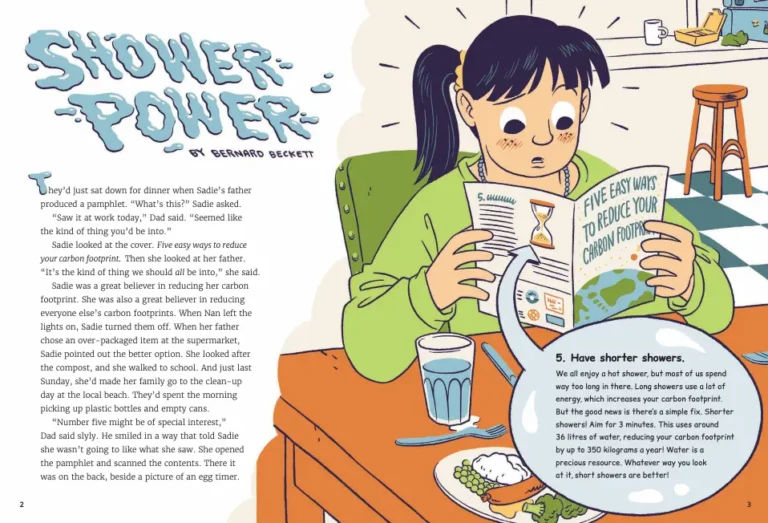
“Shower Power” is a humorous story about Sadie and her dad battling to become the household environmental champion by taking the shortest showers! As they compete, they use maths to measure and track their shower times, all while trying to reduce their carbon footprint and save water.
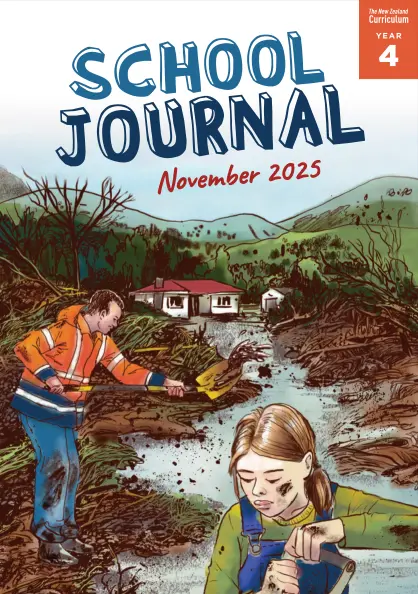
This article contains articles, stories, a play, and a poem. Three texts in this issue share the theme of “community”.
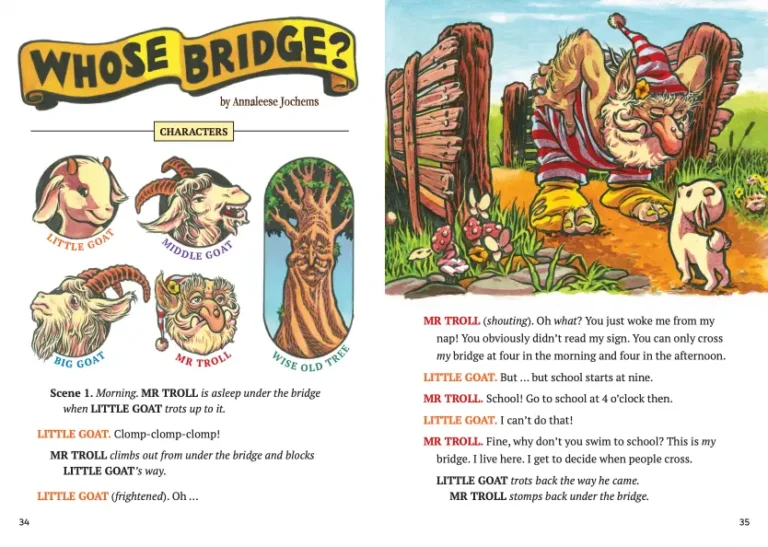
In this humorous play, three goats stand up for their rights to cross a bridge when they meet a tired, grumpy troll.
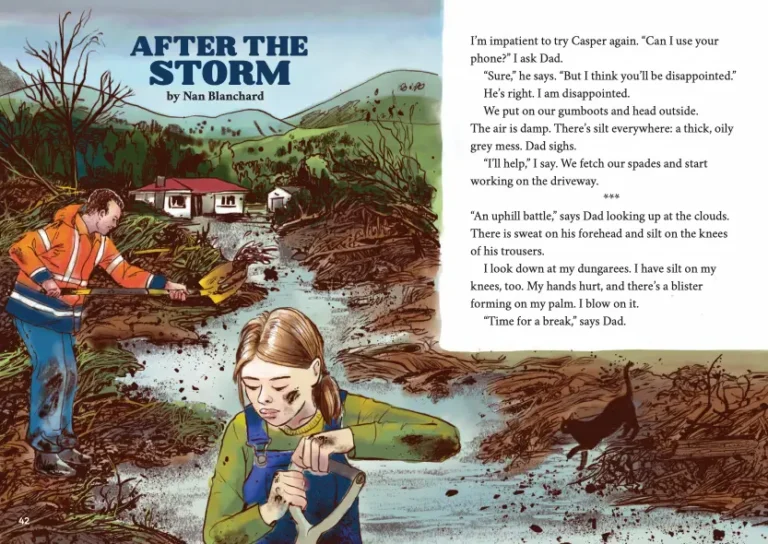
In this story, Kit and her dad are cleaning up their farm and checking that friends and neighbours are safe after a big storm. Poor cell phone reception makes it hard for them to contact people. The story shows how the community supports each other during a natural disaster.
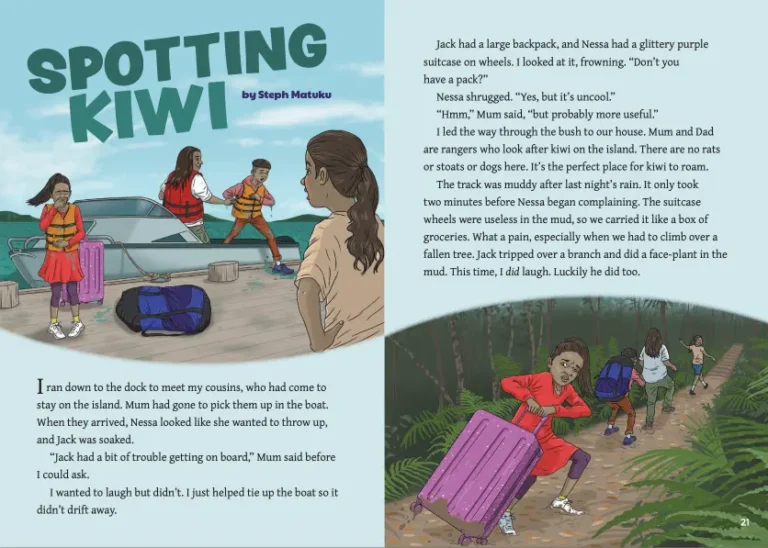
This humorous story follows a family living on a remote island who are visited by the narrator’s cousins, Jack and Nessa. At first, the cousins find it difficult to adjust to the island’s simple lifestyle, but gradually, they start to enjoy the outdoor adventures and embrace island life.
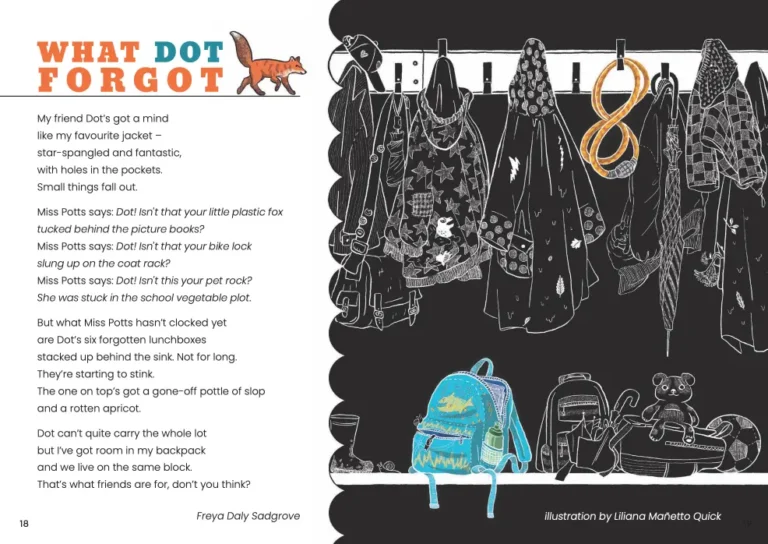
This humorous poem tells the story of a student called Dot, who is very forgetful and constantly leaves their belongings scattered around the school.
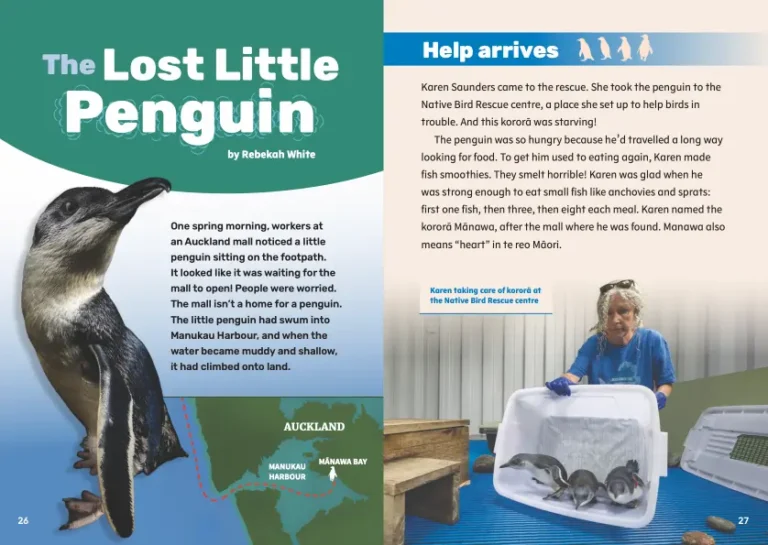
This article tells the story of Mānawa, a little penguin found outside a shopping mall in Auckland. It explains how he was cared for at the Native Bird Rescue centre, and later released back into the sea. The article includes information about the nesting habits of kororā, the threats they face, and how people can…
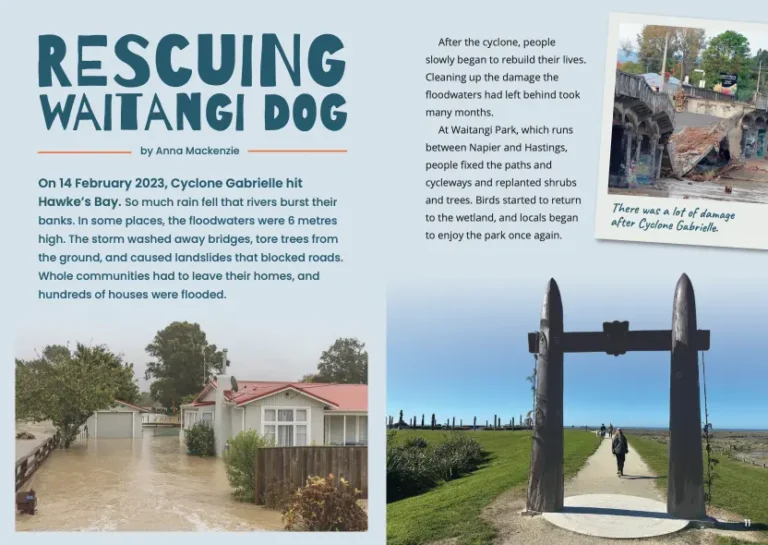
This article tells the story of Kahu, a homeless dog found in Hawke’s Bay after Cyclone Gabrielle. It highlights how the local community united to care for Kahu by offering food, shelter, and eventually a new home. Keywords: communication, community, Cyclone Gabrielle, cyclones, dog language, dogs, floods, friendship, generosity, Hawke’s Bay, kindness, pets, relationships, SPCA,…
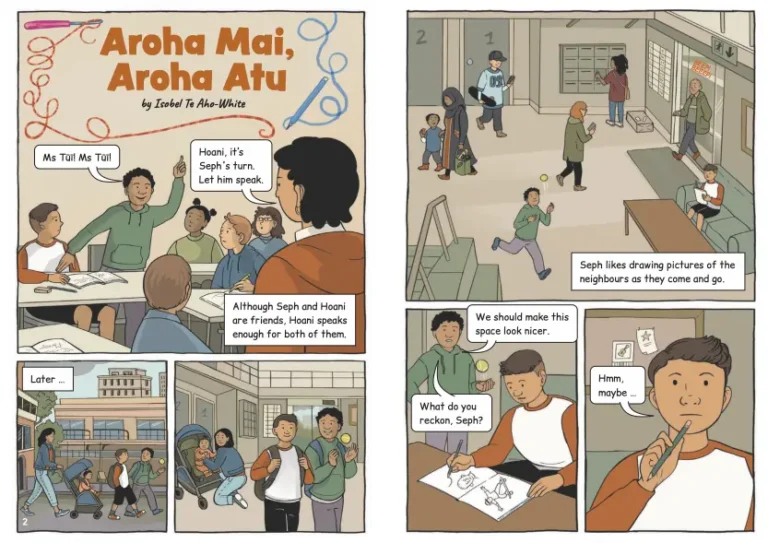
This comic describes how Seph and Hoani transform the foyer of their apartment building, with the help of their neighbour Whaea Nora, into an art gallery. The story conveys a sense of community and exemplifies the proverb “Aroha mai, aroha atu” (Love received, love returned).
This issue of the Junior Journal with a year 3 reading level, contains articles (Land of Islands, Kā Moutere Tītī: The Muttonbird Islands and Life on Aotea), a poem (Abandoned on Solander Island), and a comic story (Safe from Sharks). The texts in Junior Journal 69 share the theme of islands. They can be used…
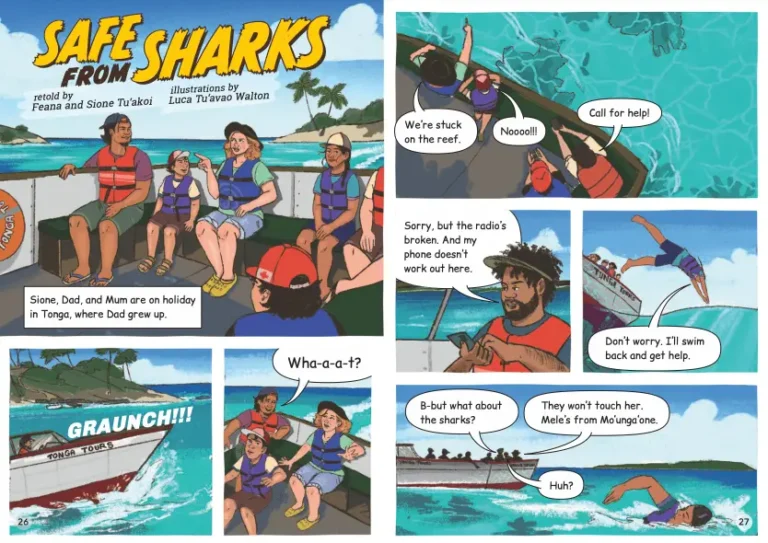
In this comic, Sione and his parents are on holiday in Tonga when their boat gets stuck on a reef. When Mele bravely swims for help, Sione becomes worried about sharks. To reassure him, Dad shares a traditional Tongan story about a chief from Mo‘unga‘one who was turned into a shark and now protects his…
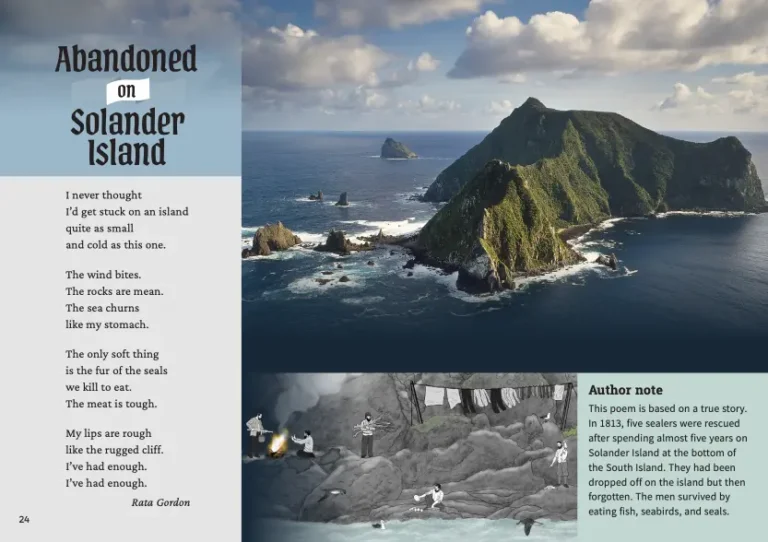
This poem describes the thoughts and feelings of someone stranded on the rugged, remote Solander Island. It uses figurative language to paint a vivid picture of the harsh conditions. The poem is based on the true story of five sealers who were rescued from the island after being stranded there for nearly five years.
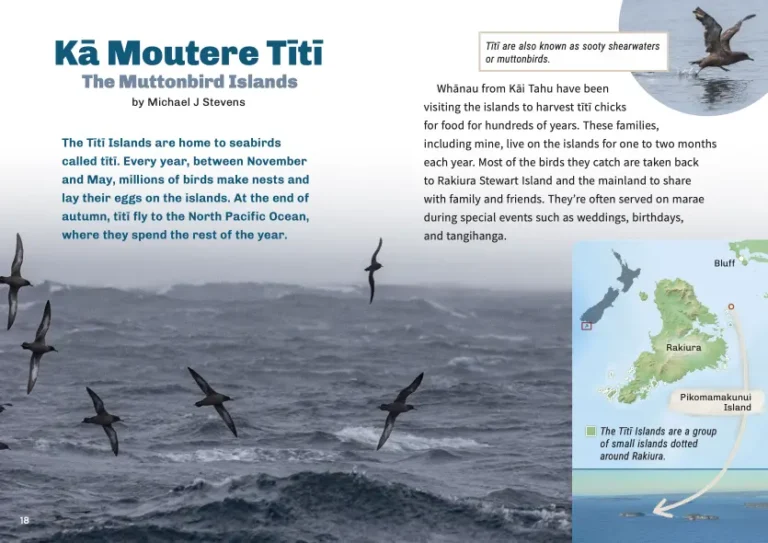
Michael Stevens shares his family’s tradition of muttonbirding. He and his children have been going to Pikomamakunui Island since they were young. The Tītī Islands and muttonbirding are taoka tuku iho, treasures passed down from their tīpuna.
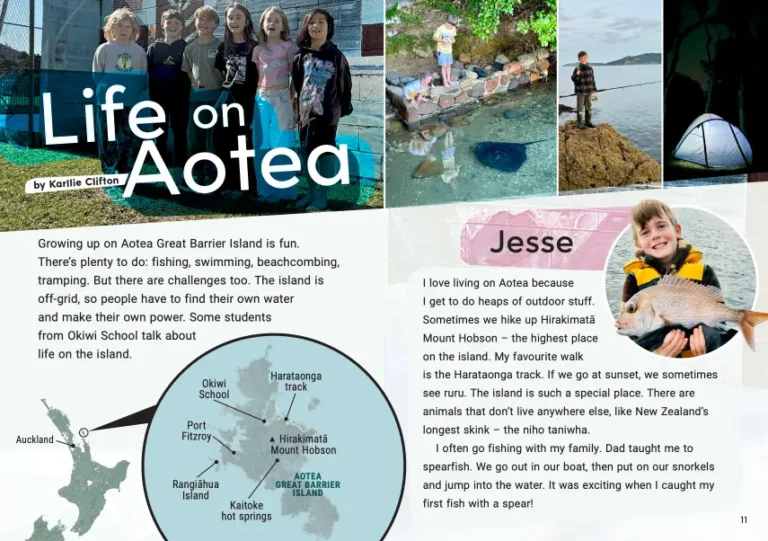
In this article, six young people describe life on Aotea Great Barrier Island.
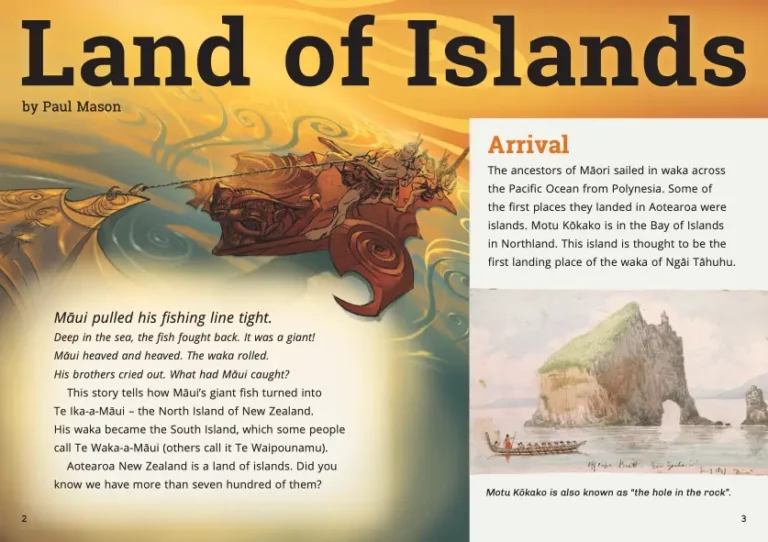
This article explores Aotearoa New Zealand as a land of islands. It looks at the ways islands in Aotearoa New Zealand have been used by people, for gathering food and resources and as quarantine stations, wildlife reserves, and places to live and visit.
©Top Teaching Tasks – ©NZ MOE – ©The Crown | Copyright Info
 Top Teaching Tasks