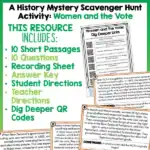
Women and the Vote: A History Mystery Scavenger Hunt Activity
NZ$8.50
Description
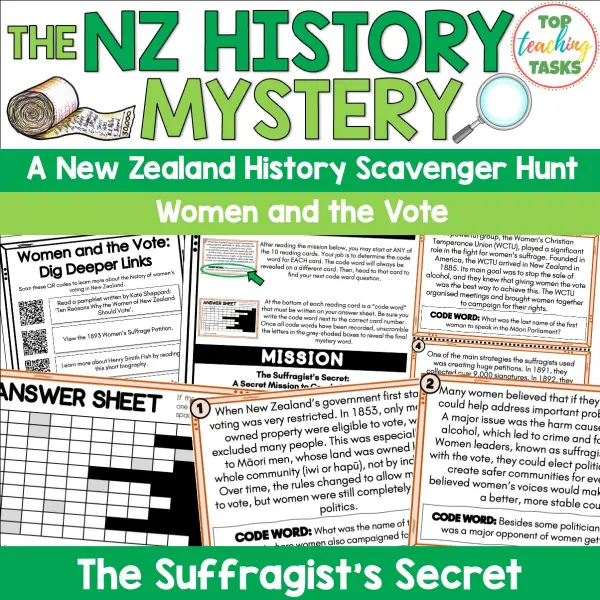
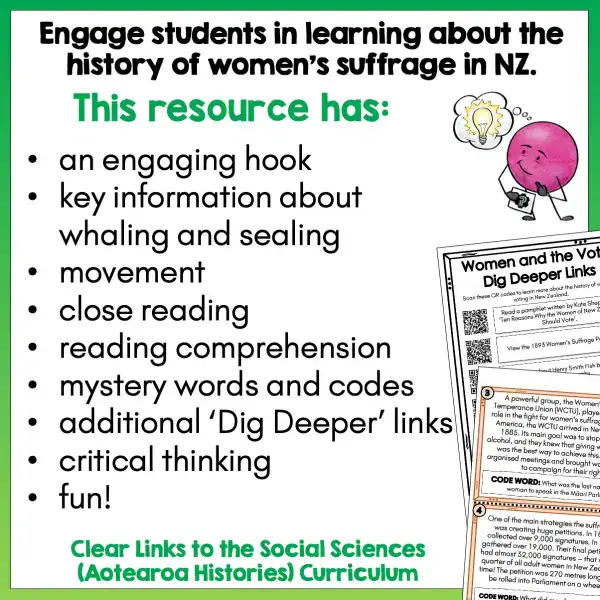
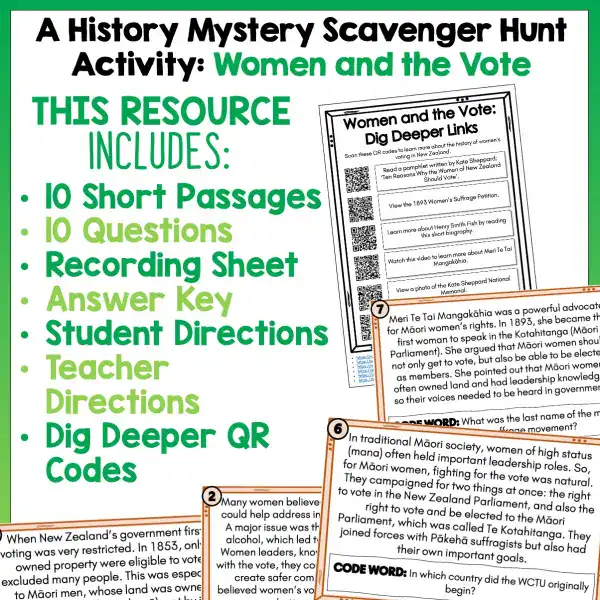
This Women and the Vote Scavenger Hunt is an engaging cross-curriculum reading comprehension activity. Allow your students to move around the room, visit reading passages and answer questions. Solve the mystery of the Suffragist’s Secret!
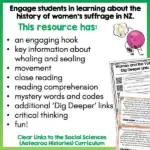
The task card scavenger hunt is designed so students must visit/read each of the ten fact cards! That means they must read the passage or skim for details multiple times! Students will use nonfiction social studies content to practice reading skills, improve fluency and comprehension, and use context clues.
This is an engaging way to hook students into a study of the history of whaling and sealing in New Zealand, or as part of a unit on migrants to New Zealand.
This scavenger hunt has TWO components:
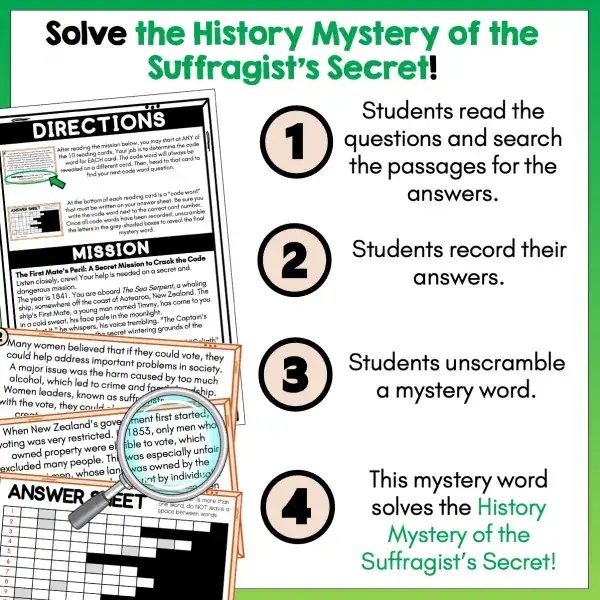
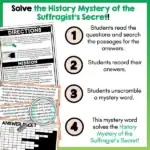
- Part 1: Students will read ten short passages revealing the question of their next “clue” or code word. After finding each code word, students must write them on their answer sheet.
- Part 2: Using the code word on each clue card, students unscramble the letters in the grey-shaded boxes to reveal the final word.
Individuals, pairs, or groups of students could do this activity.
In this Women and the Vote Scavenger Hunt pack, you will receive:
1. Ten Fact Cards about women winning the right to vote in New Zealand.
2. Directions and Mission sheet
3. Student answer sheets
4. Teacher answer key
5. Dig Deeper QR Code Links: Women and the Vote in New Zealand
Links to the Social Sciences Curriculum:
Know: Tino rangatiratanga me te kāwanatanga | Government and organisation – Year 4-6
Governing and Equity
Governments have selectively supported or excluded people through processes associated with voting rights, access to education, health, and welfare provision, reflecting prevailing public attitudes of the time. Often equitable treatment has been sought by people, including Māori, Chinese, women, children, and disabled people.
Key Questions:
- How, over time, have various New Zealand governments restricted voting rights?
- How have people advocated for their rights?
Explore examples of: women and the vote – the formation of the Women’s Christian Temperance Union (WCTU) after the visit of Mary Clement Leavitt from the US in 1885; the establishment of the Women’s Franchise Leagues; the leadership of Kate Sheppard and of Meri Te Tai Mangakāhia (in speaking in the Kotahitanga parliament, calling for the right for women to vote and be elected to that parliament)


THIS RESOURCE, AND OUR FULL RESOURCE RANGE IS ALSO AVAILABLE IN OUR TOP TEACHING TASKS MEMBERSHIP.
FIND OUT MORE HERE.
You may also like…




Related products
-
Sale!


Digital Writing Prompts Bundle for Google Drive®
Original price was: NZ$20.00.NZ$16.00Current price is: NZ$16.00. -


-
Sale!

Pacific Islands Reading and Writing Activities BUNDLE
Original price was: NZ$21.00.NZ$17.50Current price is: NZ$17.50. -