A Sweet Business Whole Class Teaching Slides – School Journal Level 3 Years 5–6
NZ$8.50
Description
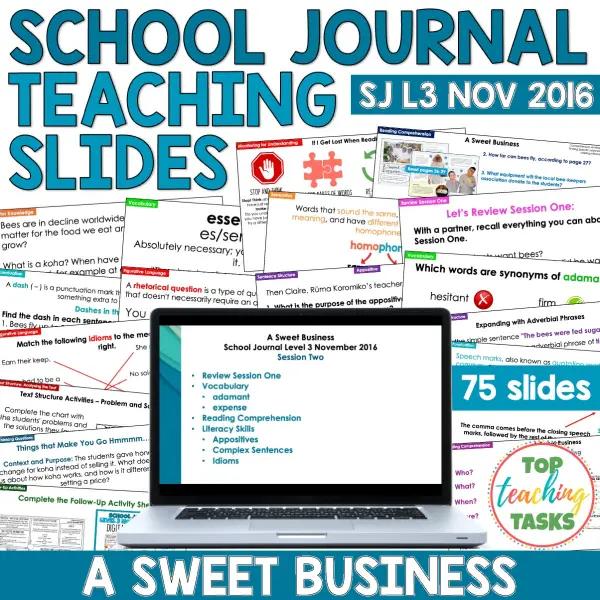
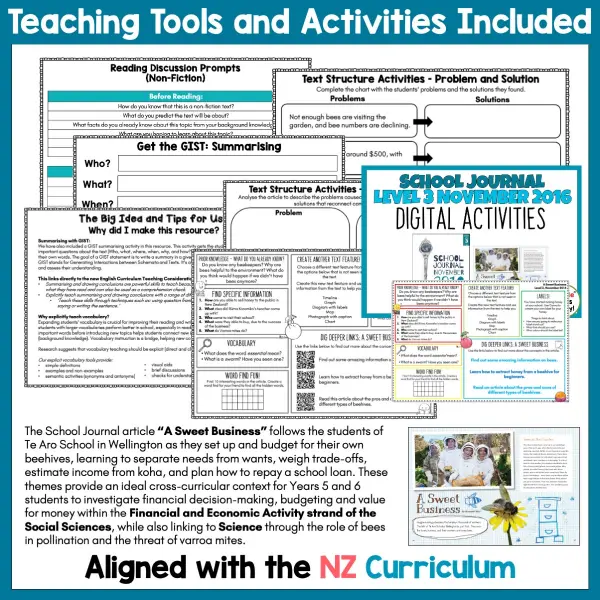
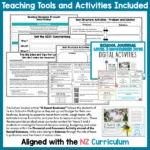
What would you do if your class had to find $500 to start a business, and your workers were bees? This ready-to-teach unit helps Year 5 and 6 students explore how a small business really works. It’s built around “A Sweet Business” by Bronwen Wall (School Journal, Level 3, November 2016).
The article follows the students of Te Aro School in Wellington as they decide to keep bees beside their school garden. A beekeeper explains the start-up costs and the ongoing costs. An accountant shows them how to build a budget and sort their needs from their wants. Along the way, students work through a first-year budget, a school loan to repay, and a harvest estimate that turns 250-gram jars into an expected $800. It’s a good way to show students how they make money decisions in real life.
Curriculum links:
This whole-class activity pack uses Science of Reading and Structured Literacy principles. It connects to Social Sciences (the Financial and Economic Activity strand: trade-offs, value for money, financial advice, borrowing, budgeting, and essential and non-essential spending) and to Science (the role of bees in plant reproduction and the threat of varroa mites).
Inside the pack:
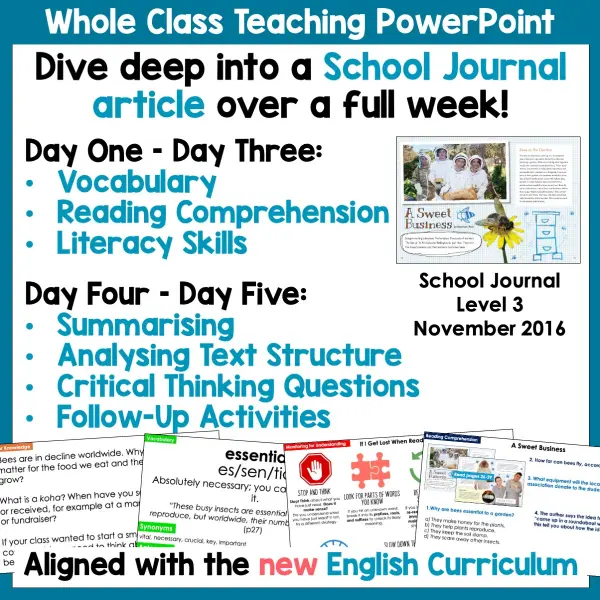
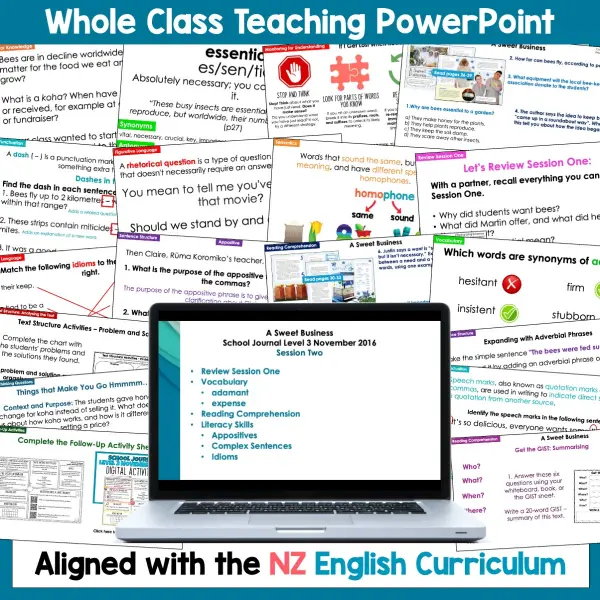
- 75-slide PowerPoint for whole-class teaching. Open it in Presenter View and click through each session.
- Three reading sessions covering pages 26–29, 30–33 and 34–35. Every session has vocabulary, comprehension questions and literacy skills.
- Six vocabulary words: essential, donate, adamant, expense, viable and vary. Each has a syllable breakdown, definition, synonyms, antonyms and a line from the article.
- Days 4 and 5: a GIST summary, a problem and solution organiser, critical thinking discussion questions and a follow-up activity.
Literacy skills taught:
Homophones, appositives, complex sentences (independent and dependent clauses, adverbial phrases, direct speech punctuation, and figurative language. These match the Year 5 English curriculum teaching sequence.


THIS RESOURCE, AND OUR FULL RESOURCE RANGE IS ALSO AVAILABLE IN OUR TOP TEACHING TASKS MEMBERSHIP.
FIND OUT MORE HERE.
You may also like…




Related products
-
Sale!


New Zealand Politics Reading Activities Bundle
Original price was: NZ$19.50.NZ$13.99Current price is: NZ$13.99. -

-
Sale!

Pacific Islands Reading and Writing Activities BUNDLE
Original price was: NZ$21.00.NZ$17.50Current price is: NZ$17.50. -
Sale!
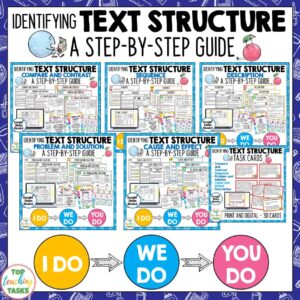
Identifying Nonfiction Text Structure Bundle
Original price was: NZ$39.00.NZ$28.00Current price is: NZ$28.00.
