
Handwriting Practice Slides – New Zealand Basic Script and Intro to Cursive (Years 4-6)
NZ$7.50
Description
This digital resource provides a structured, step-by-step instructional sequence for teaching New Zealand Basic Script and the transition to Cursive Style. Designed for 10–15 minute daily sessions, these slides focus on the explicit modelling of efficient movements to build writing stamina and automaticity.
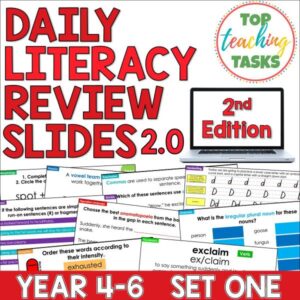
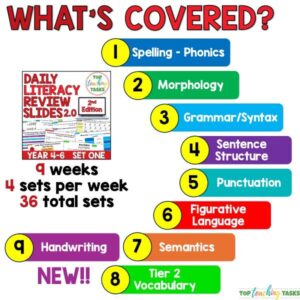
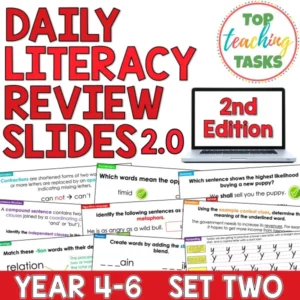
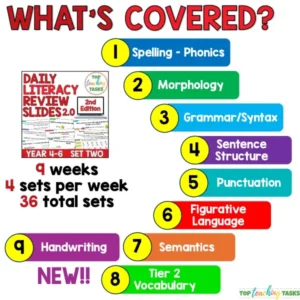
Note: These slides are also featured across our Daily Literacy Review Slides (Phase Two Set 1-4)
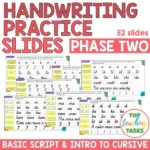
Slide Deck Features: 52 phase one slides:
1. Motor-Pattern Formation Groups
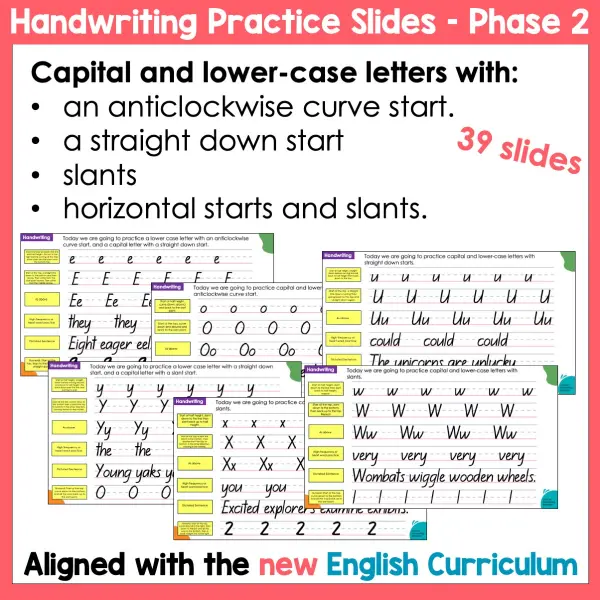
The slides categorise letters into families based on shared motor patterns to simplify the learning of efficient movements:
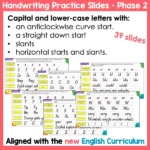
Capital and lower-case letters with:
- an anticlockwise curve start.
- a straight down start
- slants
- horizontal starts and slants.
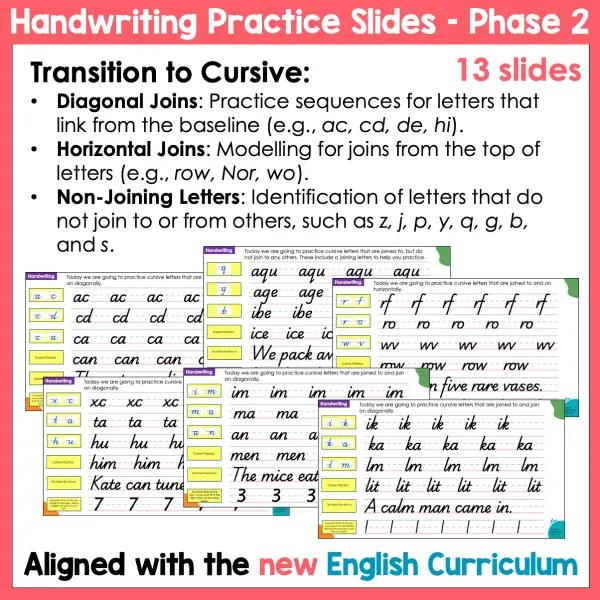
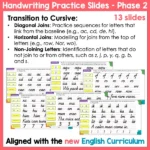
2. Transition to Cursive (Set 4)
A dedicated module focuses on increasing writing speed and fluency through the introduction of joining strokes:
- Diagonal Joins: Practice sequences for letters that link from the baseline (e.g., ac, cd, de, hi).
- Horizontal Joins: Modeling for joins from the top of letters (e.g., row, Nor, wo).
- Non-Joining Letters: Identification of letters that do not join to or from others, such as z, j, p, y, q, g, b, and s.
3. Advanced Fluency & Dictation Practice
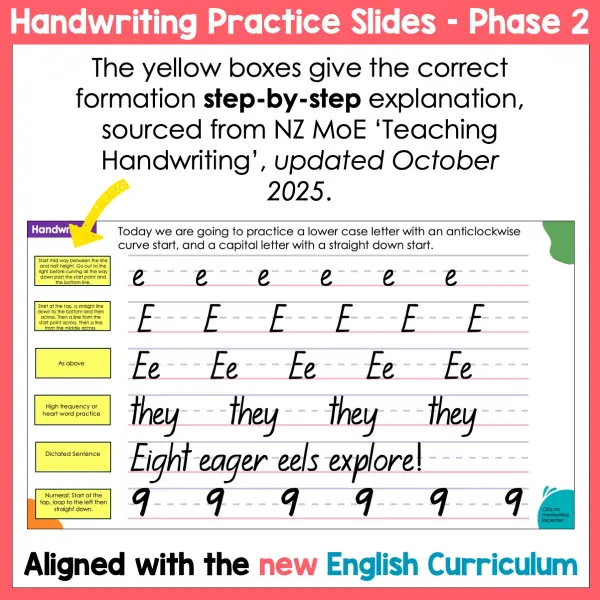
- High-Frequency Word Drills: Application of script in high-frequency words such as come, some, went, they, about, and should.
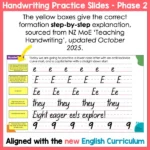
- Dictated Sentences: Every lesson includes a “Dictated Sentence” slide to practice letter formation within a functional context (e.g., “Curious cats chase cheetahs” or “Wild wolves wander the woods”).
- Numeral Precision: Step-by-step formation guides for numbers 0–9.
NZ Curriculum Links: Years 4–6 (Phase Two)
This resource is designed to support the Transcription Skills requirements for senior primary students as they move beyond basic formation toward sophisticated disciplinary writing.
- Year 4: Stamina and Fluency: These slides support the Year 4 objective of building writing stamina while maintaining legibility. The repetitive movement drills allow students to practice writing longer sequences without losing quality.
- Years 5–6: Automaticity and Individual Style: The cursive sequences align with the Year 5 and 6 goals of handwriting with ease and automaticity across multiple purposes. Students are encouraged to explore joining letters to develop an efficient, individual style that remains legible.
- Cognitive Load Management: By using these slides to automate the mechanical act of writing, students free up working memory to focus on the increasingly complex creative and critical demands of the Year 4–6 English curriculum.
Our Handwriting Slides:
- Free Working Memory: By automating letter formation, students can focus their mental energy on creative ideas and composition.
- Boost Literacy Outcomes: Handwriting activates specific brain pathways that strengthen a student’s ability to decode (read) and spell.
- Provide Continuous Progress: Provides a consistent model that builds endurance and stamina for longer writing tasks.


THIS RESOURCE, AND OUR FULL RESOURCE RANGE IS ALSO AVAILABLE IN OUR TOP TEACHING TASKS MEMBERSHIP.
FIND OUT MORE HERE.
You may also like…


Related products
-
Sale!


Digital Writing Prompts Bundle for Google Drive®
Original price was: NZ$20.00.NZ$16.00Current price is: NZ$16.00. -

-

-


