Whose Bridge? – School Journal Year 4 November 2025
In this humorous play, three goats stand up for their rights to cross a bridge when they meet a tired, grumpy troll.
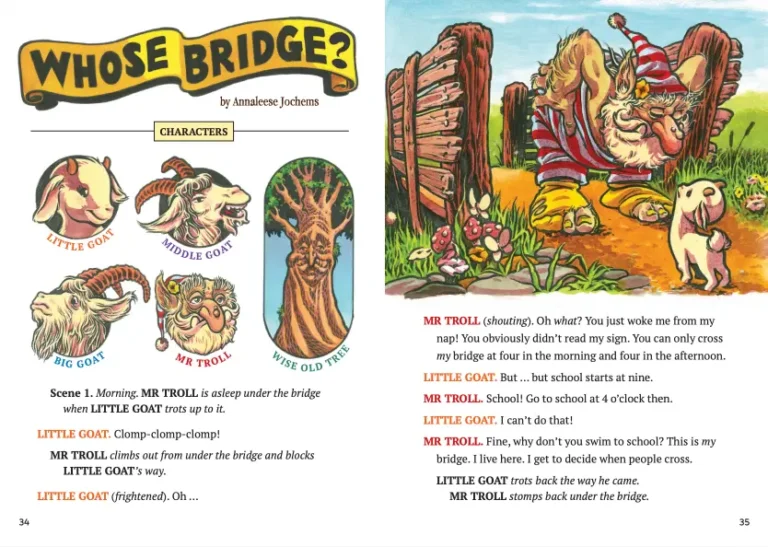
In this humorous play, three goats stand up for their rights to cross a bridge when they meet a tired, grumpy troll.

Inside this School Journal is one comic (Tōku Anō Takiwā | In my own time and place), one essay (Carrier Pigeon), two articles (Through a Māori Lens – The Photographs of Te Rawhitiroa Bosch; The Kuranui Waka and the Story of Te Pakakohi), one story (Running Wild), one play (The Money or the Goat?) and…

A play based on a famous mathematical brain-teaser – the Monty Hall problem.

Two stories in one, based on the life of Frank Worsley and his adventures as a navigator for Ernest Shackleton. Keywords: Akaroa, Antarctica, Elephant Island, Endurance, Ernest Shackleton, expedition, Frank Worsley, history, navigation, ocean, polar explorers, relationships, sailing, siblings, the Southern Ocean, South Georgia, sea

A student writer explores her growing Samoan identity over time (poetry).

An ancient waka discovered on the banks of the Kuranui Stream, near Pātea, tells the story of the people who once owned it and their experience after the New Zealand wars. Keywords: ancestors, colonisation, community, confiscation, conservator, culture, Kuranui, New Zealand Wars, Ngāti Ruanui, Ngāwaka Taurua, Pātea, peace, Taranaki, Te Pakakohi, Tītokowaru, tūpuna, waka, whakapapa,…

Te Rawhitiroa Bosch takes photos of te ao Māori. He wants his work to uplift his people, portraying them in a truthful, positive light.

An essay about life as an identical twin. Keywords: communication, disabilities, diversity, family, friends, identical twins, identity, independence, relationships, school, siblings, twins, whānau, wheelchairs

A graphic novel – in the form of a memoir – about life with Autism. Keywords: ancestors, autism, autistic, behaviours, creativity, drawing, family, identity, illustration, masking, neurodivergent, takiwātanga, tūpuna, whānau

Inside this School Journal are two articles (The Art of Taiaha; Thinking Big – Pōtiki Poi), three stories (Tivaevae; Skylarking; Beans on Toast), one essay (My First Ramadan) and one example of student writing (Maim Kithom Ham | Where I am from). Five texts in this issue share the theme of identity.

In this personal essay, Khadro Mohamed shares her experience of her first Ramadan.

Georgia Latu runs the biggest poi company in the world. What are the challenges, and what motivates her?

Almost every year since 1973, tāne Māori have travelled to a wānanga near Rotorua to train in the art of taiaha. Liam Ratana shares his life-changing experience.

Student writing by Mehakpreet Kaur that celebrates her identity as a Punjabi New Zealander and a big reader.

Brothers Toby and Joseph are back, and this time, Toby has a broken leg and is attempting to assert his power in a new way …

Historic fiction based on the true story of a Taranaki highwayman, the teenaged Robert Wallath, who had trouble distinguishing reality from fiction.
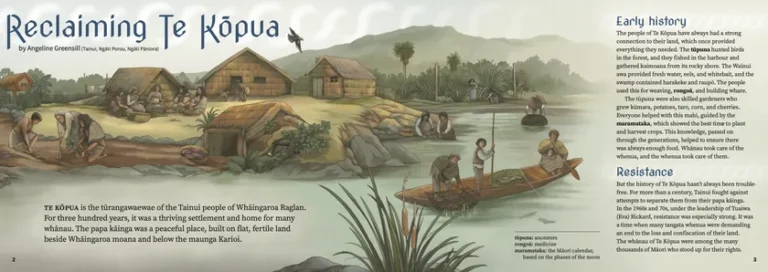
An article about the Raglan golf course protest in 1978. This article tells the story of Tainui and Te Kōpua, their turangawaewae in Whāingaroa Raglan. For more than a century, Tainui fought against attempts to separate them from their papa kāinga. In the 1960s and 70s, under the leadership of Tuaiwa (Eva) Rickard, this resistance…
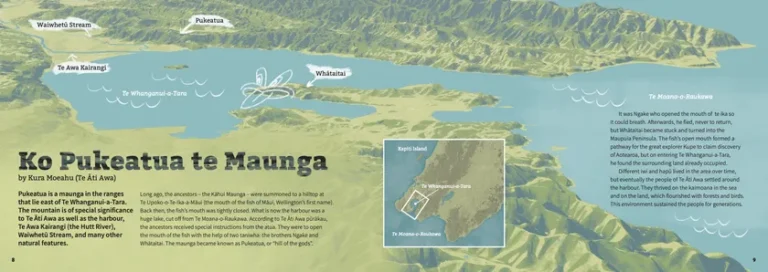
A pūrākau from Te Āti Awa. A short pūrākau about Te Upoko-o-Te-Ika-a Maui, the name given to the Wellington area by Te Āti Awa.
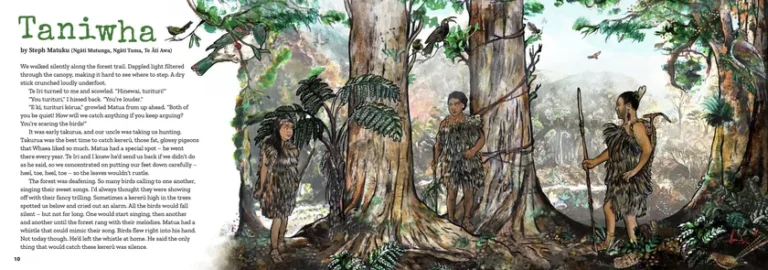
A historic story set in the 1830s in Te Whanganui-a-Tara about two siblings who go bird hunting with their uncle. Along the way, they met Joe, a Pākehā whaler. Over lunch, they tell him the Te Āti Awa pūrākau of Wellington harbour, created by two taniwha.
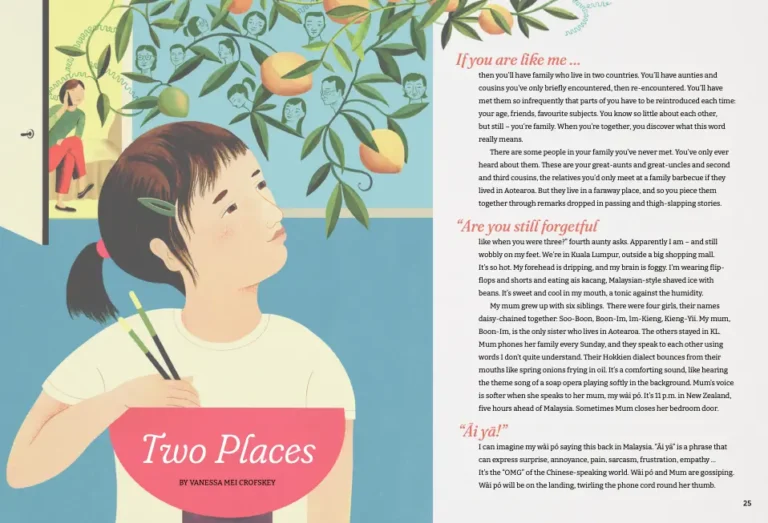
If you’re like me, you’ll have family that lives in two countries. You will have met them so infrequently that parts of you have to be reintroduced each time: your age, friends, and favourite subjects. You know so little about each other, but still, you’re family. When you’re together, you discover what this word really…
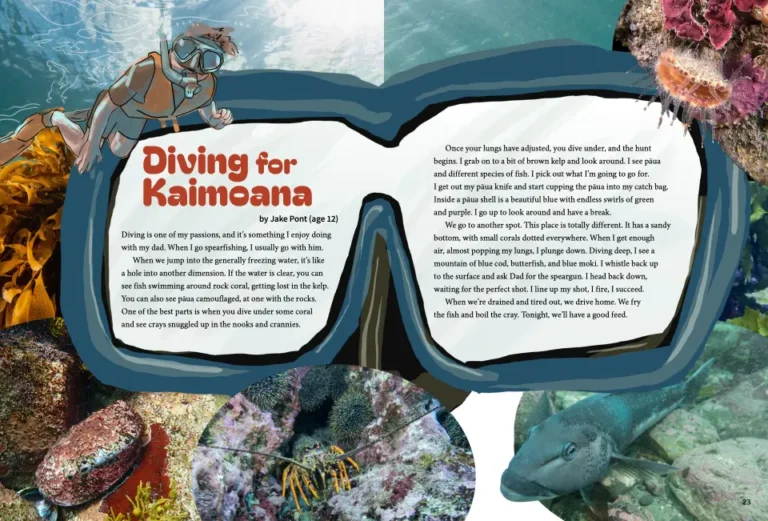
The writer describes his love of diving and his enjoyment of doing it with his father.
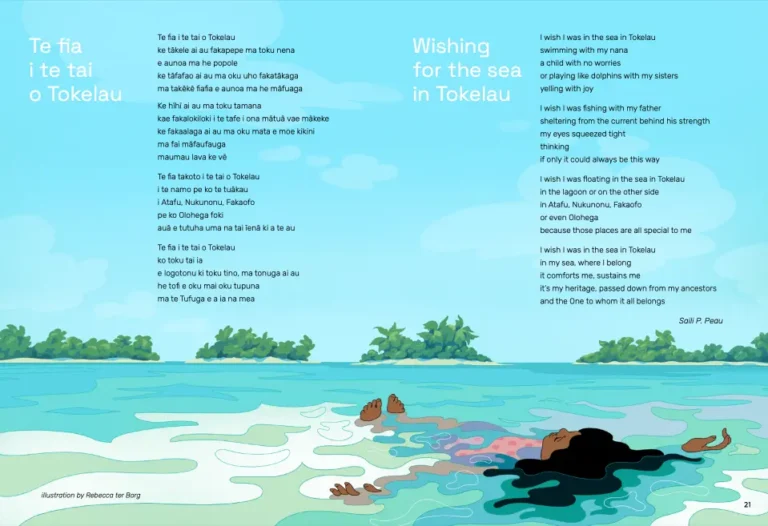
A poem in Tokelauan and English about the poet’s yearning for the sea in Tokelau.
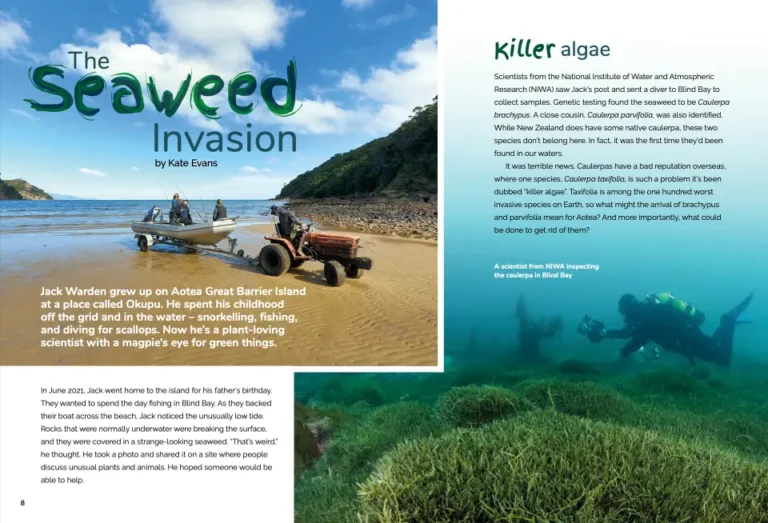
Caulerpa is a seaweed that smothers everything in its path—sea sponges, mussels, and scallops. It is a big problem on Aotea Great Barrier Island. Mana whenua and the government are working to stop the spread of one of the world’s most invasive seaweeds.
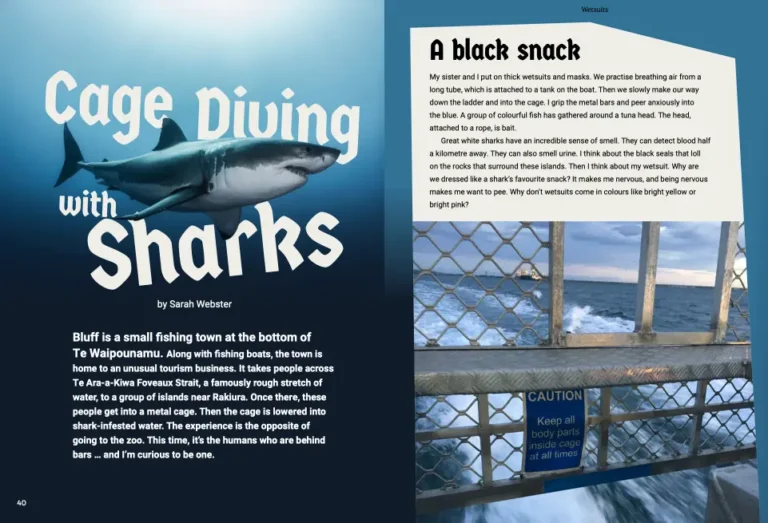
The author recounts an encounter with a great white during a cage-diving trip in Foveaux Strait. As well as challenging common narratives about sharks, the writer emphasises their importance as a keystone species essential for keeping marine ecosystems healthy. Keywords: apex predators, biodiversity, Bluff, cage diving, eco-tourism, extinction, food chain, Foveaux Strait, keystone species, ocean,…
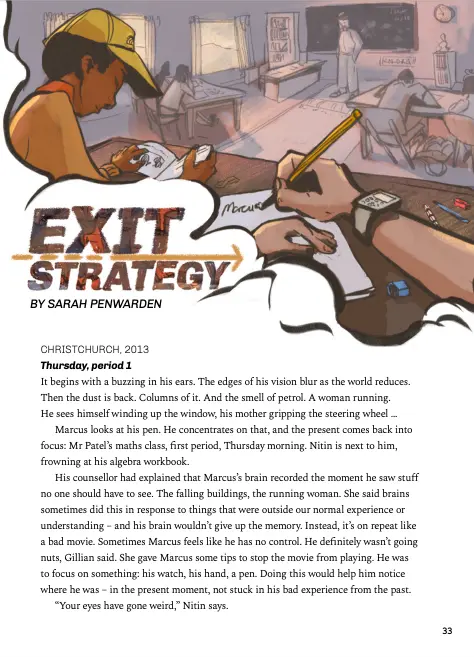
Marcus suffers from flashbacks after the Christchurch earthquakes. To deal with his anxiety, he takes comfort in the logic of maths and plans to become an engineer and build safer buildings. Marcus’s friends and teachers all offer support, and he also attends regular therapy sessions.
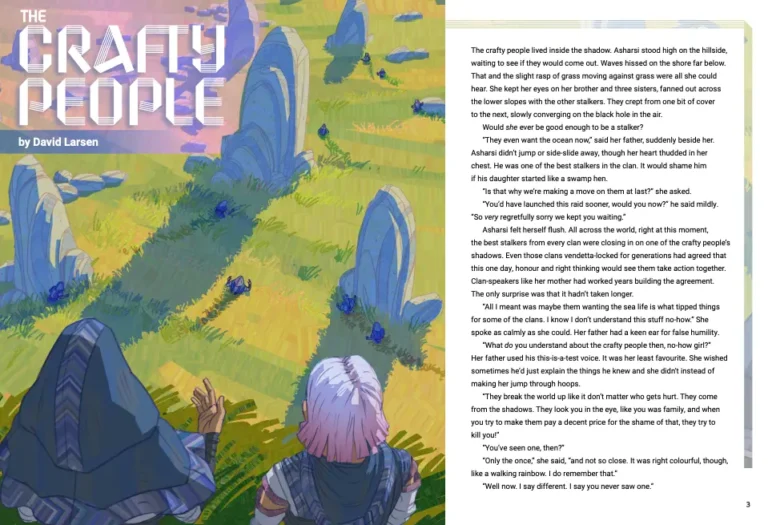
All her life, Asharsi’s clan have silently worried. The great project to heal the world is in danger because the crafty people are now everywhere. They have torn the world apart and used it to make things. And now they want the sea,
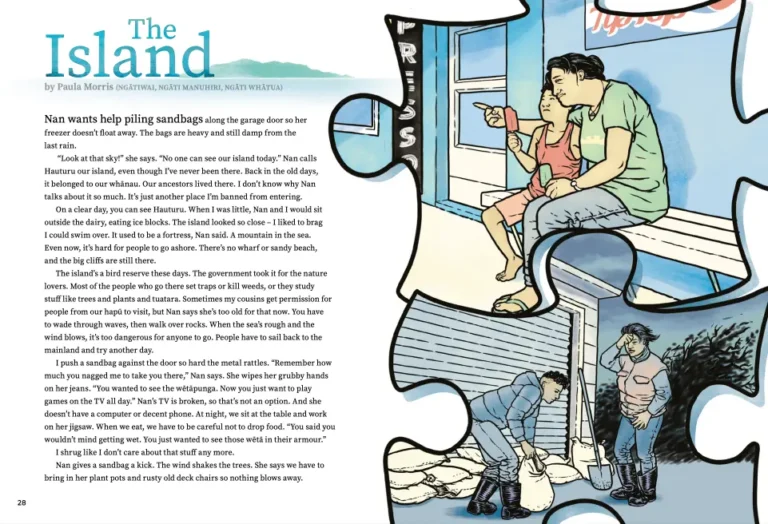
Nan has always told stories about Hauturu before it was taken away from their ancestors. The narrator used to nag Nan to take him to the island. Now he doesn’t “care about that stuff any more”. But during a storm, “I want to see that stone and the wētāpunga and the birds. I want to…
Inside this school journal are three stories (Pākehā Tapu Day; Paper Tiger; The Stunt Man and the Geologist), one poem (Tokotoko), one student writing (Keith), one essay (Beyond Imagination), and two articles (Valley of the Whales; Silk Robes and Big Hats).
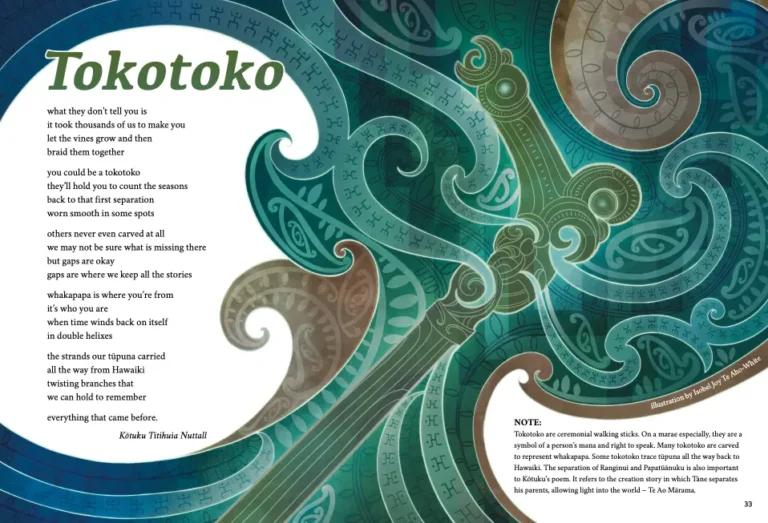
This poem uses tokotoko to express ideas of whakapapa, tūpuna, family history, and belonging.
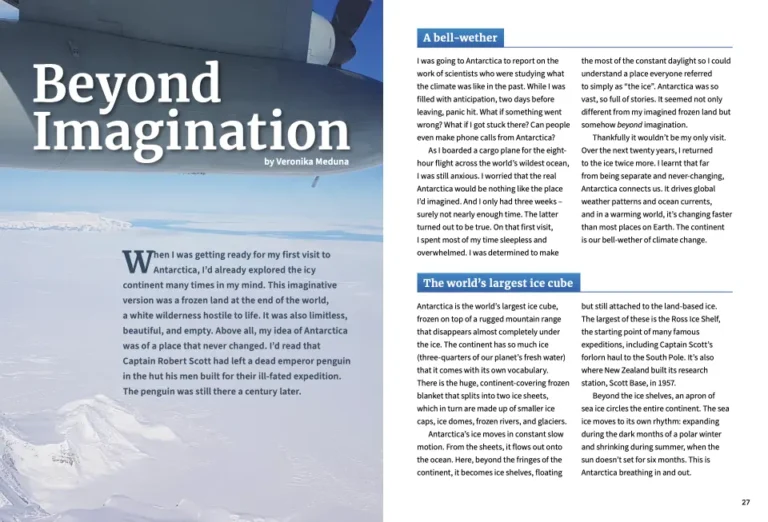
The author recounts her visits to Antarctica. I learnt that far from being separate and never-changing, Antarctica connects us. It drives global weather patterns and ocean currents, and in a warming world, it’s changing faster than most places on Earth. Keywords: Antarctica, Captain Robert Scott, climate change, endangered species, environment, geology, glaciers, greenhouse gases, history,…
©Top Teaching Tasks – ©NZ MOE – ©The Crown | Copyright Info
 Top Teaching Tasks