School Journal Level 2 November 2016
Inside this School Journal are two articles (Getting Closer; The Polish Refugee Children), there are two stories (Lost in the Bush; Mossie) and one poem (Close-up).


Inside this School Journal are two articles (Getting Closer; The Polish Refugee Children), there are two stories (Lost in the Bush; Mossie) and one poem (Close-up).

This is a poem about a detailed, intimate observation of a male ngirungiru, or tomtit, perched on a branch in a makomako tree. The speaker meticulously describes the bird’s physical features, from its sulphur-yellow breast and dark chocolate eye to a tiny speck of dust caught in its whiskers.

This true story of Adelphi Zawada’s grandparents will be engaging for students in year 4, although it is complex and presents some interesting challenges. Adelphi tells how her grandparents, as children, along with over a million other Polish people, were sent to work camps in Russia following the invasion of their country by the USSR…

This article, written from the perspective of a wildlife photographer, will appeal to and engage young readers. The subject matter for his camera – tomtits in the Ōrokonui Ecosanctuary – is central to the information about photography.

In this story, a young boy named Riki feels nervous about his first day at a new school after moving from Brisbane to New Zealand. However, he quickly earns the respect of his new classmates by demonstrating his fluency in te reo Māori and his knowledge of traditional games during a lunchtime game of rugby.

The style of this graphic text will appeal to many students, and the humour will engage their interest. The story concerns an urban school group on a trip to the bush. The children are told the rules of the bush and set off to complete their worksheets.

In this four-stanza, illustrated poem, Sarah Penwarden uses rich imagery to describe the four seasons. The first-person narrator is a child, and the poem also reflects his or her relationship with grandparents.

This play follows 6 students grouped together to make a wearable arts costume. The students are forced to improvise after their original idea doesn’t go as planned.
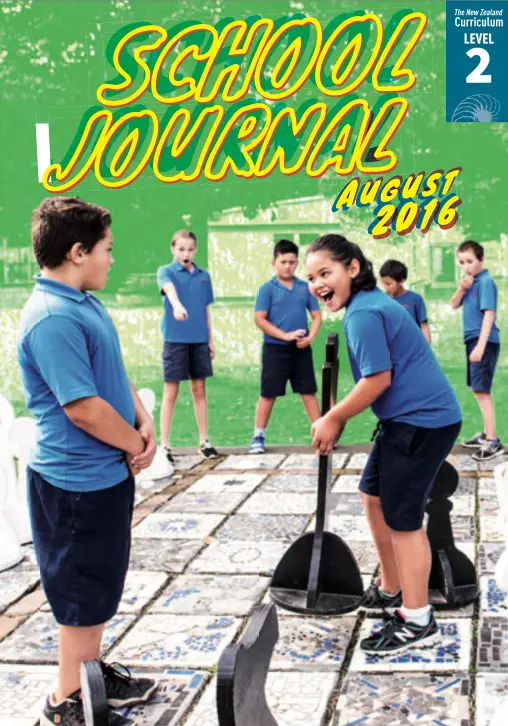
Inside this School Journal are two articles (Seals; The Chess Champions of Nūhaka), one story (Queen of the Board), one play (Good as Gold), and one poem (Becoming Toroa).
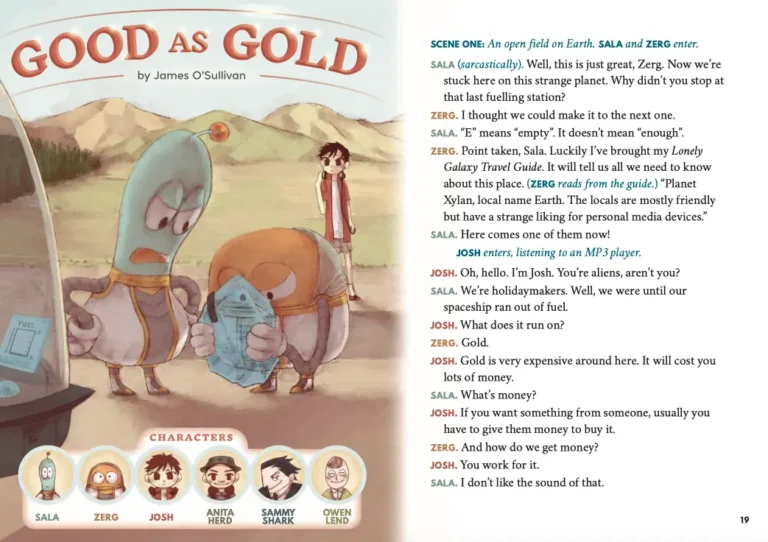
This play combines sci-fi (science fiction) with humour and provides students with an opportunity to read, enjoy, and perform. A number of abstract financial capability concepts are embedded in the story.
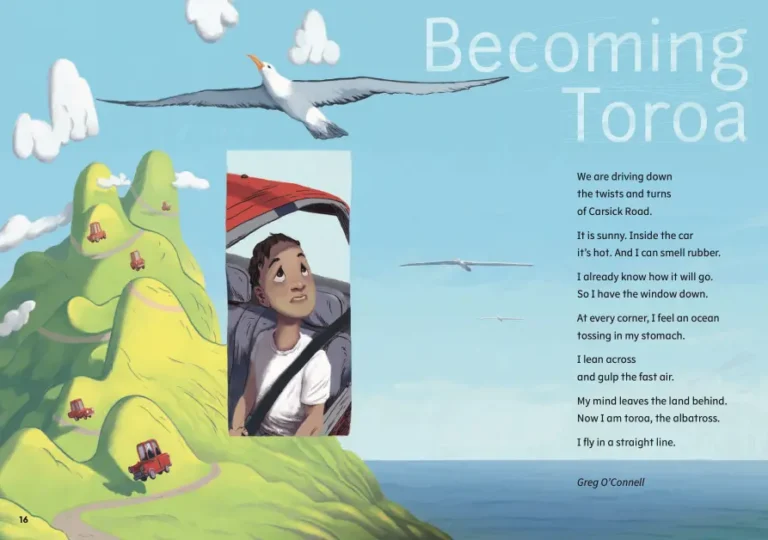
A poem about car travel. The writer deals with carsickness by opening the window and breathing in the air while traveling down a winding road. To escape the physical discomfort, they visualise themselves as a toroa flying in a straight line.
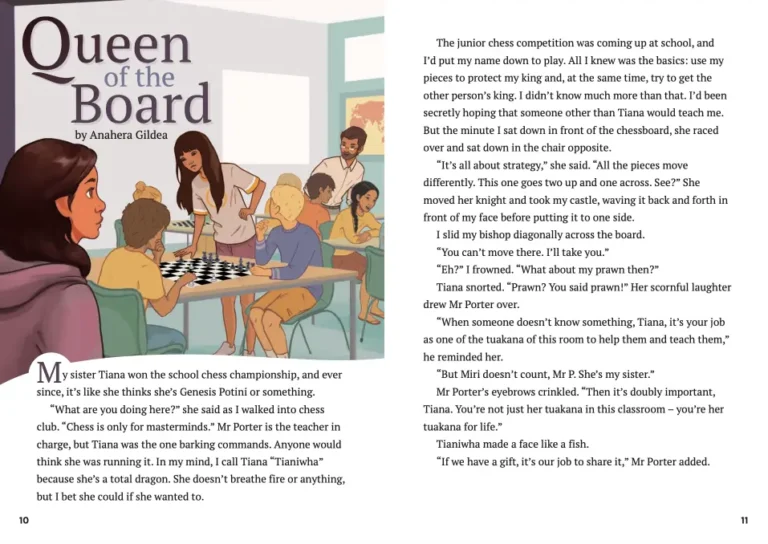
This is a story about two sisters, Miri and Tiana, who navigate their different approaches to learning and playing chess under the guidance of their teacher, Mr Porter. While the sisters initially clash over Tiana’s bossy attitude and Miri’s use of imagination, they eventually find common ground.
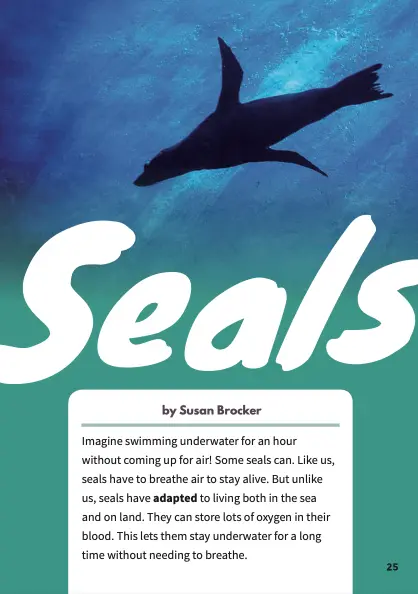
This article presents information about seals in an engaging way. Students can find out about the ways seals are adapted for living on land and sea, the various species found around New Zealand, and how they raise their pups.
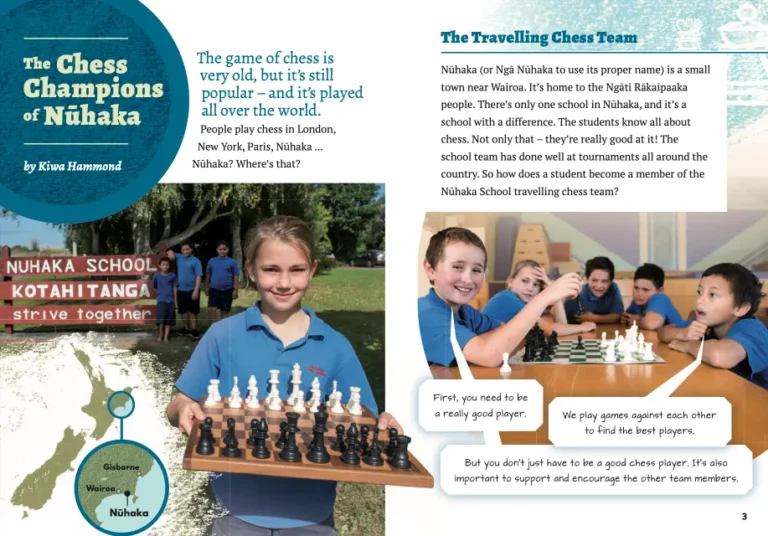
Nūhaka School took out the title of “Most Successful School” in the Hawke’s Bay junior chess championship last year. The interest in chess at the school was sparked by a workshop given by Genesis Potini (subject of the New Zealand film The Dark Horse) several years ago.
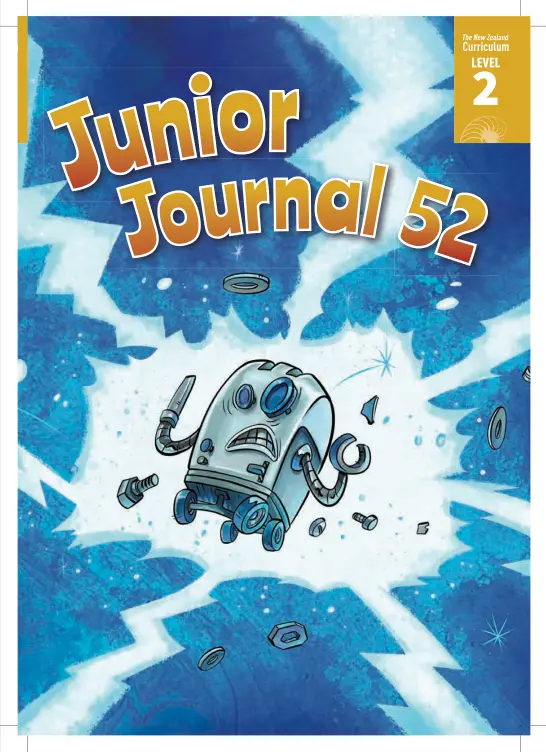
Inside this Junior Journal are two stories (The Green Team; Zapped!), one poem (Māra), and two articles (Dig In!; The Jungle in my Garden).
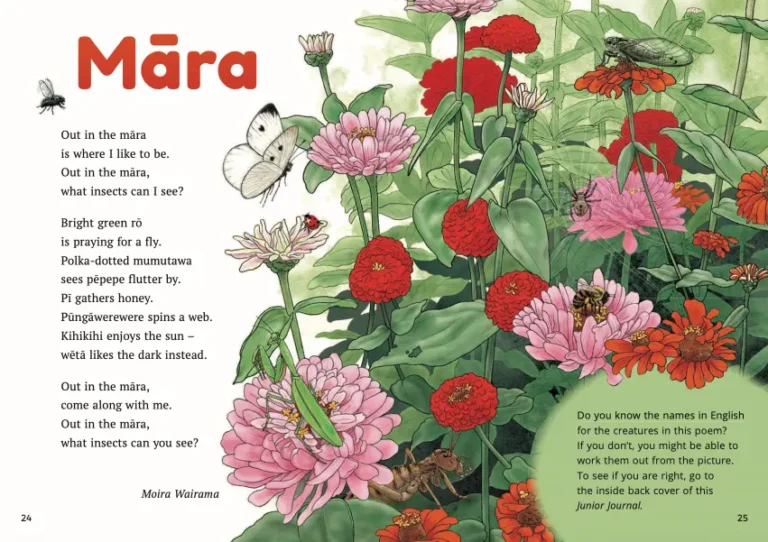
A poem about gardens and gardening. “Out in the māra is where I like to be. Out in the māra, what insects can I see?”
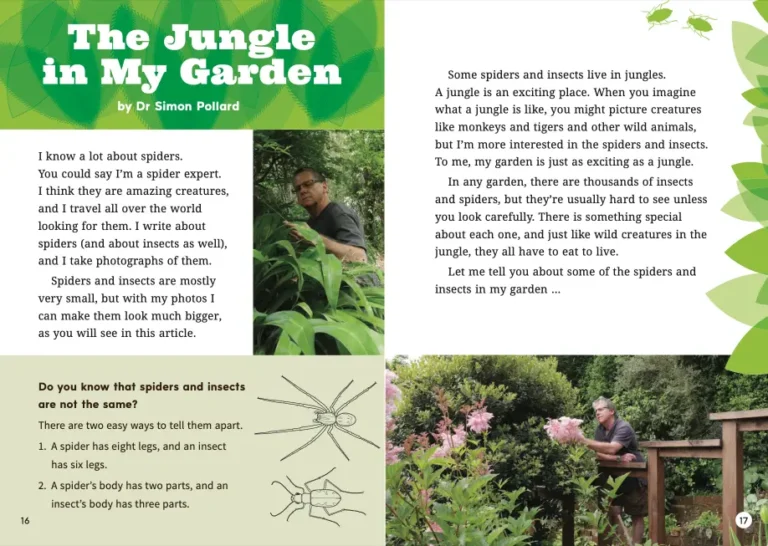
This report describes some common spiders and insects found in New Zealand gardens. The author, an expert on spiders, considers the spiders and insects in his garden to be as exciting as wild animals in a jungle.
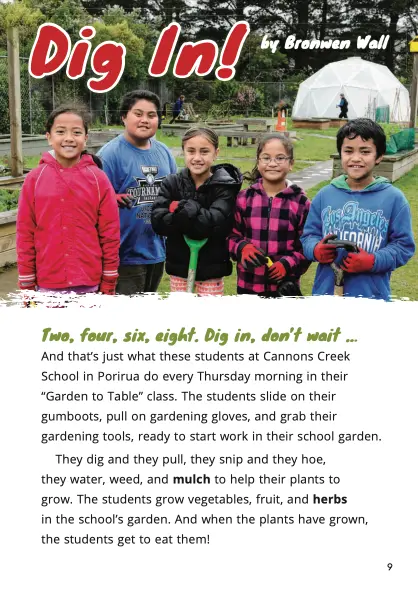
This report describes the Garden to Table programme and how it operates at Cannons Creek School. The programme involves teachers and community volunteers and helps students learn how to grow and cook their own fruit, vegetables, and herbs.
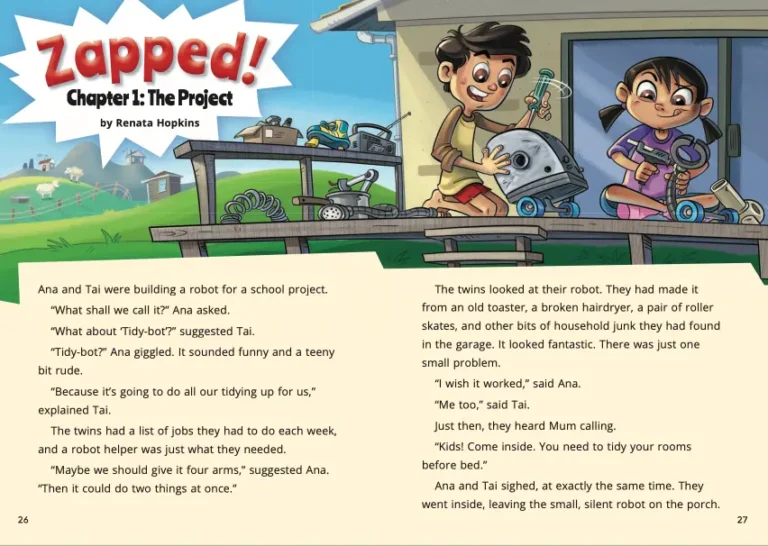
This is the first chapter of a humorous science-fiction story designed to “hook” year 3 students into reading chapter books by themselves. In this chapter, twins Ana and Tai build a robot for a school project. Overnight, the robot gets “zapped” by lightning and comes to life, creating all kinds of problems! The chapter ends…
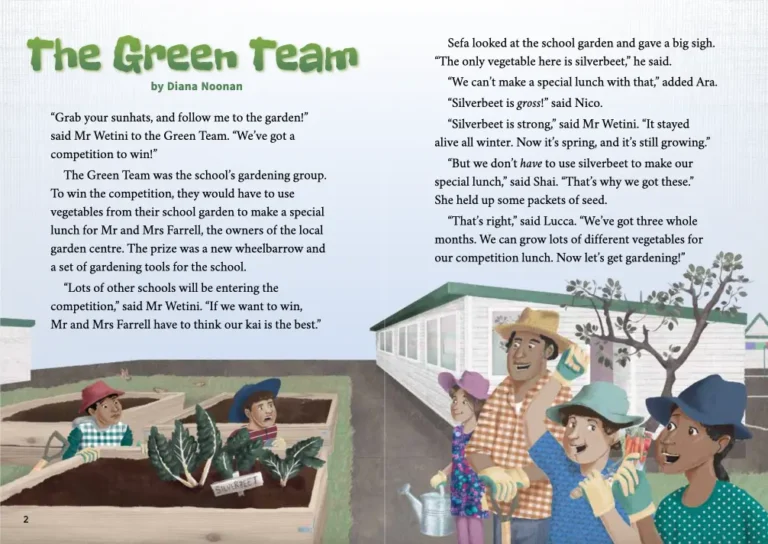
The Green Team enter a competition that involves growing vegetables and using them to cook a meal, but the weather turns out to be a big problem.

Inside this School Journal are two stories (Awarua The Taniwha of Porirua; My Name Is Davy Lowston), there is one poem (Te Marama) and two articles (Night Light; Tunç Tezel: Star Man)

This text is a fictionalised recount. Davy Lowston was among a group of sealers set down on the Open Bay Islands (off the west coast of the South Island) in 1810. The ship that was to pick them up sank in a storm, and the men were marooned for four years. Their story is the…

Rereroa the albatross teaches her friend Awarua, the taniwha, how to fly. In the process, Awarua creates some of the geographical features around the Porirua area, such as the flat top of Mana Island, which was caused when she crash-landed on top of the island, and the valley in Whitireia. Keywords: myths and legends

A poem about the moon – Tonight I can’t sleep. Te Marama floods my room with silvery light. Outside, the moana swells high upon the shore – ngā tai a Kupe.

An interview with astrophotographer Tunç Tezel. His photographs appear in the October 2015 School Journal (Level 2).

This article presents facts and phenomena about the moon, such as tides and phases of the moon. A companion piece to “Cool Facts about a Hot Place” (School Journal, Level 2, October 2015). Together they provide a great platform for exploring the Planet Earth and Beyond Science strand.
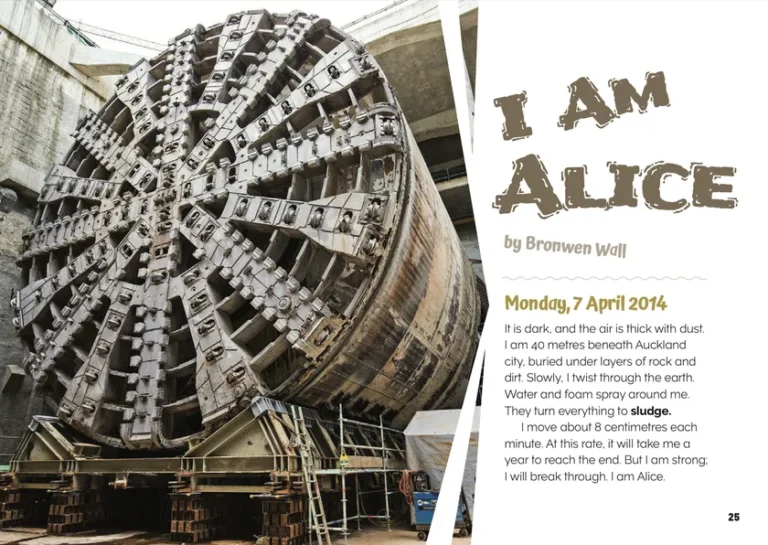
Alice is a tunnel-boring machine used to build two tunnels for Auckland’s Western Ring motorway. Hear about the experience from Alice herself as she provides a first person account of the impact of new technology on our land and infrastructures.
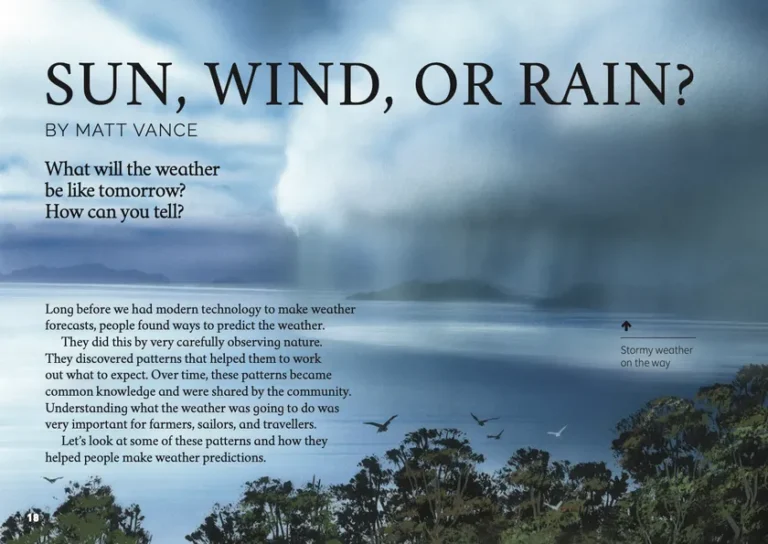
People in Aotearoa New Zealand have been predicting the weather for years. From violent storms to warm breezes, by observing patterns in nature people can tell what tomorrow will bring.
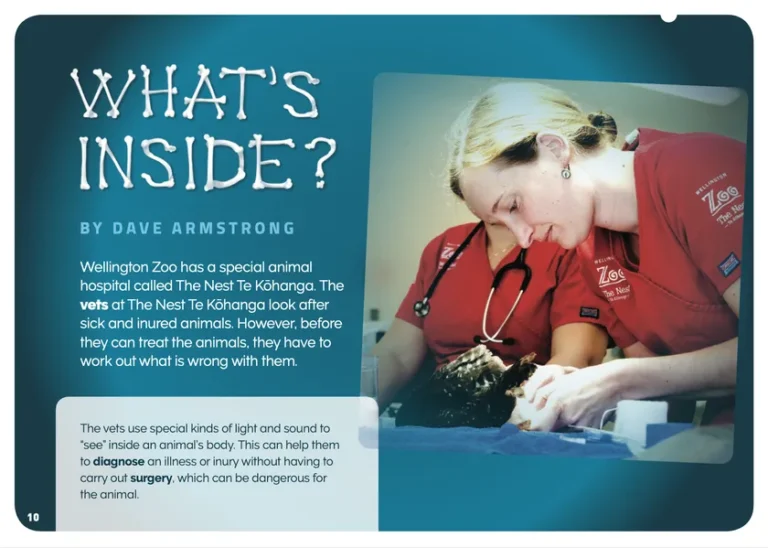
The vets at Wellington zoo encounter a lot of interesting patients. Luckily, they have a range of amazing technologies that harness light and sound to help them see inside sick and injured animals.
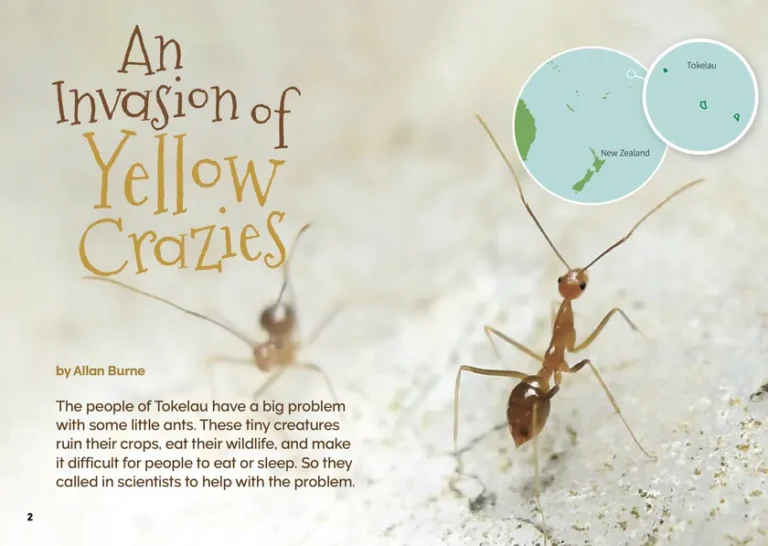
The islands of Tokelau have been invaded by yellow crazy ants. Scientists are investigating where they are and what can be done about them. By collecting and recording data, they can identify the extent of the problem and figure out the best course of action.
©Top Teaching Tasks – ©NZ MOE – ©The Crown | Copyright Info
 Top Teaching Tasks