Instructions for Travelling without Touching the Ground – School Journal Level 3 August 2019
A whimsical poem from Lynley Edmeades on the topic of flying.


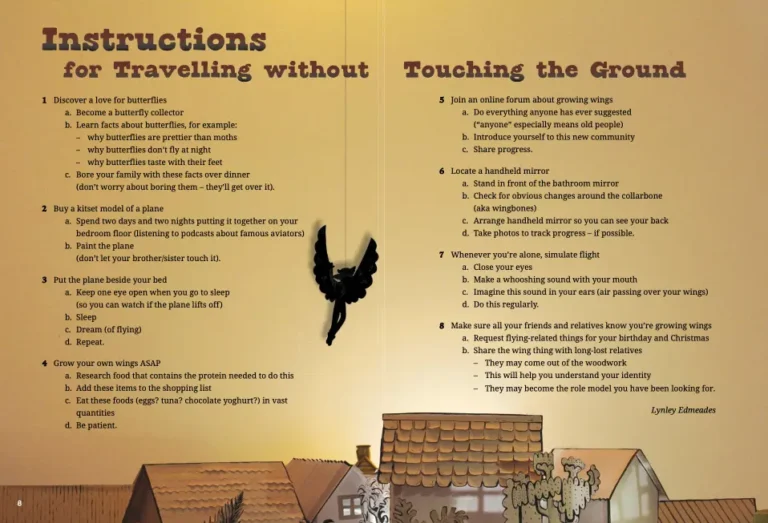
A whimsical poem from Lynley Edmeades on the topic of flying.
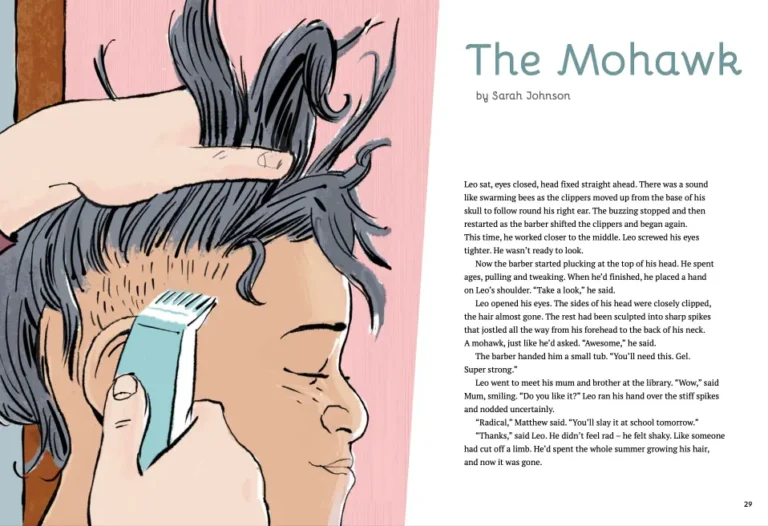
In the story “The Mohawk” by Tim Tipene, a young boy named Jason decides to get a bold mohawk hairstyle to stand out, only to find that his new look brings unexpected challenges and lessons about identity and self-confidence at school.
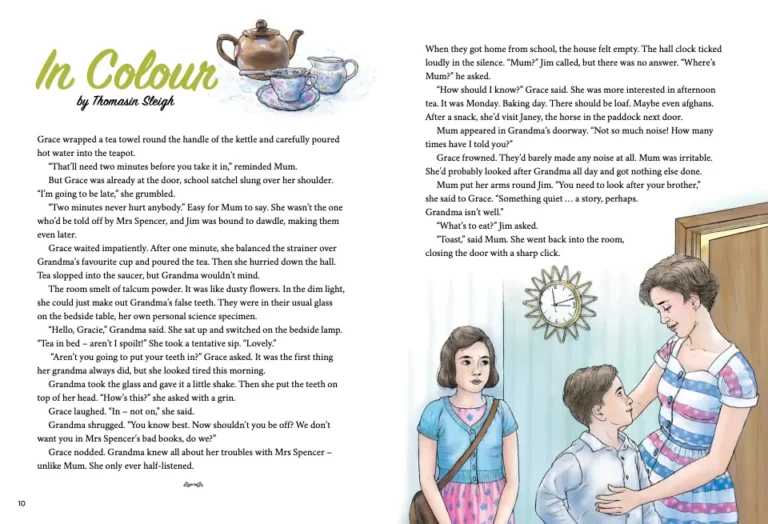
In 1958, a young girl named Grace navigates her relationship with her aging grandmother, whose gift of a colourised vintage photograph highlights their striking resemblance and the inevitable passage of time. .
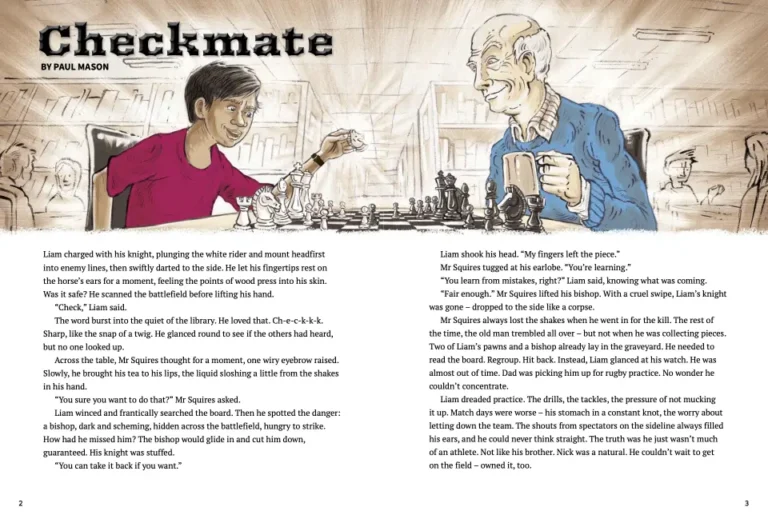
In the story “Checkmate” by Victor Rodger, a young boy named Mani, who is usually underestimated by his more academic sister and competitive cousins, surprises his family by revealing his strategic talent during a game of chess. Despite being seen as someone who only cares about rugby and “dumb stuff,” Mani uses his quiet observation…
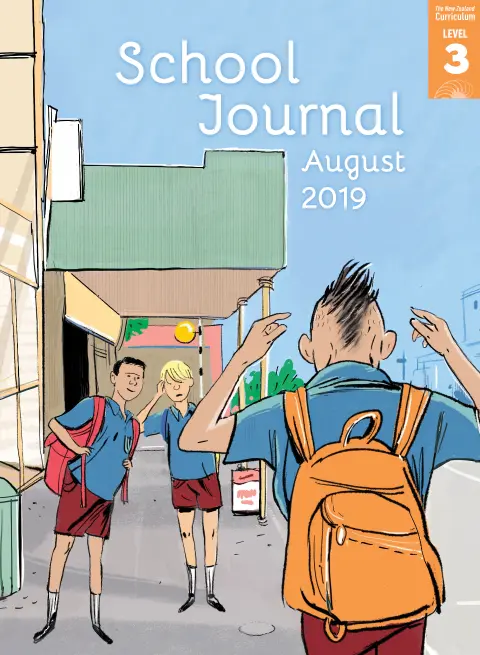
Inside this School Journal are four stories (Checkmate; In Colour; The Mohawk; Trespass) and one poem (Instructions for Travelling without Touching the Ground) and one play (Smash Hit) and one article (Tupaia: Master Navigator).
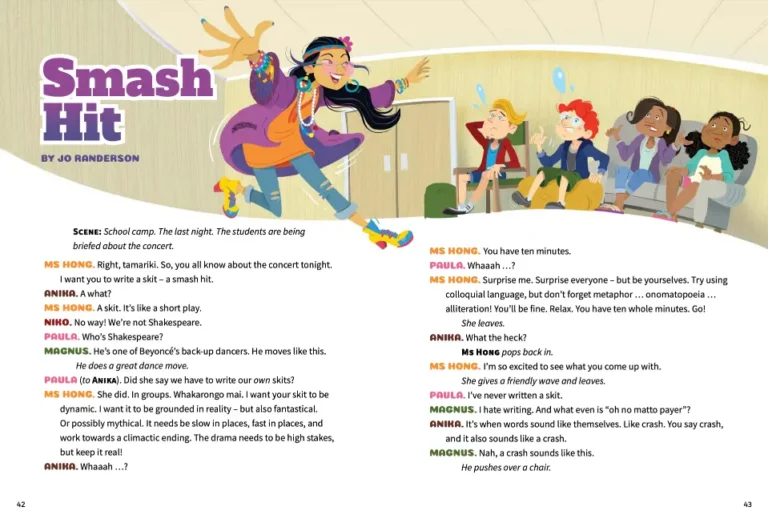
Faced with a ten-minute deadline at school camp, a group of students humorously improvises a “smash hit” skit by frantically blending their conflicting ideas about bio-tech engineering, aliens, family metaphors, and a smelly dog.
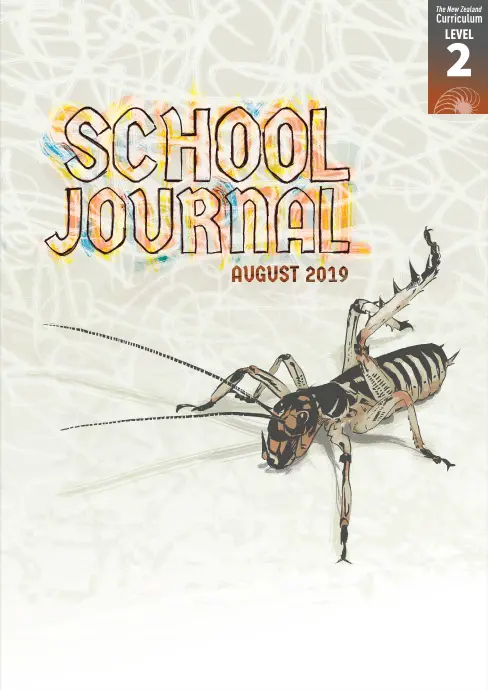
Inside this School Journal are two articles (Wētā; Pencarrow: New Zealand’s First Lighthouse), one poem (Ika a Whiro), and two stories (Stealing Maru; Max and Alice).
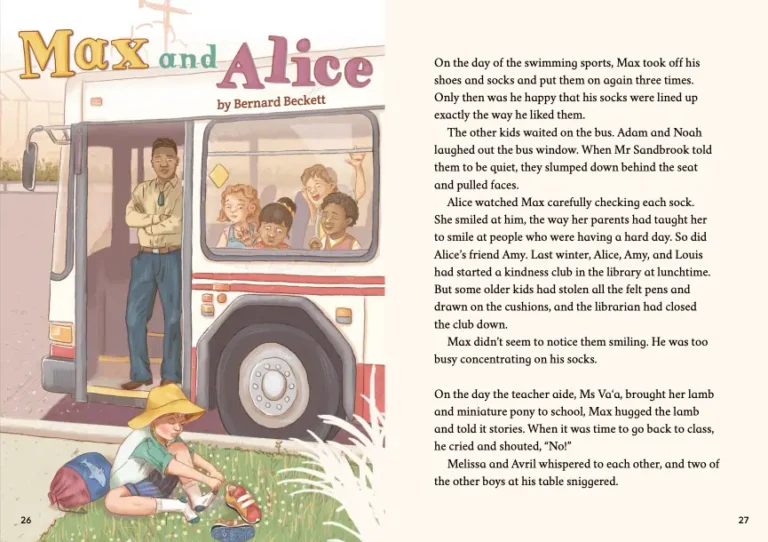
In the story “Max and Alice” by Bernard Beckett, a kind-hearted student named Alice patiently builds a friendship with her neurodivergent classmate Max through small acts of empathy, which eventually leads to a reciprocal moment of support when Alice is injured.
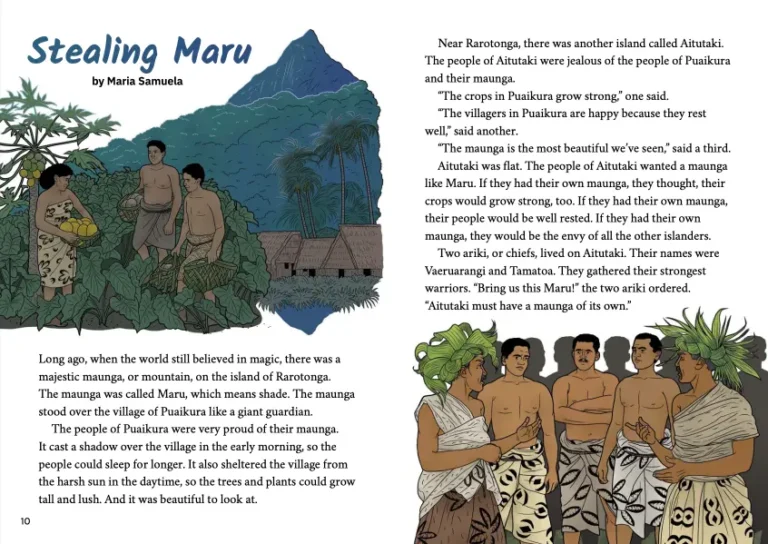
In the traditional story “Stealing Maru” by Maria Samuela, warriors from Aitutaki steal the top of a majestic mountain from Rarotonga, a loss that ultimately benefits the original owners by providing them with more daylight for productivity and family time. Keywords: myths and legends
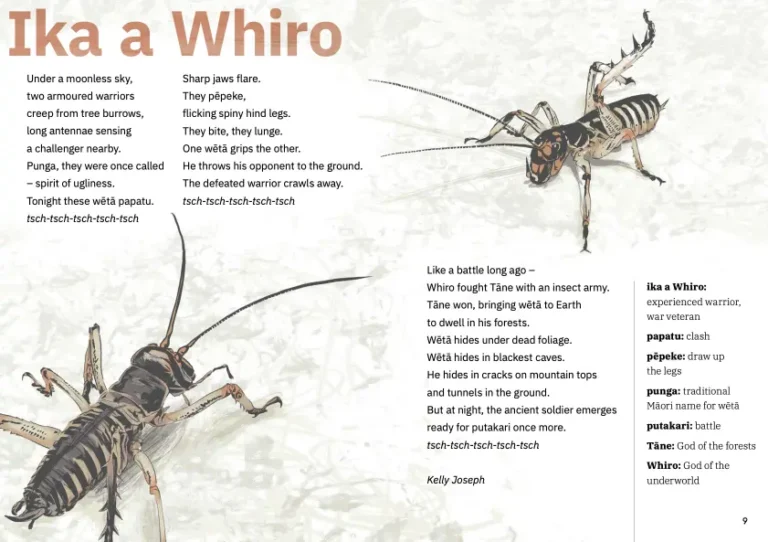
Under a moonless sky, two armoured warriors creep from tree burrows, long antennae sensing a challenger nearby.
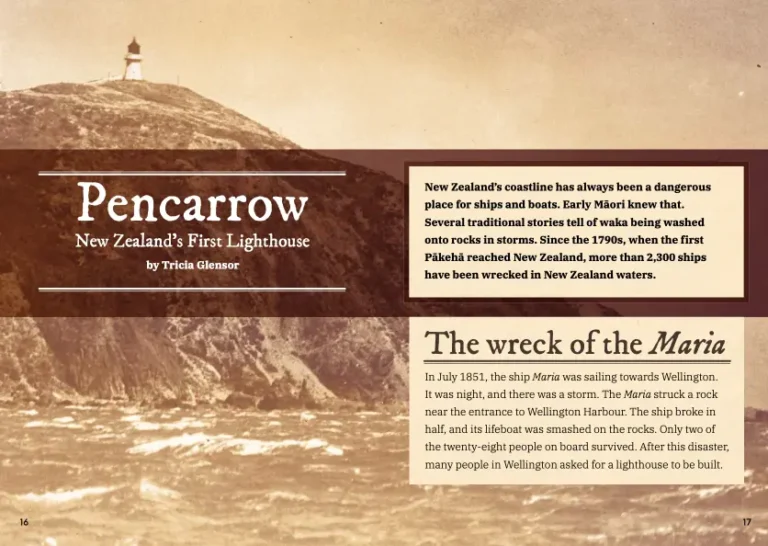
New Zealand’s coastline has always been a dangerous place for ships and boats. Early Māori knew that. Several traditional stories tell of waka being washed onto rocks in storms. Since the 1790s, when the first Pākehā reached New Zealand, more than 2,300 ships have been wrecked in New Zealand waters.
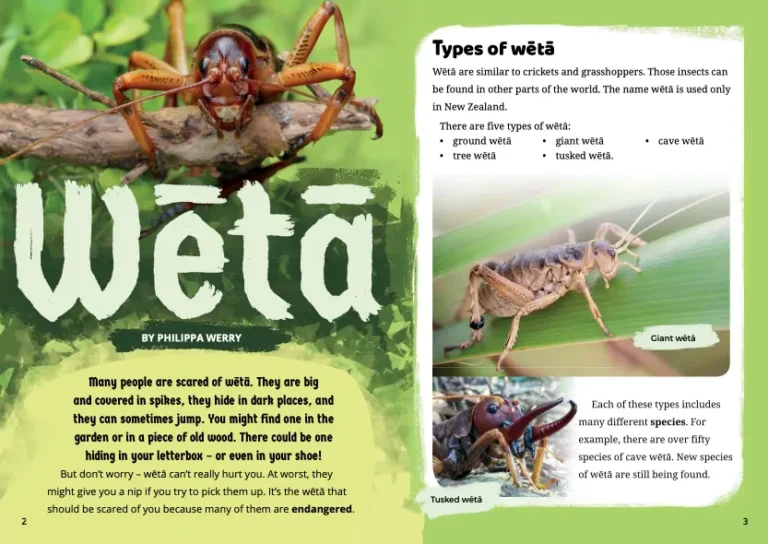
Many people are scared of wētā. They are big and covered in spikes, they hide in dark places, and they can sometimes jump. You might find one in the garden or in a piece of old wood. There could be one hiding in your letterbox – or even in your shoe!

In this Junior Journal there are two articles (The Kiwileles; The Ukulele Maker), one poem (The Something), one story (Rāhui), and one play (Space Rubbish).
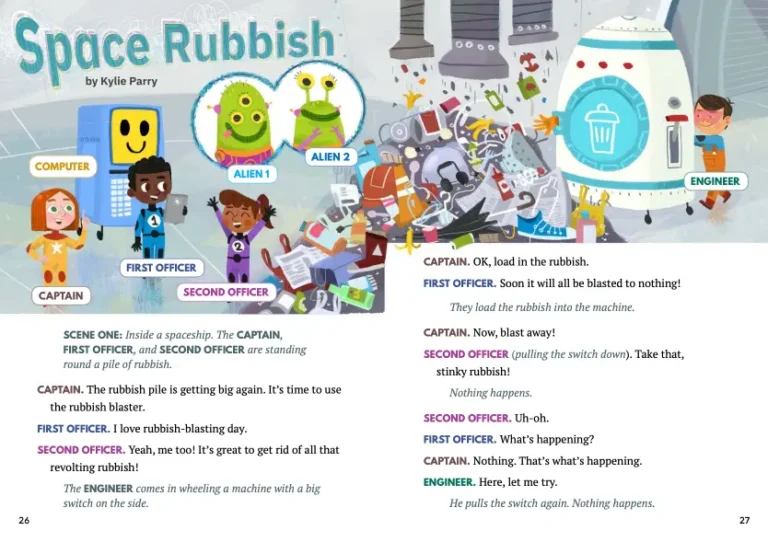
This humorous science-fiction play is set on a spaceship in the future. When the crew’s rubbish-blasting machine stops working, they are intrigued to find out how people used to deal with their rubbish in the “old days”.
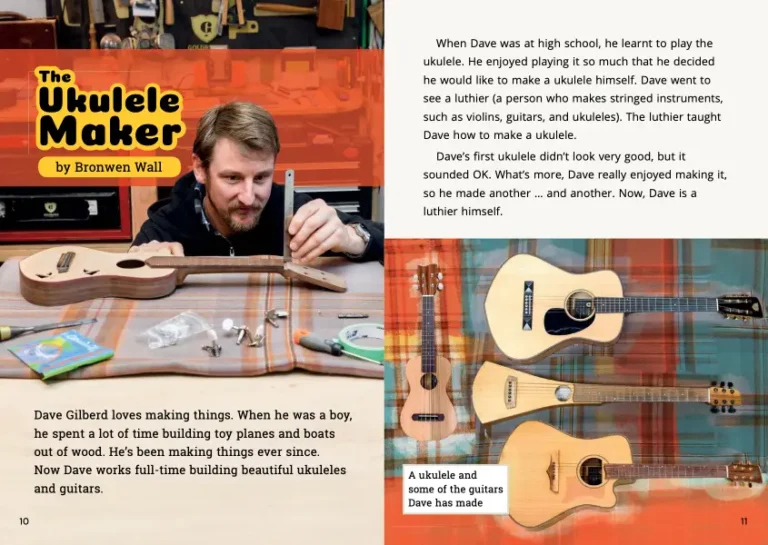
Dave Gilberd is a luthier, a maker of stringed instruments. This report describes how Dave makes a ukulele. A note at the end of the report provides additional information about how the ukulele got its name.
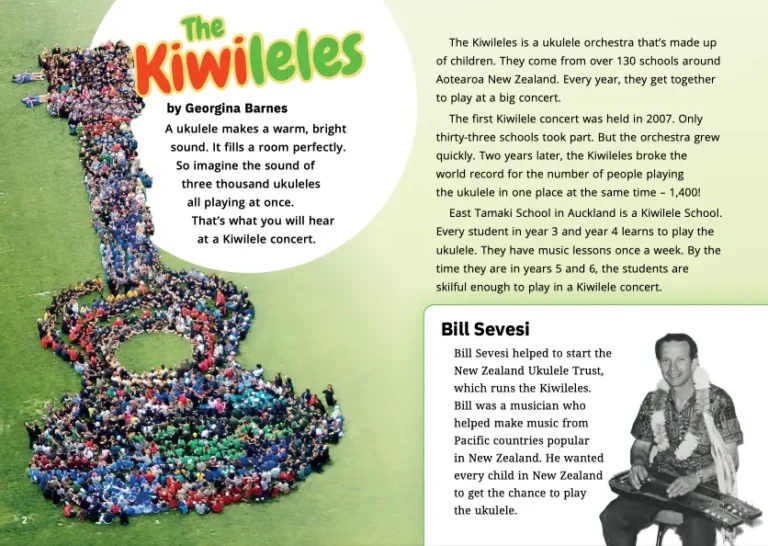
This report provides information about the Kiwileles, a ukulele orchestra made up of New Zealand school students. It focuses on the experiences of students at East Tamaki School and includes a description of some of the steps involved in learning to play a ukulele.

Inside this School Journal are two stories (Four of a Kind; Springers), one play (The Name Game), one poem (Fly), and two articles ( Johnny Pohe and the Great Escape; Resistance: When Antibiotics Don’t Work)
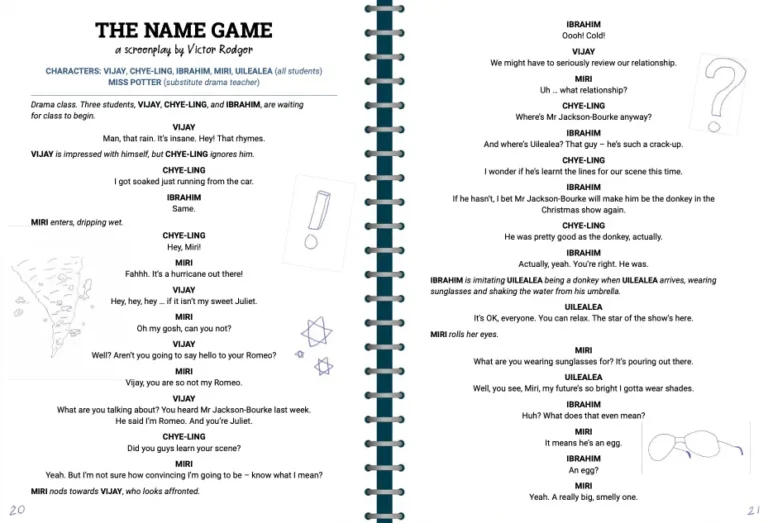
In this play, a substitute drama teacher named Miss Potter attempts to learn her students’ names through a “name game,” leading to a persistent and ultimately successful effort to correctly pronounce the name of a student named Uilealea. Despite initial awkwardness and comedic interference from the other students, Miss Potter refuses to take the easy…
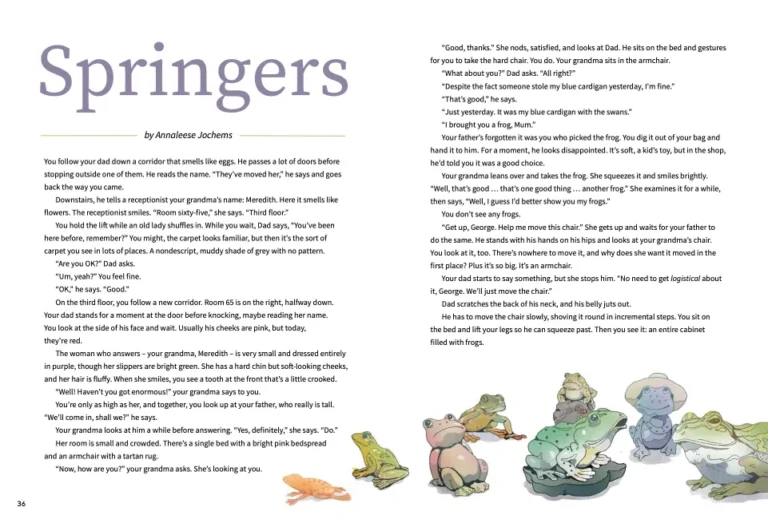
“Springers” is a fictional story set in a rest home, where George and his daughter are visiting his elderly mum. Meredith has dementia, although it’s not clear to what degree: at times her strong mind and character shine through, at others, she seems childlike and resigned to the loss of autonomy that many people in…
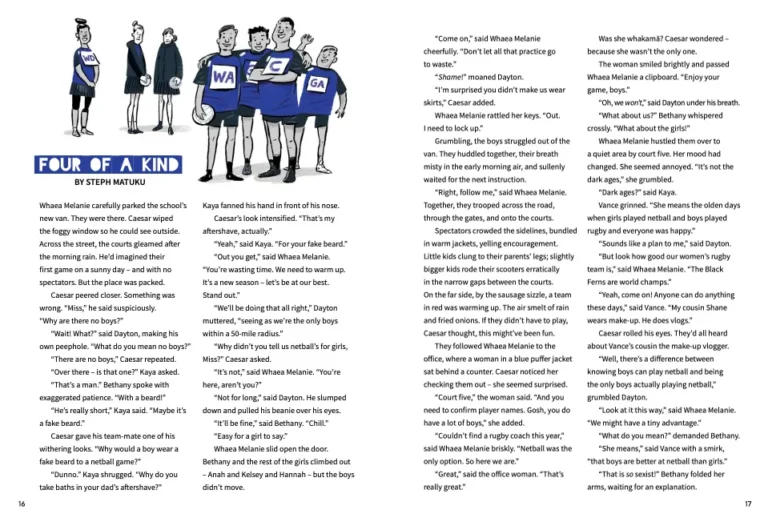
When the school cannot find a rugby coach for the year, the boys joined the netball team. On game day, questions around gender and teamwork are raised.
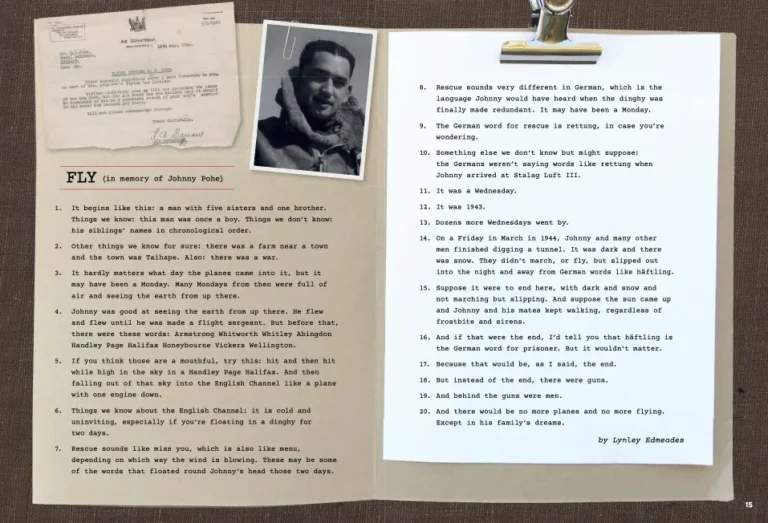
A poem from Lynley Edmeades about the life of pilot Johnny Rohe, who was taken prisoner during the Second World War. Explore a poem called Fly by Lynley Edmeades about the capture of Second World War pilot Johnny Rohe and his daring escape.

How do antibiotics work? What will happen if they don’t? Keywords: Alexander Fleming, antibiotics, bacteria, bugs, colds, disease, epidemic, flu, health, infection, infectious diseases, influenza, medicine, microbiologists, penicillin, resistance, sickness, stomach bugs, vaccination, viruses, report
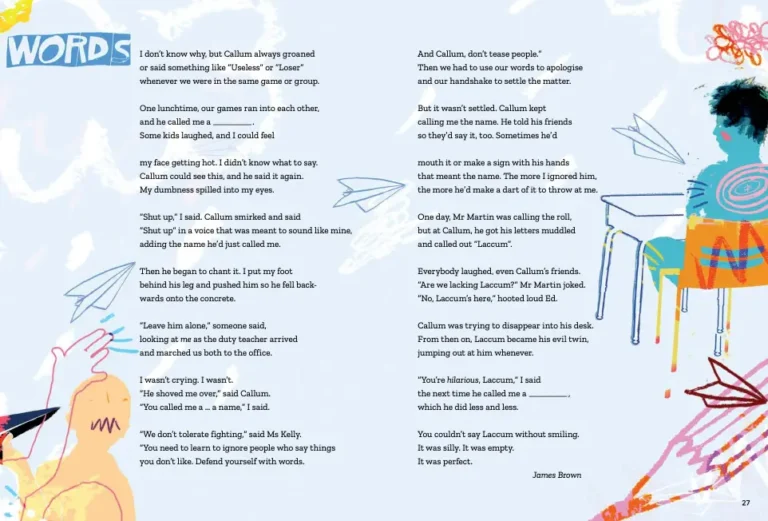
In this narrative poem, a boy uses humour to confront a bully.
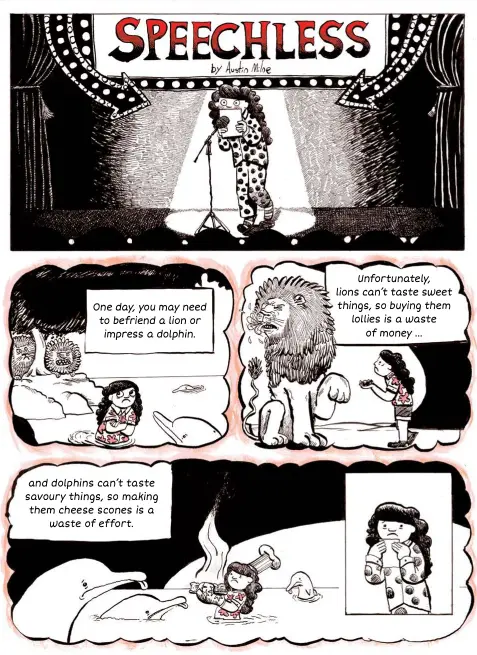
In the story “Speechless” by Fifi Colston, a young girl named Tilda attempts to navigate her school’s “Day of Silence” fundraiser while dealing with the frustration of being misunderstood by her peers and a competitive classmate. Tilda, who usually talks a lot, finds that her vow of silence allows her to observe others more closely…
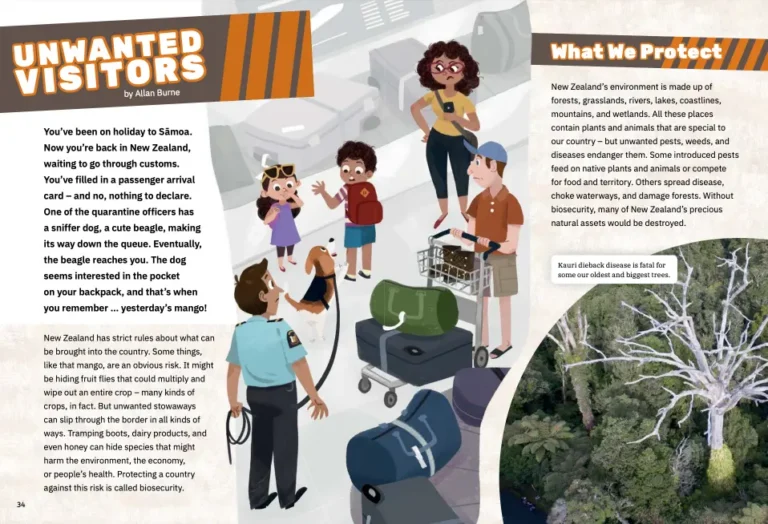
The article “Unwanted Visitors” by Allan Burne explains the critical importance of biosecurity in New Zealand, detailing how strict border controls and community surveillance protect the country’s unique environment and economy from the devastating impact of invasive pests, weeds, and diseases.
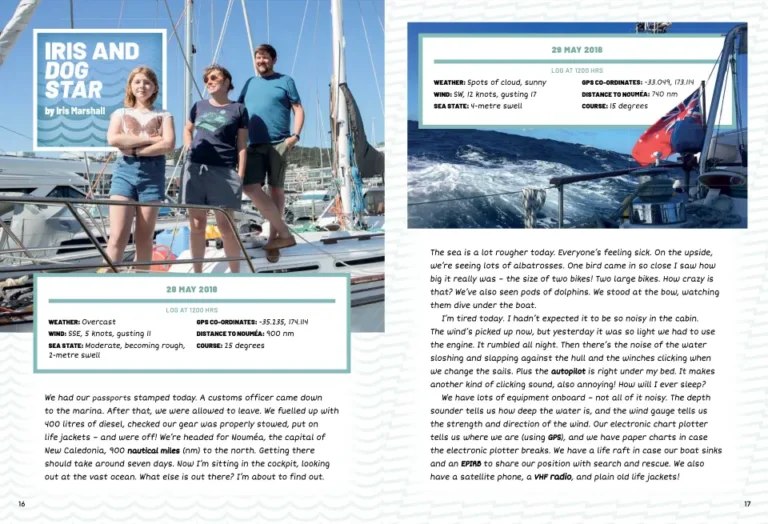
This article is based on the diary of Iris Marshall, a ten-year-old girl who sailed on the yacht Dog Star with her parents and a family friend from New Zealand to Nouméa. The text details the highs and lows of the journey from Iris’s perspective and includes some excerpts from the on-board logbook. While few…
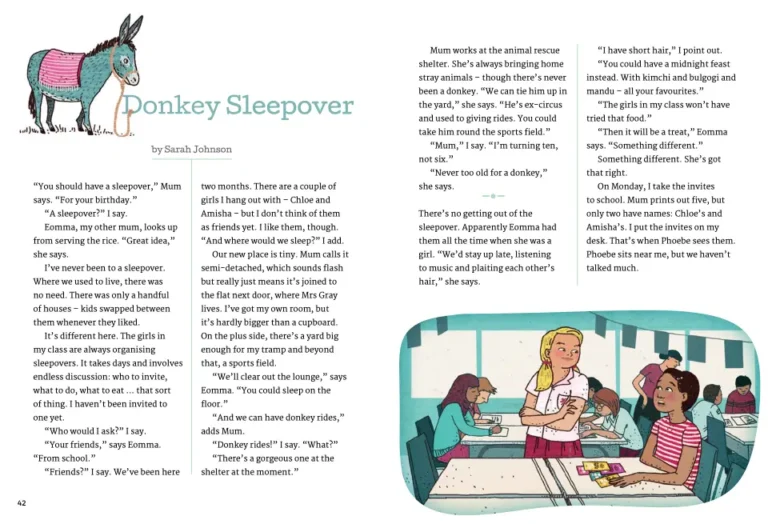
In the story “Donkey Sleepover” by Sarah Johnson, a young girl hosting her first sleepover is initially nervous about her small home, her parents’ unique food, and the presence of stray animals. While a group of popular girls leaves early after one discovers she is allergic to the family’s surprise guest guinea pigs, the narrator…
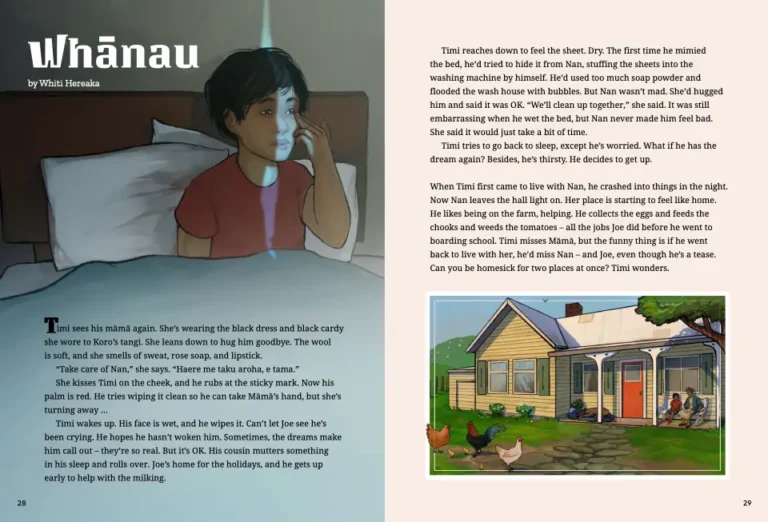
In the story “Whānau” by Whiti Hereaka, a young boy named Timi, who is living with his grandmother on a farm while missing his mother and deceased grandfather, finds comfort and a sense of belonging when he is gifted a puppy. As Timi cares for the small, homesick dog, he realizes that his new life…
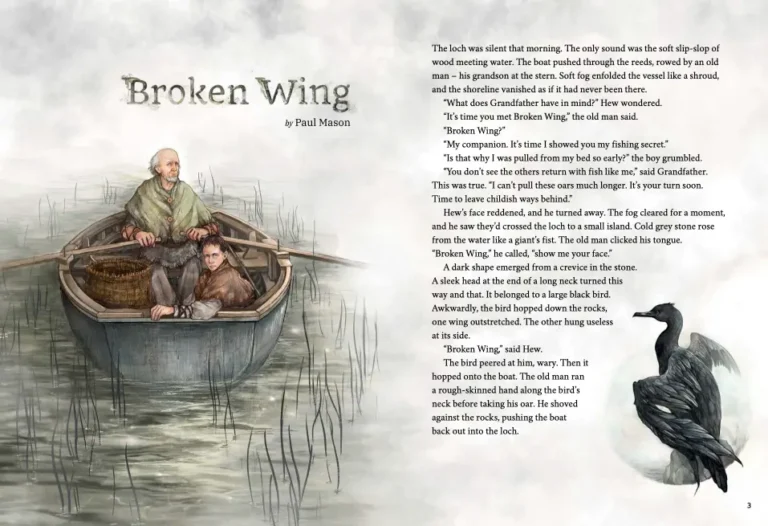
This mysterious story combines the familiarity of a coming-of-age story with elements of fantasy. The setting and time are vague. There is magic at work, yet most students will relate to the sense of pressure that comes from trying to meet an older person’s expectations while working out personal values and priorities. The layers of…
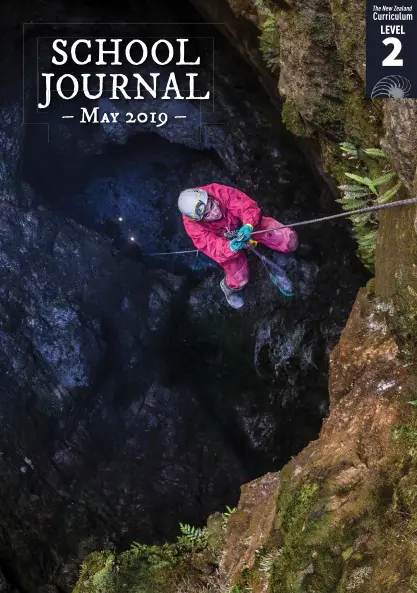
Inside this School Journal are three articles (Harwoods Hole; The Striped Invader; Why is the Wasp a Pest?) two stories (Stung!; Where’s Toki?) and the poem (Cave).
©Top Teaching Tasks – ©NZ MOE – ©The Crown | Copyright Info
 Top Teaching Tasks