Junior Journal 51 Year 2 2015
Inside this Junior Journal are two stories (Kāhu and Hōkioi; No Big Deal) One poem (If) and three articles (Llamas; Haast’s Eagle; Living in a Colourful World).

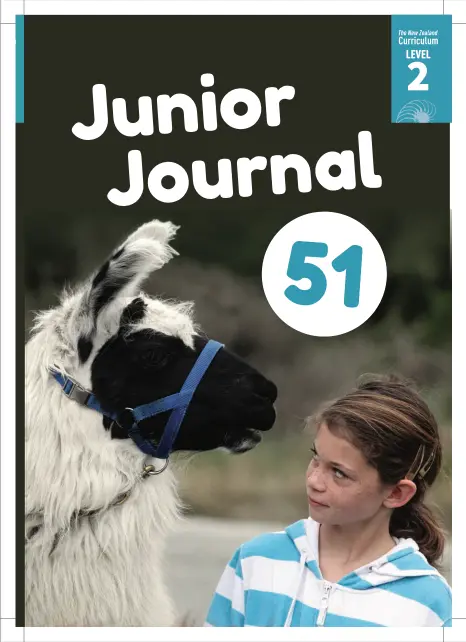
Inside this Junior Journal are two stories (Kāhu and Hōkioi; No Big Deal) One poem (If) and three articles (Llamas; Haast’s Eagle; Living in a Colourful World).
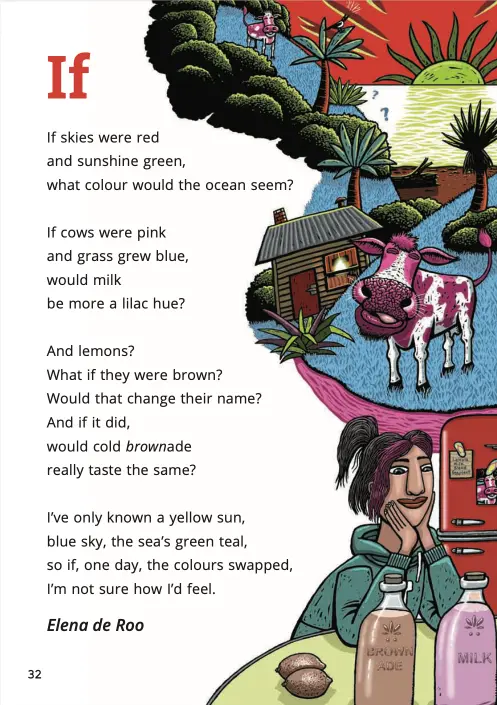
If skies were red and sunshine green, what colour would the ocean seem?
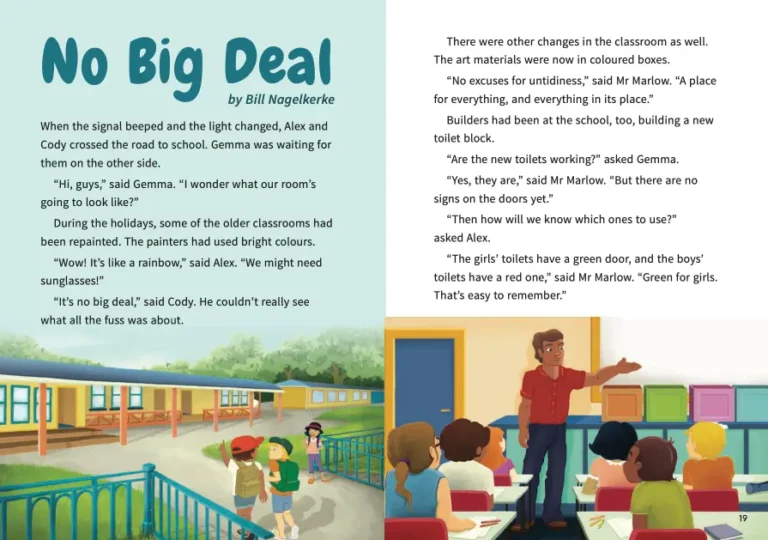
This story introduces colour-blindness in a light-hearted but informative way. When Cody goes back to school after the holidays, he can’t see why his friends are so excited about the repaint of the school.
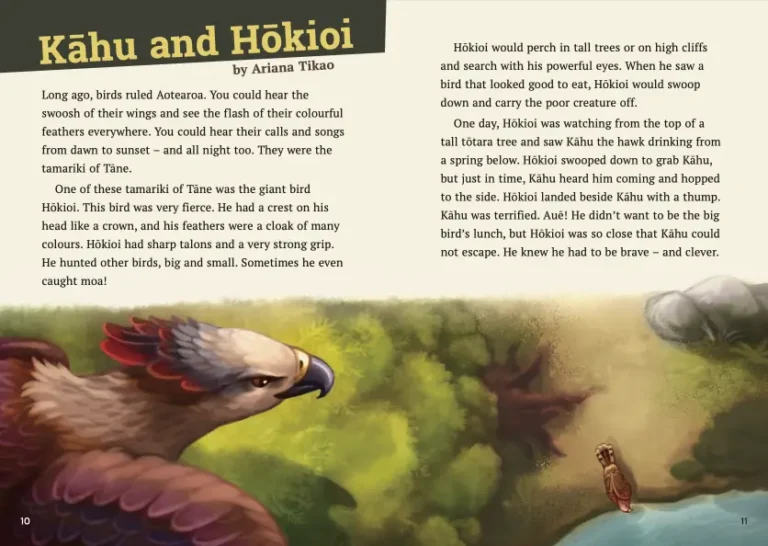
Long ago, birds ruled Aotearoa. You could hear the swoosh of their wings and see the flash of their colourful feathers everywhere. You could hear their calls and songs from dawn to sunset – and all night too. They were the tamariki of Tāne.
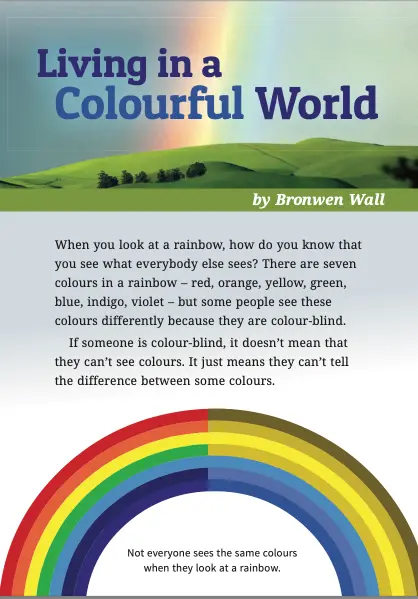
This article explains colour-blindness, a condition that is quite widespread but that many people are unaware of.
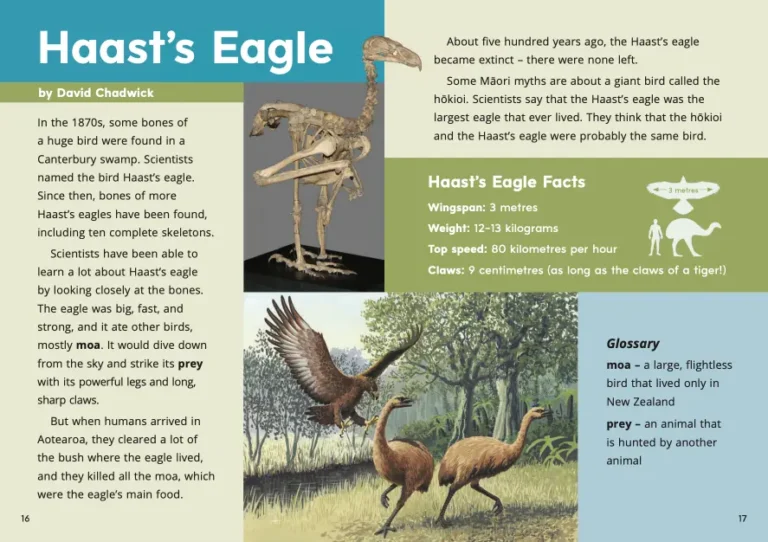
This article is about Haast’s Eagle, other extinct birds and myths. In the 1870s, some bones of a huge bird were found in a Canterbury swamp. Scientists named the bird Haast’s eagle.
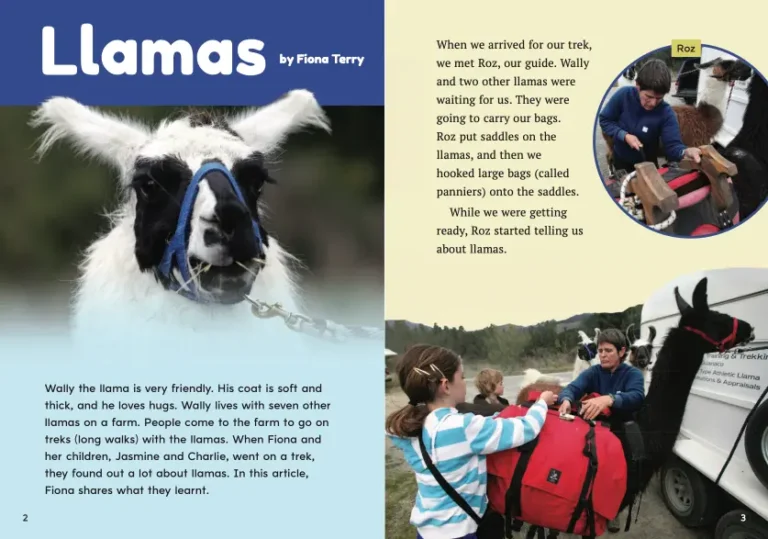
In this information text, Fiona and her children visit a llama farm and go on a llama trek. Fiona shares what they learnt about llamas, including where they come from and why they are farmed in New Zealand.
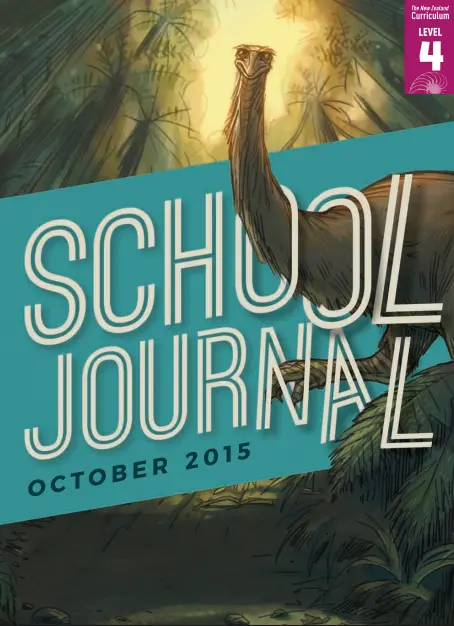
Inside this School Journal are five stories (Hatter’s Gold; Benny; Oakley Creek; The Seeing Hawk; Mr Archibald), one poem (Family Photographs), and two articles (Return of the Moa; Comic Man).
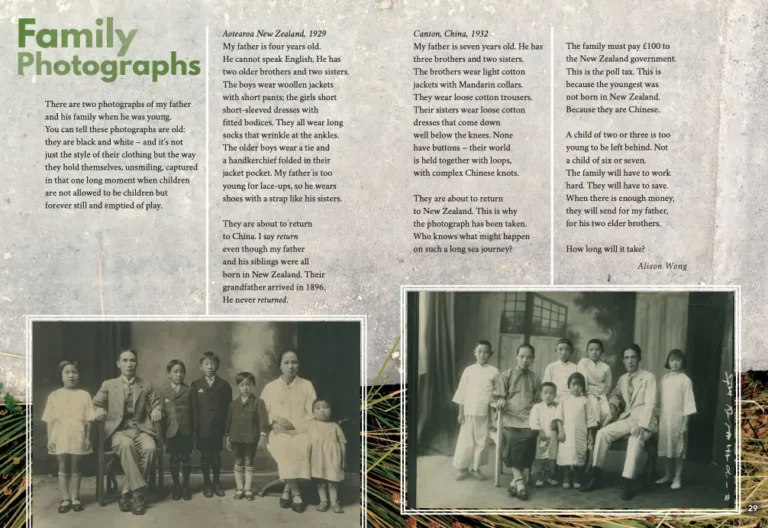
In this prose poem, the poet reflects on two old photographs that show her father at different ages. In one, her father was four years old and was living in New Zealand with his family. By the time of the second photo, the family had gone back to China and there are two more children….
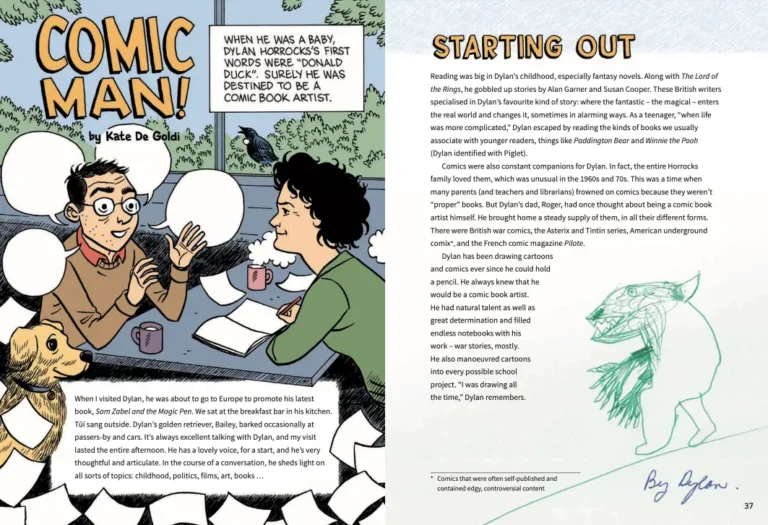
An article on Dylan Horrocks and how to become a comic book artist.
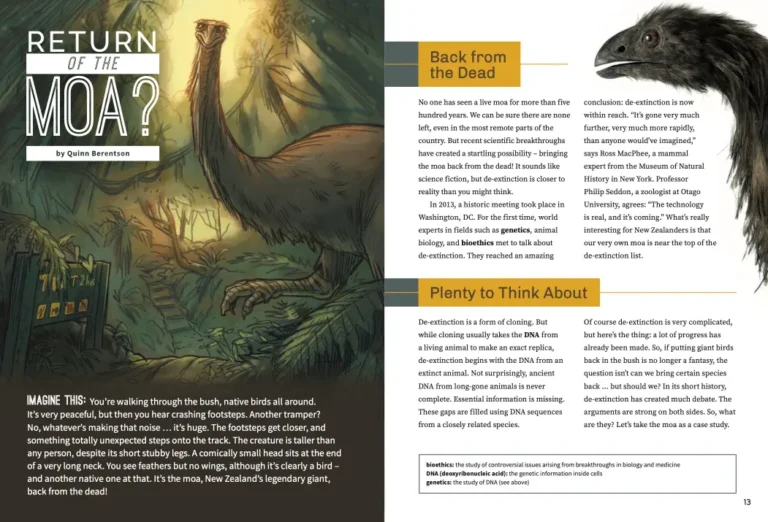
Could moa really be brought back from extinction? This high-interest article considers the scientific and ethical issues related to the de-extinction of moa and other species. The ethical conundrums are explored using a “for” and “against” format, and further details are supplied in a humorous “how to” section. The final section puts forward several other…
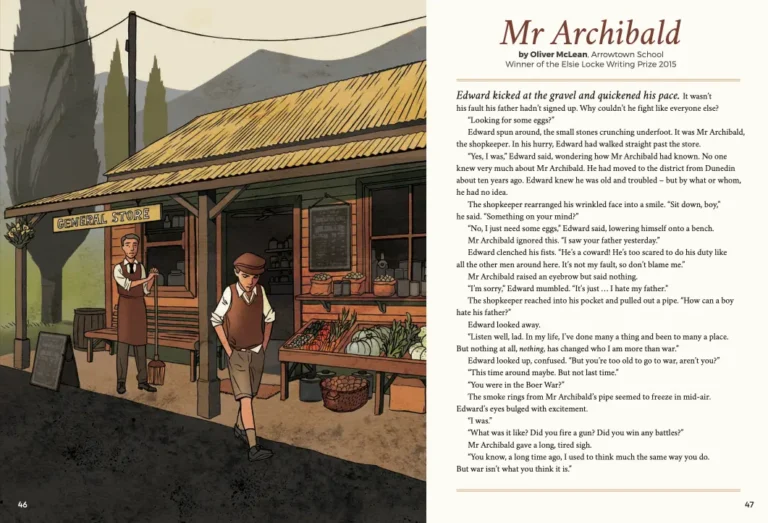
In Mr Archibald, a young boy named Edward struggles with intense shame and anger toward his father, whom he believes is a coward for refusing to fight in the First World War. While running an errand at the local general store, Edward encounters the shopkeeper, Mr Archibald, a troubled veteran of the Boer War who…
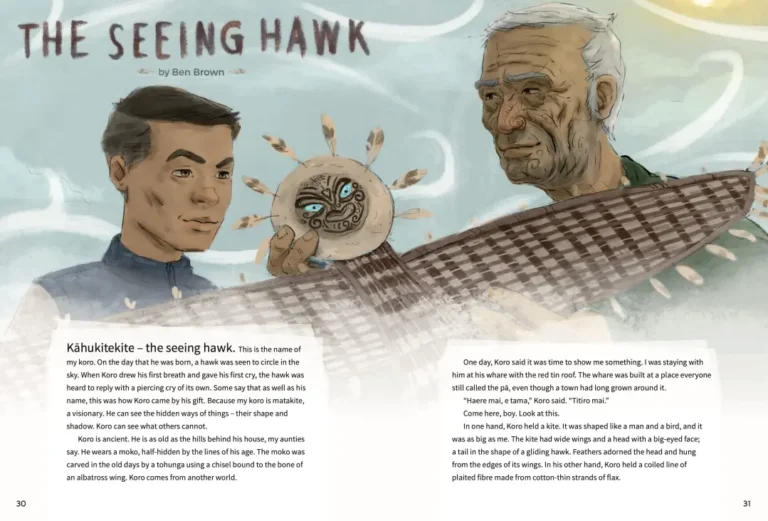
In The Seeing Hawk, a young boy flies a traditional kite made by his Koro, a matakite (visionary) who shares a mystical connection with the bird of prey seen at his birth. Guided by a chanting karakia, the boy experiences a transcendent vision where he becomes a soaring hawk, traveling through time to witness his…
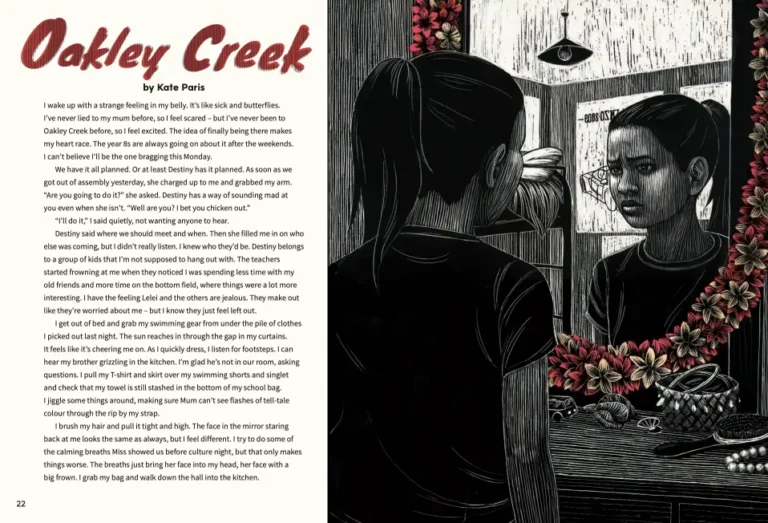
A swim with friends is complicated … I wake up with a strange feeling in my belly. It’s like sick and butterflies. I’ve never lied to my mum before, so I feel scared – but I’ve never been to Oakley Creek before, so I feel excited. The idea of finally being there makes my heart…
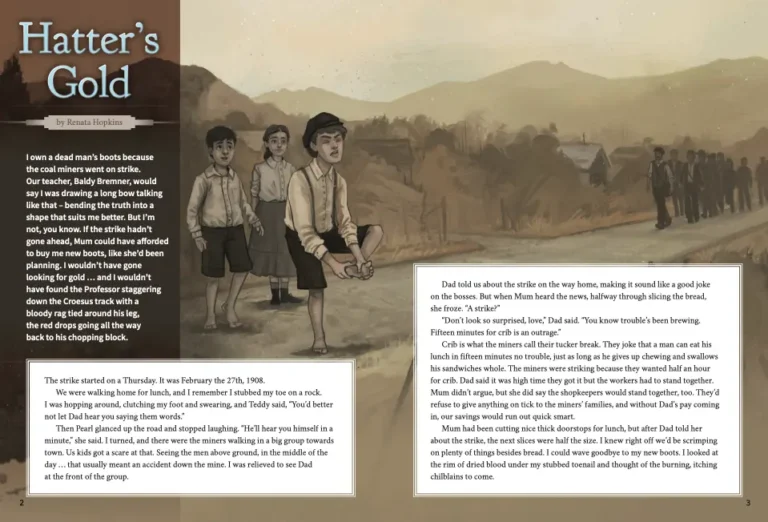
This historical fiction story is set in the West Coast mining town of Blackball in the early 1900s. Laurie, a twelve-year-old boy whose father is a coal miner, tells the story. When the miners go on strike, Laurie realises his family won’t be able to afford the new boots he needs. Laurie sets off to…
Inside this School Journal are two articles (The Remarkable Reti; Making Radio Waves), one poem (Barney Whiterats), one play (Baa-mite), and three stories (Happy New Year; The Rules; Miri and Raru).
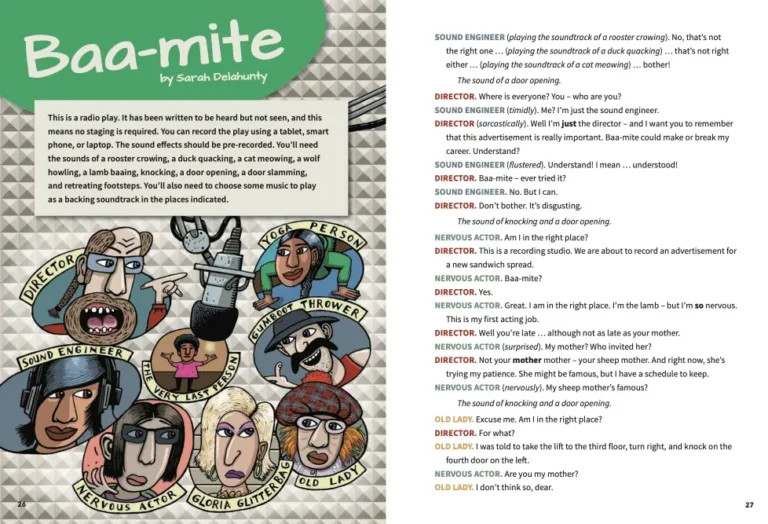
Recording a radio advertisement has never been so complicated …
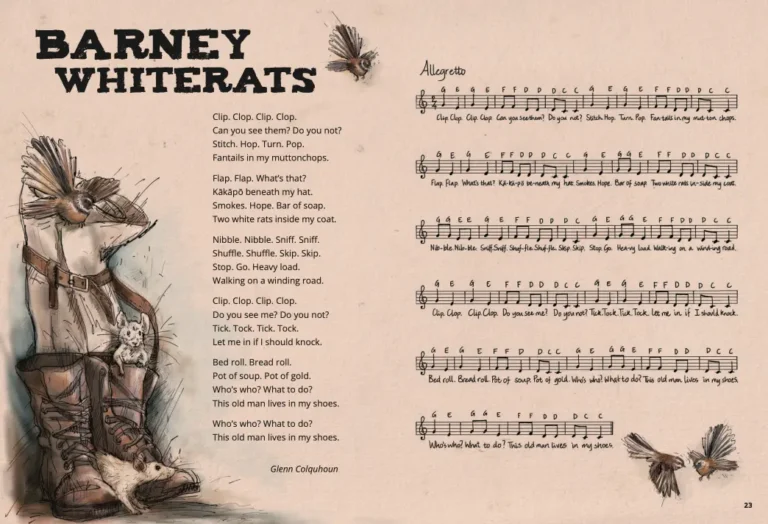
“Barney Whiterats” is a text in three parts. Students have to consider: a poem by one of New Zealand’s most respected poets, a musical setting of the poem as a lullaby, and an explanation of the poet’s inspiration that includes an old black-and-white photograph of a swagman.
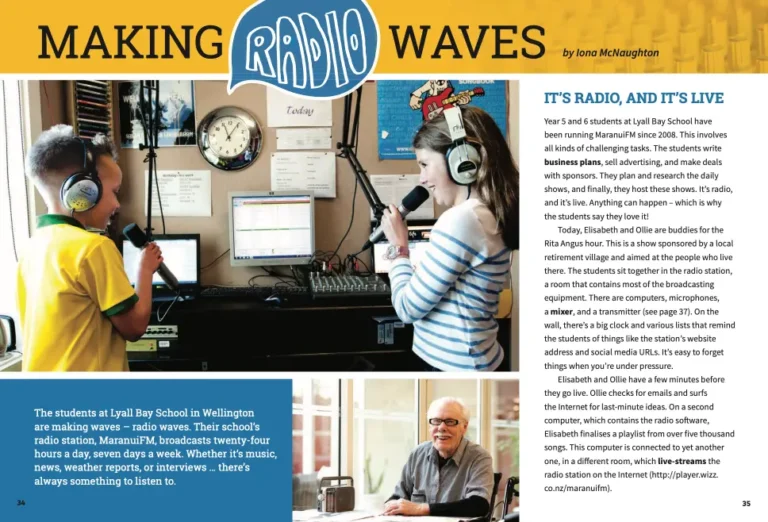
The students at Lyall Bay School in Wellington have their own radio station.
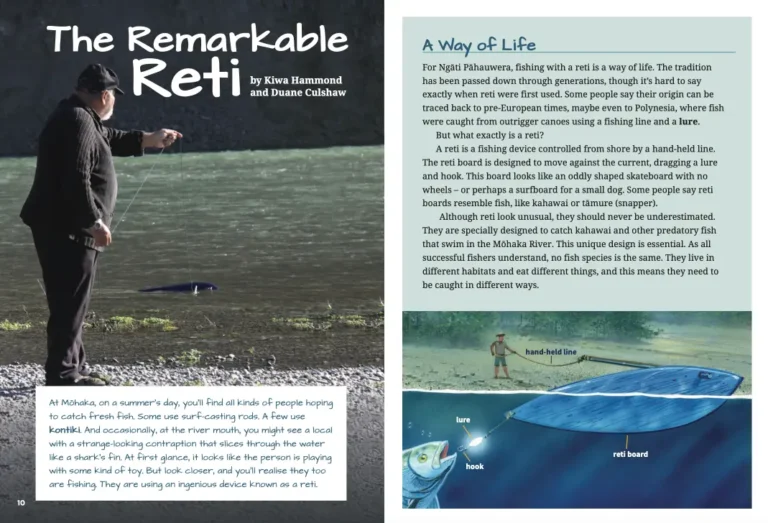
A reti is a fishing device, used by Ngāti Pāhauwera to catch kahawai on the Mōhaka River. The iwi regard the reti as a taonga, and the article provides a great example of how traditions, along with stories and waiata, are handed down through the generations.
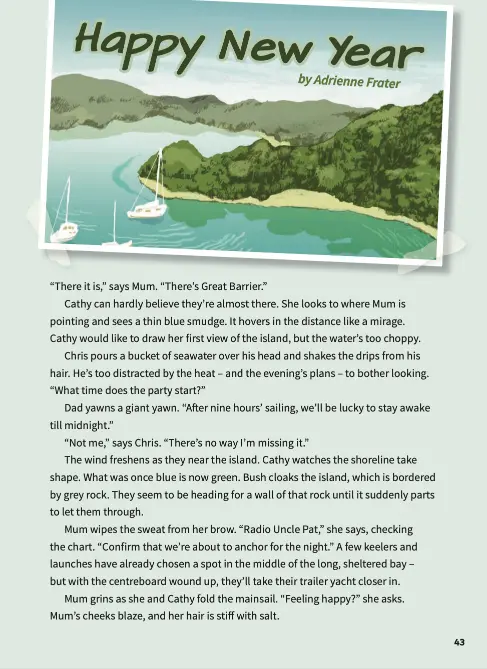
“There it is,” says Mum. “There’s Great Barrier.” Cathy can hardly believe they’re almost there. New Year’s Eve on Great Barrier Island doesn’t go according to plan.
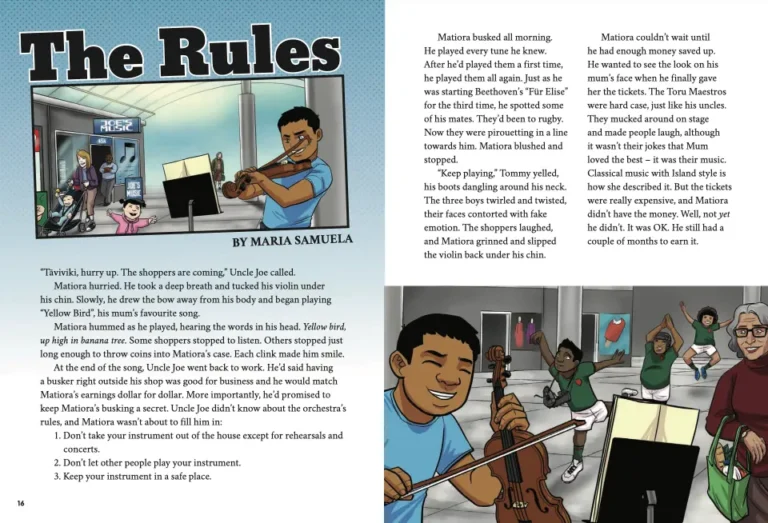
Matiora breaks his orchestra’s strict rules by busking in secret to save up for a special musical surprise for his mother. However, his plan takes a devastating turn when a local bully snatches his violin, leading to an accident that leaves his precious instrument in pieces. Now, he must face his mother and find a…
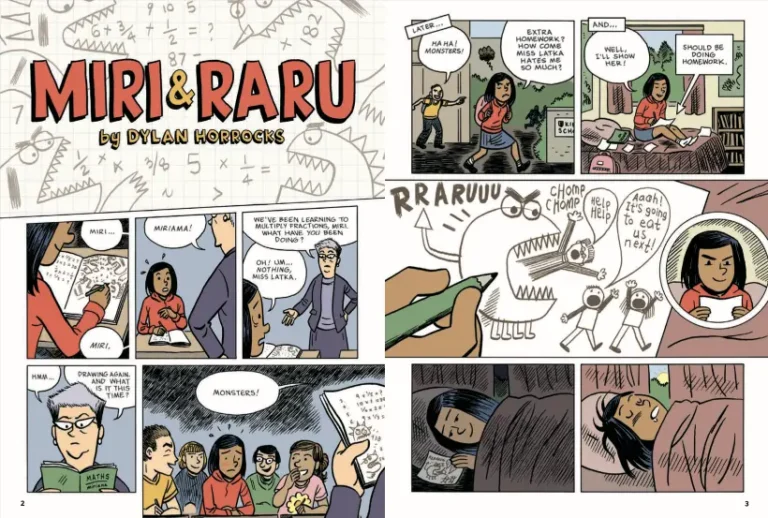
This lively graphic text provides a hilarious take on the old “dog ate my homework” story. Miri draws monsters in her schoolbooks to calm herself down when she’s feeling angry or upset. When one drawing comes to life, she finds that her teacher is surprisingly understanding. Information and tips for using comics in the classroom.
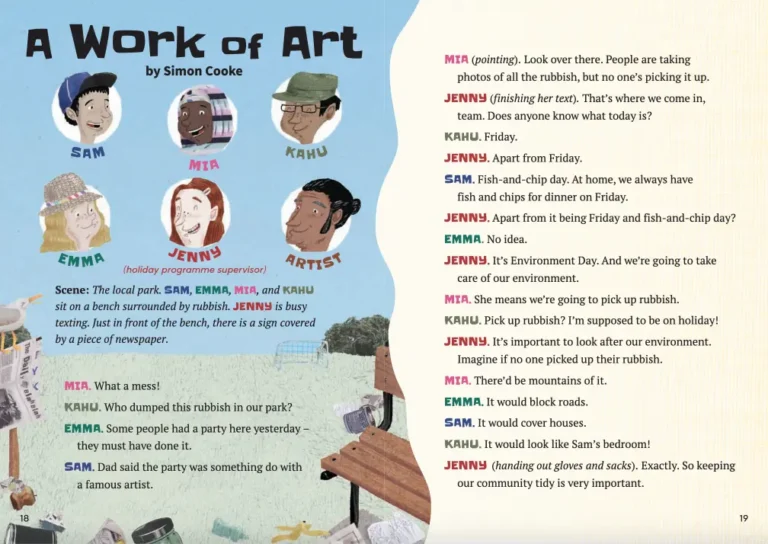
In this play, a group of students in a local park decide to celebrate Environment Day by cleaning up what they believe is a mess left over from a recent party. Supervised by Jenny, the team fills sacks with rubbish, only to discover a sign revealing that the “mess” was actually a three-dimensional installation created…
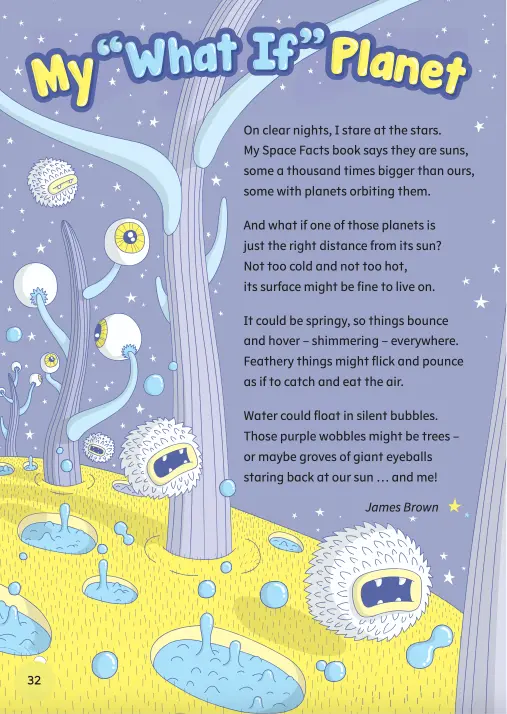
In this poem, a speaker looks at the stars and imagines what life might be like on an alien planet that is just the right distance from its sun
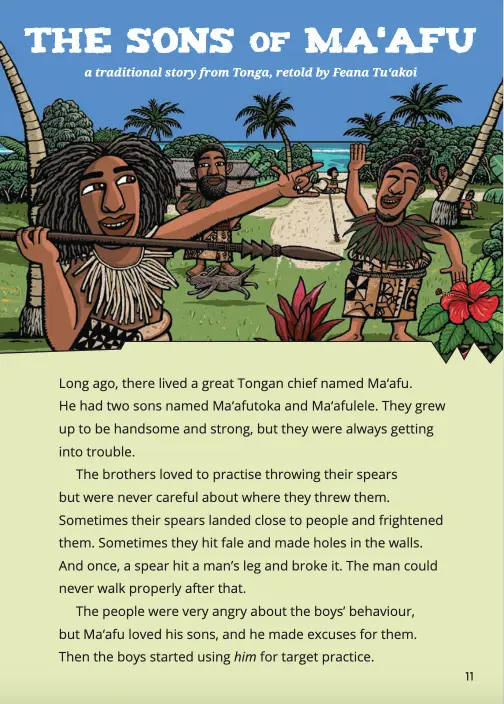
This traditional legend from Tonga is about two brothers with a reputation for trouble try to redeem themselves by carrying out some perilous tasks.
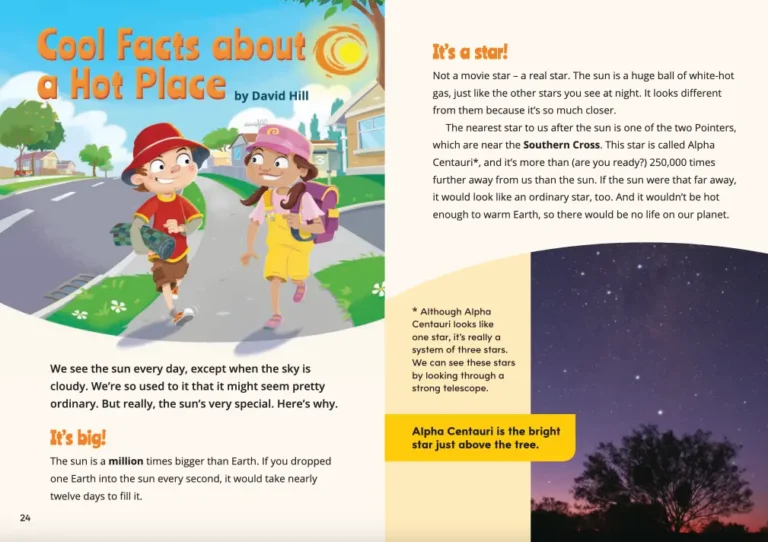
This article presents a lot of facts about the sun and information about how the sun affects Earth. Although some of the concepts may be challenging, the writer uses humour and comparisons with familiar things to help readers get a sense of the enormous numbers involved.
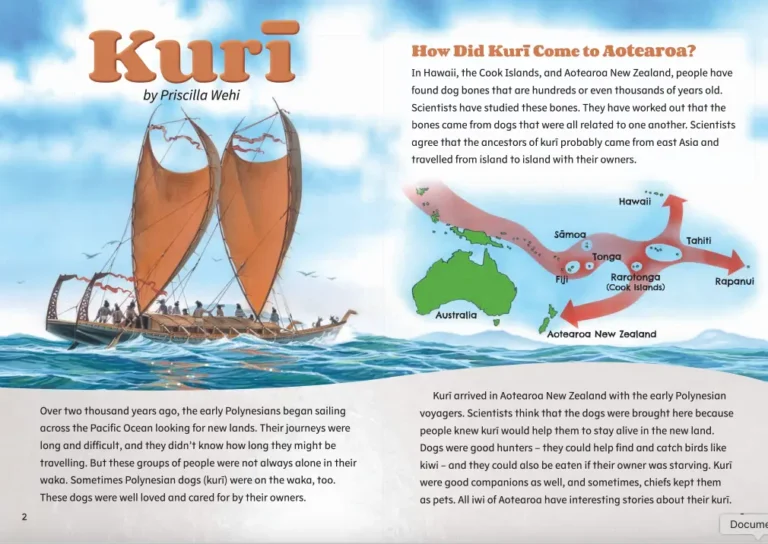
Māori brought the kurī or Polynesian dog with them when they migrated to Aotearoa New Zealand. This article looks at what we know about kurī, their origins, what they were used for, and why they died out.
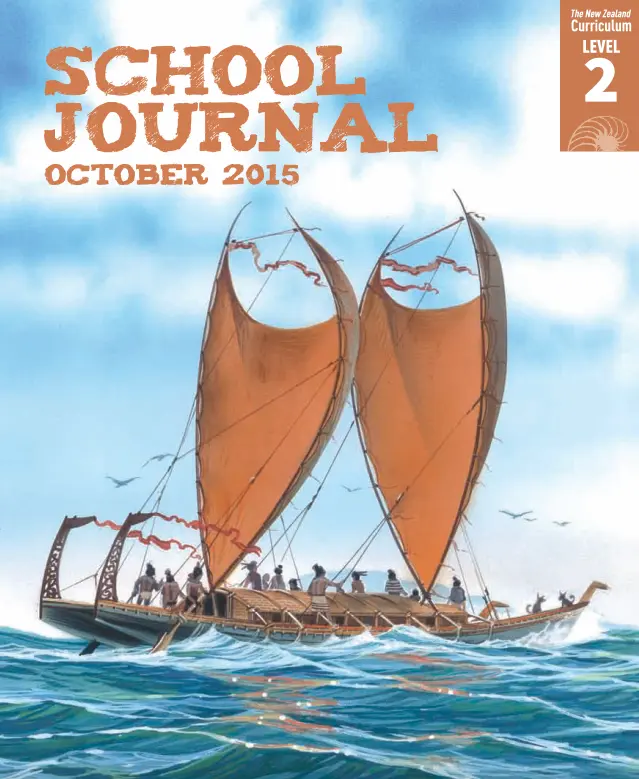
This School Journal contains one story (The Sons of Ma’afu), one play (A Work of Art), one poem (My “What If” Planet), and two articles (Kurī; Cool Facts about a Hot Place).
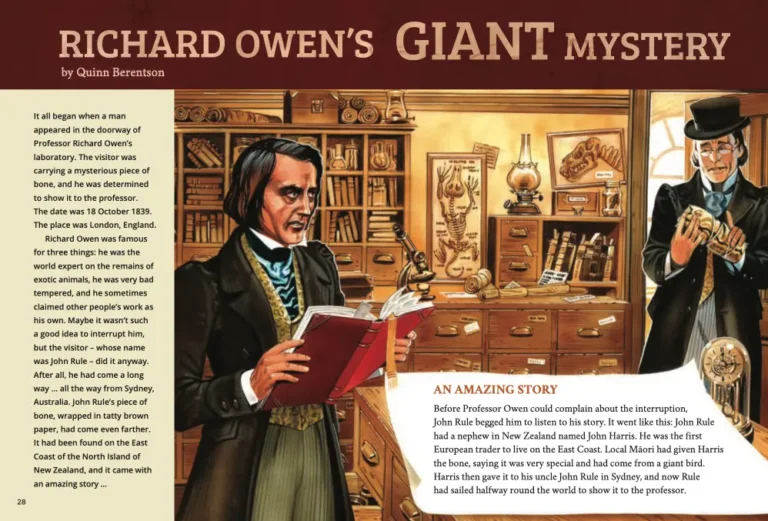
Richard Owen was a British scientist of the early nineteenth century, most famous for his identification and naming of dinosaurs. This article reports on the role he played in unravelling the mystery of the moa and in identifying it as the largest bird ever known to humans. The nature of scientific endeavour is conveyed well,…
©Top Teaching Tasks – ©NZ MOE – ©The Crown | Copyright Info
 Top Teaching Tasks