Dawn Service – School Journal Level 4 June 2014
A poetic story about memories of a great-granddad who flew in World War One.


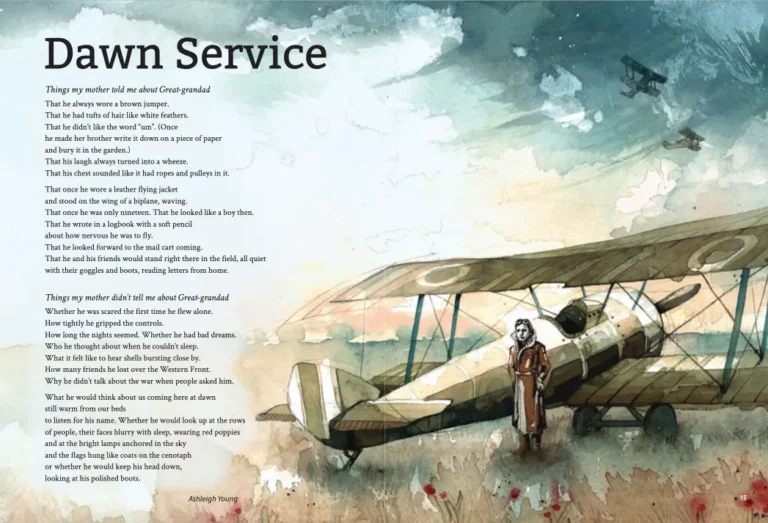
A poetic story about memories of a great-granddad who flew in World War One.
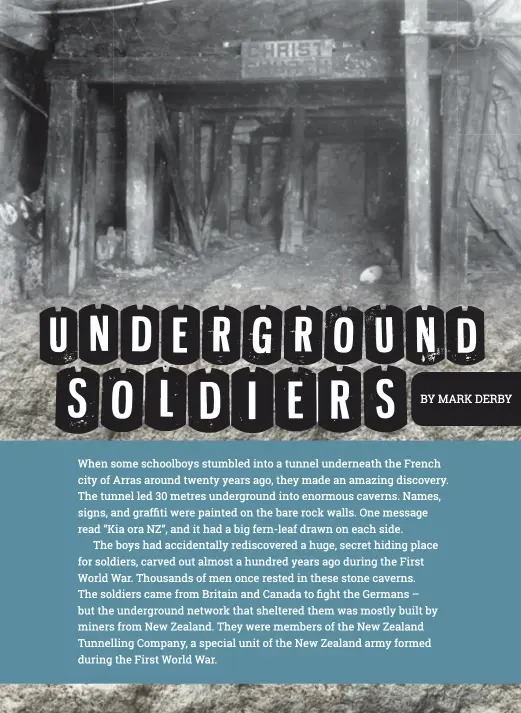
This article details the New Zealand Tunnelling Company’s efforts during the First World War. Arriving in Arras in 1916, these miners and laborers converted ancient quarries into a secret underground city for 25,000 troops, complete with a hospital and electric lighting. Using geophones to monitor enemy “counter mining,” they prepared a massive surprise attack for…
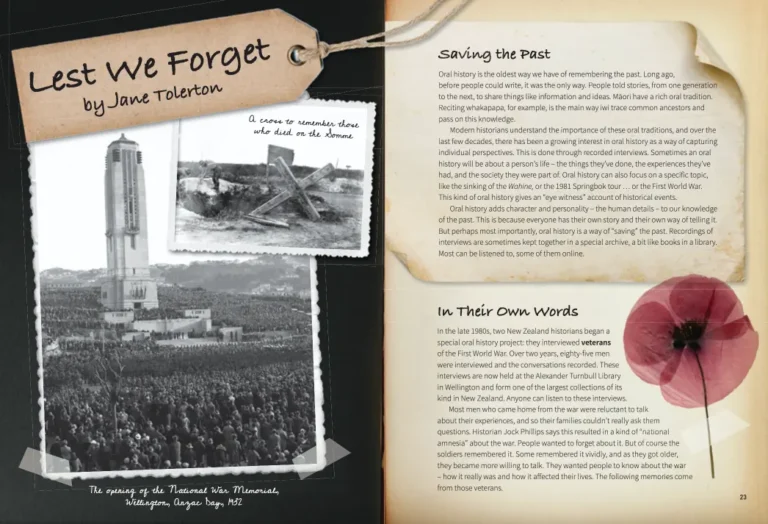
This article explores how oral history preserves the lived experiences of First World War veterans to counter “national amnesia” regarding the conflict. Through eighty-five recorded interviews now held at the Alexander Turnbull Library, historians captured the shift from initial “adventure” to the grim realities of Gallipoli, the Somme, and shell shock. These “eye witness” accounts…
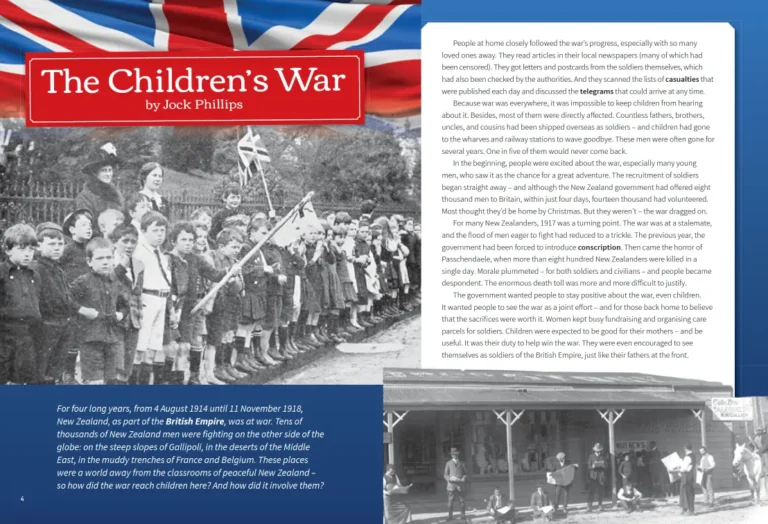
This article describes how New Zealand children were mobilised as “little crusaders” to support the British Empire through school rituals and the School Journal. While soldiers faced the horrors of Gallipoli and Passchendaele, children at home were taught duty through flag saluting, military drills, and extensive fundraising for the war effort. This era left a…
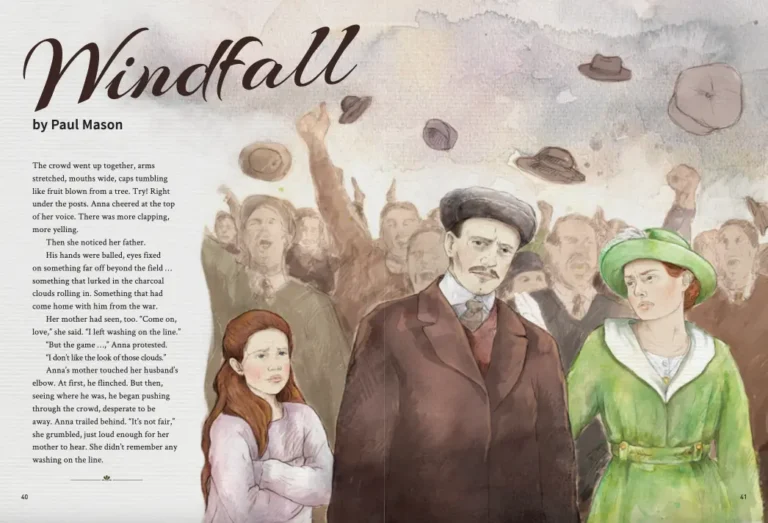
Windfall – School Journal Level 3 June 2014 This is a story about a girl, Anna, trying to cope with her father, James, who has returned from the war suffering from nightmares and being emotionally distant (implied shell shock). During a fierce storm, James reverts to his capable self, using a rope to rescue Anna…
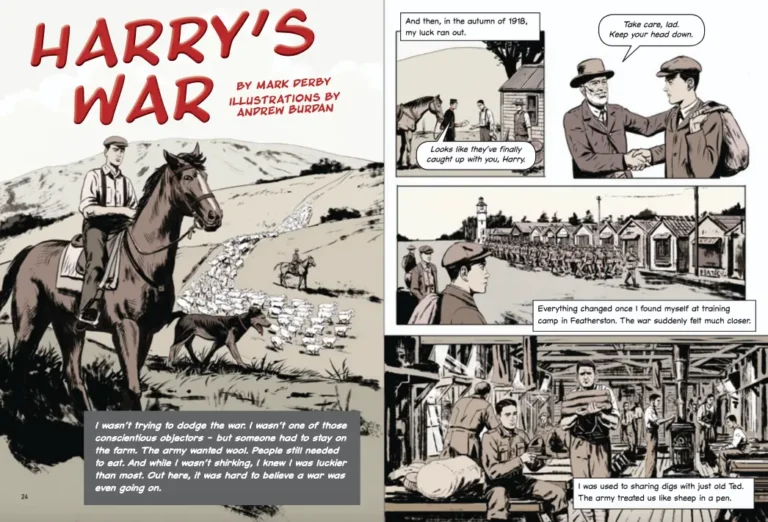
Harry’s War – School Journal Level 3 June 2014 This is a graphic story about Harry, a farmer conscripted late in the war (1918). He trains miserably and arrives in England just before Armistice Day. Frustrated by being stuck overseas, the troops riot. Harry’s sole lasting military act is carving the huge chalk kiwi into…
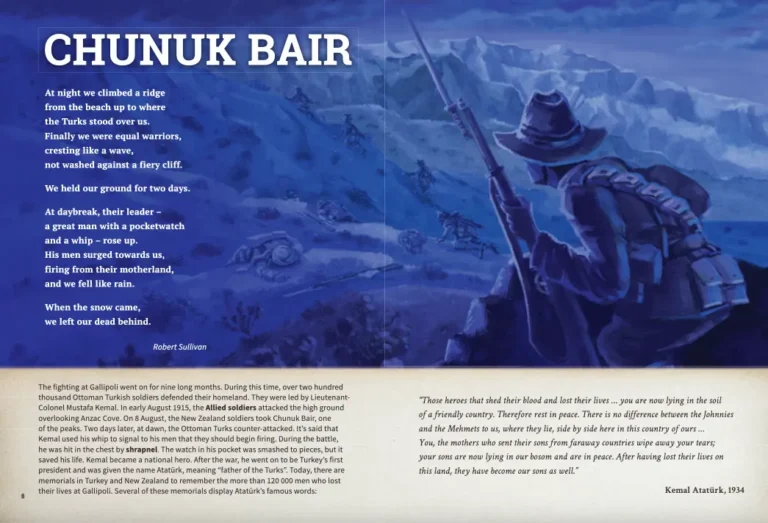
Chunuk Bair – School Journal Level 3 June 2014 This is a poem and accompanying text about the brutal battle for Chunuk Bair during the Gallipoli campaign in August 1915. It describes the brief capture of the peak by New Zealanders and the devastating Turkish counter-attack led by the Ottoman commander, Mustafa Kemal (Atatürk).
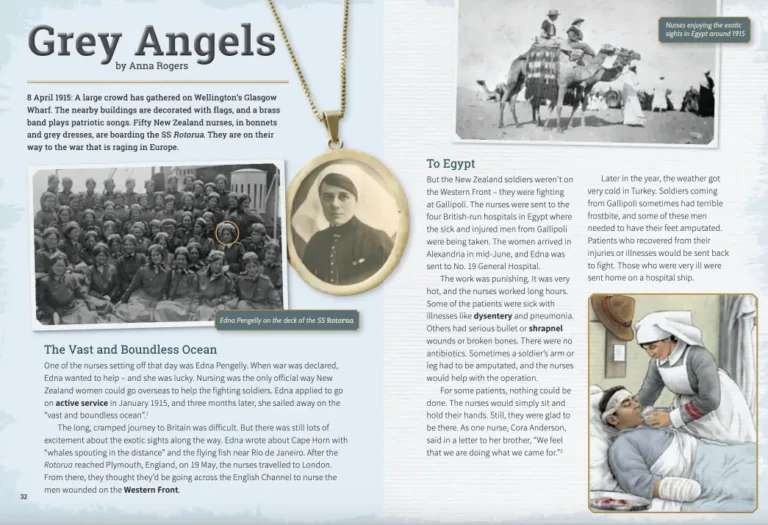
Grey Angels – School Journal Level 3 June 2014 This is an article about the 550 New Zealand nurses who served in WWI, following the experiences of Edna Pengelly. They endured punishing work in Egypt treating Gallipoli casualties, and later in England at places like Brockenhurst, dealing with severe injuries and shell shock. .
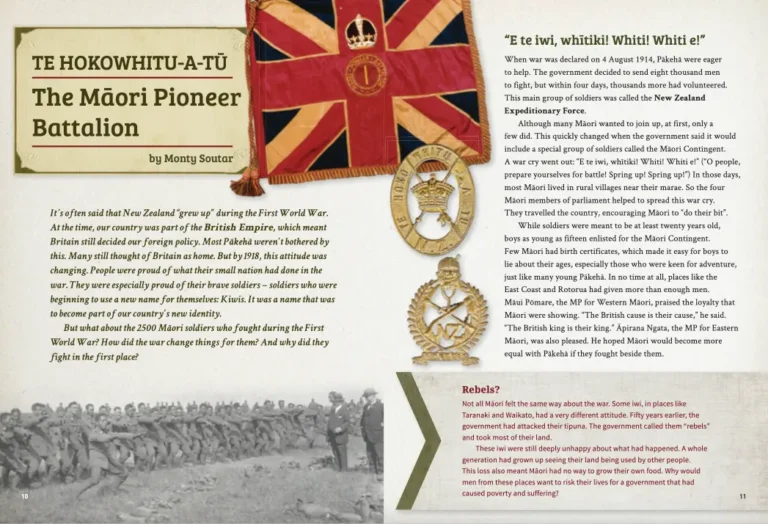
Te Hokowhitu-a-Tū: The Māori Pioneer Battalion This article is about the Māori Pioneer Battalion. It details how some Māori volunteered hoping to achieve equality, while others (Waikato) resisted conscription due to historical land losses. After fighting at Gallipoli, they served primarily as labourers on the Western Front.
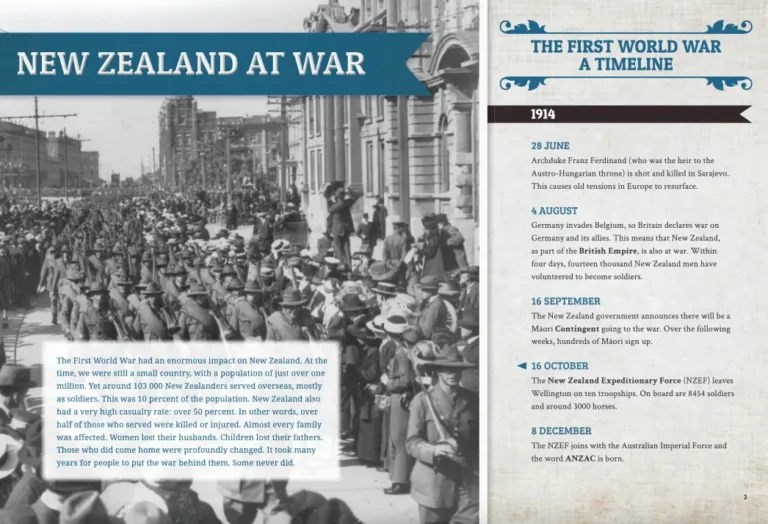
New Zealand at War – School Journal Level 3 June 2014 This is an article about the huge impact of World War I on New Zealand, noting that around 10% of the population served and over half became casualties. It includes a timeline of major events like ANZAC formation and the Battle of Passchendaele. .
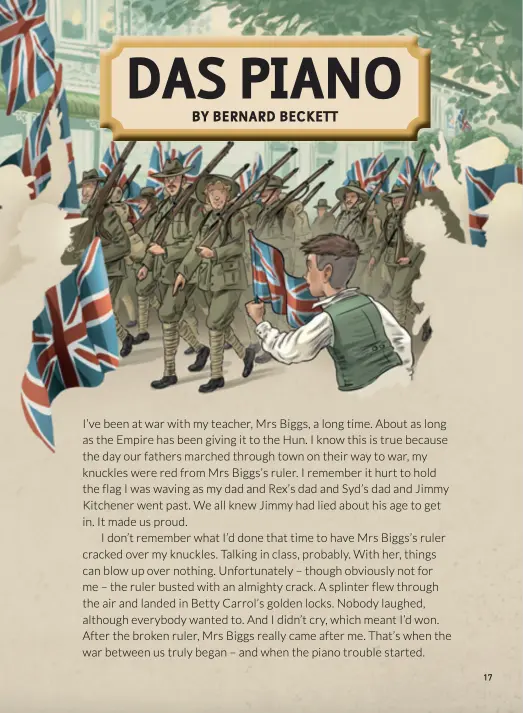
Das Piano – School Journal Level 2 June 2014 This is a story about the personal “war” between a schoolboy, Thomas, and his teacher, Mrs. Biggs. To avoid singing a solo, Thomas falsely claims the school’s piano is German. Mrs. Biggs and the town mayor furiously prove the claim and then destroy the piano with…
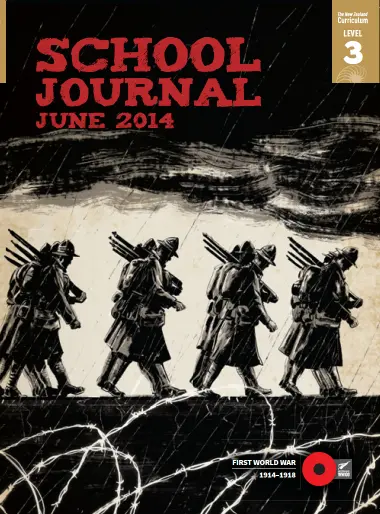
School Journal Level 3 June 2014 Inside this School Journal are three stories (Das Piano; Harry’s War; Windfall), three articles (Grey Angels; Te Hokowhitu-a-Tū: The Māori Pioneer Battalion; New Zealand at War), and one poem (Chunuk Bair). The theme of these texts is centred around World War 1, the First World War.
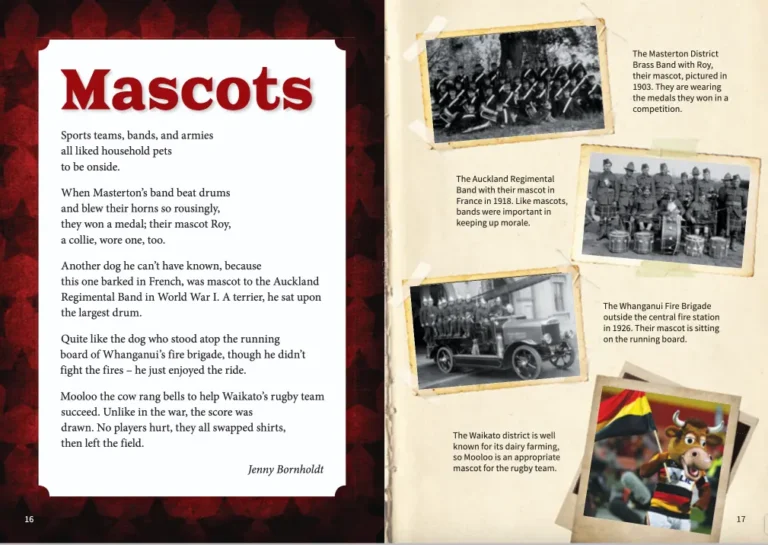
This poem discusses mascots used by sports teams, bands, and armies. It mentions specific mascots like the collie Roy of Masterton’s band, who wore a medal when the band won a competition, a terrier that barked in French and sat on the drum for the Auckland Regimental Band in World War I, and Mooloo the…
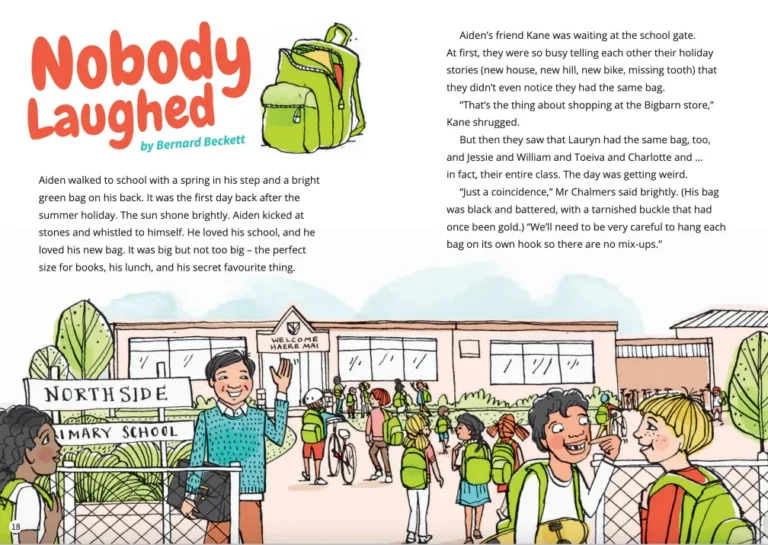
Nobody Laughed – School Journal Level 2 September 2014 A short story where Aiden is deeply embarrassed when his entire class shows up with the same backpack, fearing his hidden “secret favourite thing” will be mocked. When the teacher opens everyone’s bags to sort them, revealing a series of strange items (from a moa bone…

In this Junior Journal are three stories (Always Great, Never Late; Breakdown; Rongoā Māori), one poem (Tortoise), and two articles (Helpful Trees and Plants; Torty, the Lucky Tortoise).
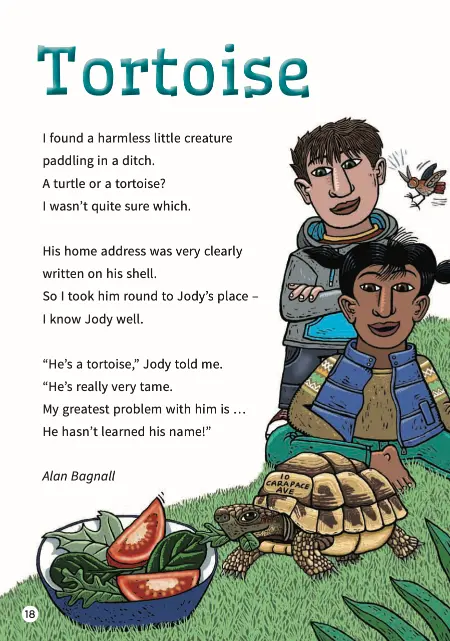
A poem about a tortoise: I found a harmless little creature paddling in a ditch. A turtle or a tortoise? I wasn’t quite sure which.
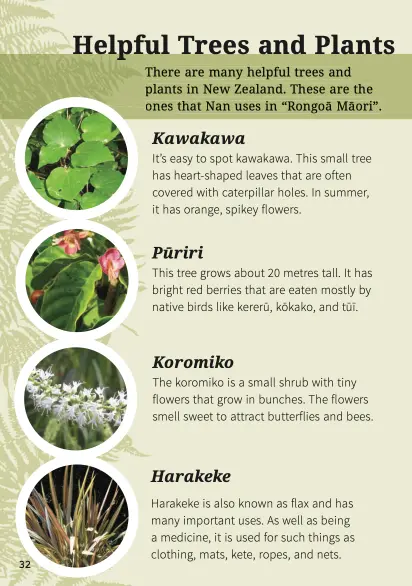
There are many helpful trees and plants in New Zealand. These are the ones that Nan uses in “Rongoā Māori”.
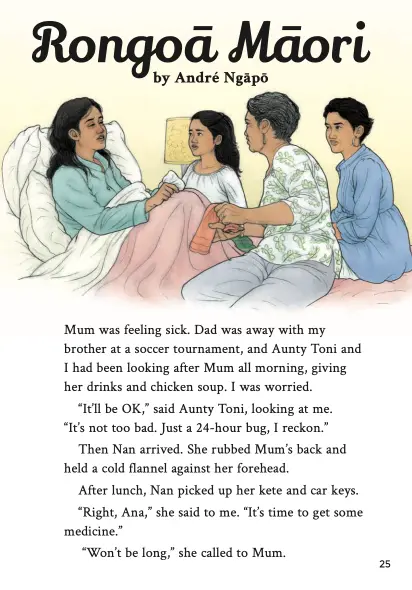
This story has a strong theme of the value of rongoā Māori, traditional Māori medicine. It provides opportunities for students who are familiar with te reo and rongoā Māori to share their knowledge.
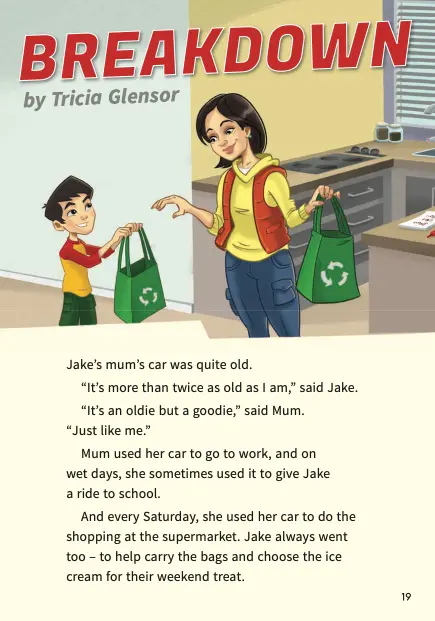
Mum and Jake can’t go to the supermarket because Mum’s car won’t start. When the tow truck arrives, Jake takes a keen interest in everything the tow- truck driver does.
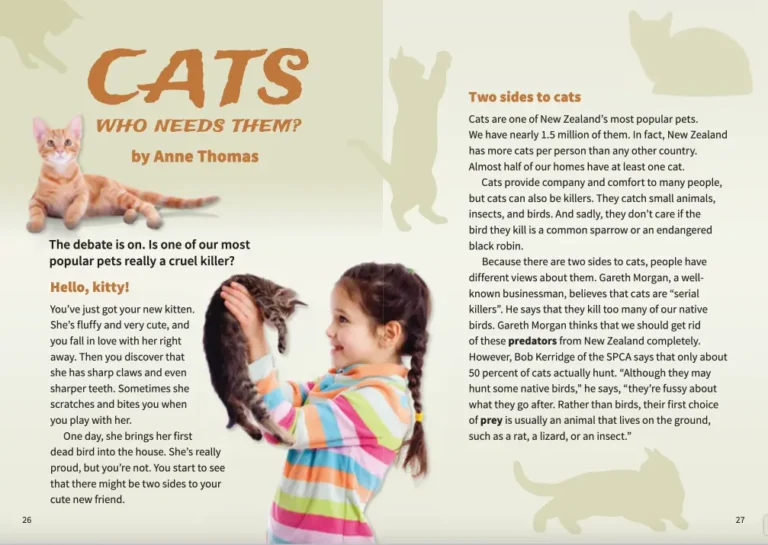
Cats – Who Needs Them? School Journal Level 2 June 2014 This article debates the role of the nearly 1.5 million cats in New Zealand, balancing their role as popular pets with their status as predators of native wildlife. The law defines them as companion, stray, or feral cats. Methods for protecting native species include…
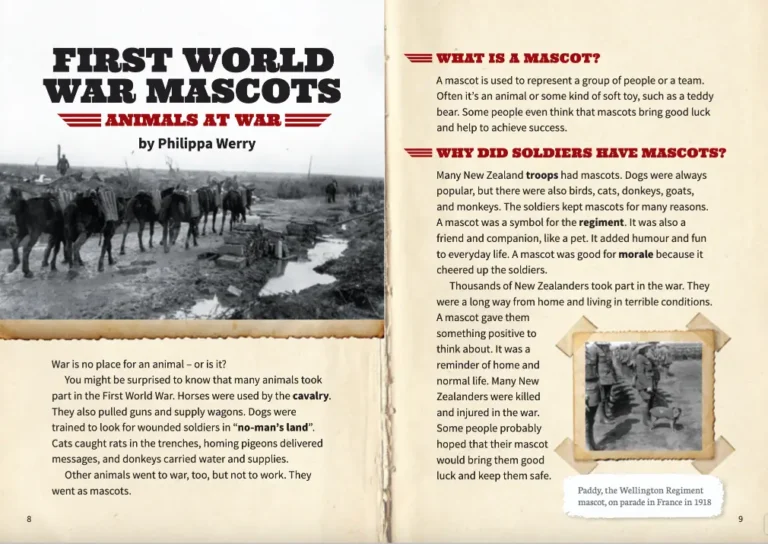
This article is about animal mascots during the First World War. Animals served as mascots in WWI to boost soldier morale and provide companionship. Popular mascots included dogs, donkeys (like Moses), and a bulldog named Pelorus Jack on HMS New Zealand. Most weren’t allowed back into New Zealand due to quarantine.
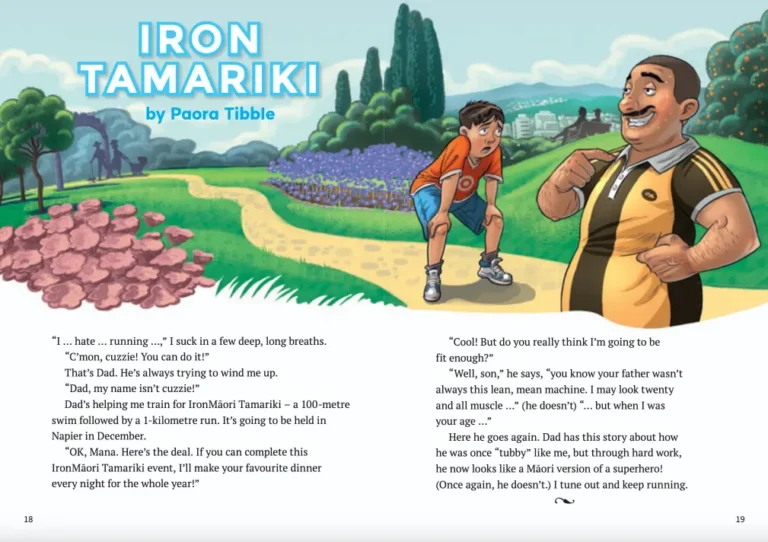
Iron Tamariki – School Journal Level 2 2014 Mana trains with his father for the IronMāori Tamariki race, overcoming his aversion to running. He wins the swim and finishes the race, feeling pride, and is cheered on by both his previously separated parents
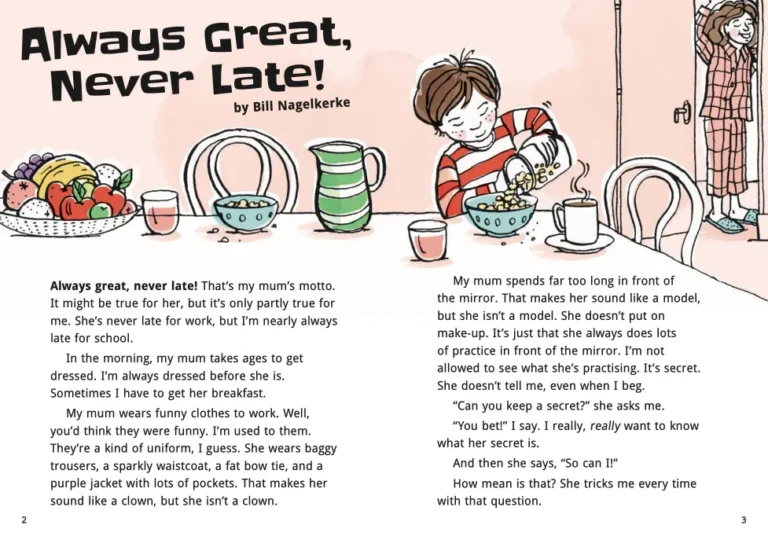
The boy in this humorous narrative is ready for school but fears he’ll be late (again) because Mum isn’t ready for work.
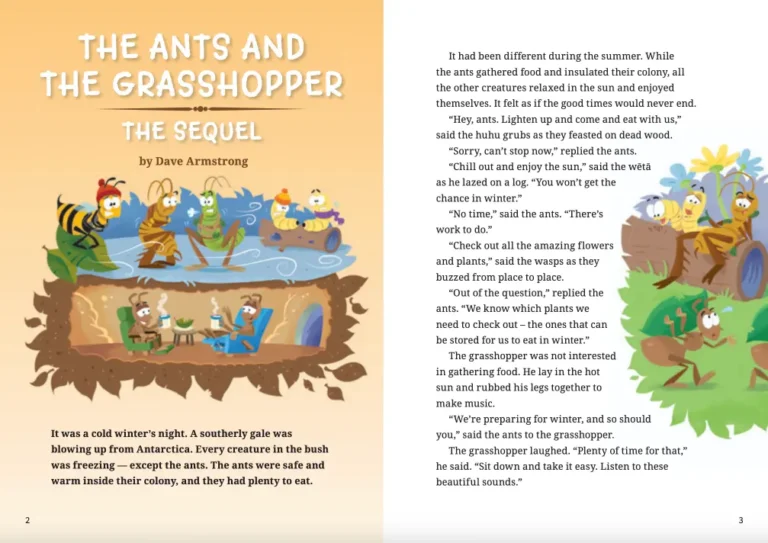
The lazy grasshopper seeks shelter from the cold ants, who make him work all winter in exchange for food. In the summer, he starts charging for his music to ensure his future, proving he learned the lesson of preparation and resourcefulness
©Top Teaching Tasks – ©NZ MOE – ©The Crown | Copyright Info
 Top Teaching Tasks